Episode Transcript
[00:00:00] Speaker A: Foreign.
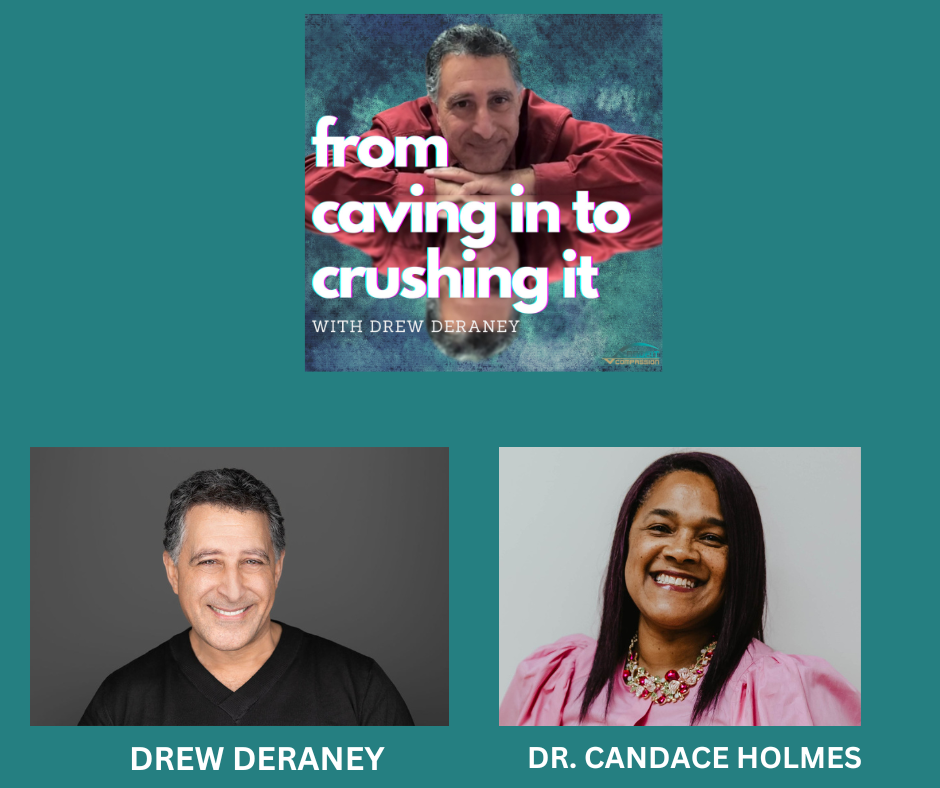
[00:00:09] Speaker B: The podcast for those who find themselves immersed in adversity and choose to write their story instead of having others write it for them. I'm Drew Duraney and I'm your host.
Today's guest is Dr. Candice Holmes. Dr. Candice Holmes is a transformative wellness authority, speaker and chiropractor with nearly three decades of experience.
Her passion for neurofeedback therapy was sparked by her eldest daughter's powerful ADHD transformation, overcoming symptoms, thriving without medication, and consistently making the President's and Dean's list in college.
Now a certified neurofeedback therapy specialist, Dr. Holmes has spent the past decade helping others achieve similar breakthroughs. She's on a mission to share this brain based, life changing therapy with individuals, families and organizations ready to transform their mental wellness. Enjoy the show. Dr. Candice Owen, it's so good to see you.
[00:01:06] Speaker A: Thank you. Thank you for having me.
[00:01:08] Speaker B: Candace Holmes. It was funny I said Dr. Candace Owen, who's a political person. I just realized that I had so many, anytime I get a first name that I that's very unique and beautiful, I always think of who the original person I heard of. But we're with Dr. Candice Holmes, folks, and Dr. Candice. Whenever I do one of these podcasts, I always thank the person who introduced me to my guest. So Anissa Hudak gets the thank you. So Anissa, thanks again for a wonderful introduction. I'm so glad you introduced me to Dr. Candice Holmes.
So folks, you always know, I always talk about in the beginning that when we're young, we're taught that life is linear, that if we do A plus B plus C D is going to happen. And you know what? For the most part, life is linear until it's not.
Ultimately, at some point in our lives, adversity rears its ugly head, that external circumstance that kind of gets in the way of that straight path and creates more of a circuitous route in our lives.
Now, when adversity rears its ugly head, we either don't see it or we do see it. And if we do see it, we've got a choice. We either face it or we run away.
And because of that, I believe there's three types of people out there. Three types of men, three types of women. So we'll go with the women on this one.
So woman number one has got so many blind spots that she doesn't even notice the adversity. She just says, hey, this is my life that's been, I've been told to live. So I'm Just gonna live it the way it comes and that's what happens. And she doesn't change anything. And I don't have woman number one on this show. Then you have woman number two. Woman number two does see the adversity, yet she says it's life doing it to her. So she's the victim. She says that all this adversity are barriers stopping me from doing things. I can't change anything. It is what it is. So she makes no changes in her life. And on her deathbed she's got so many regrets. I don't have woman number two on the show. I have woman number three on the show. She's got a heightened self awareness. She sees that adversity and she says, I am sick and tired of being sick and tired. I'm going to do something different, take massive action and become a stronger woman on the other side.
So with that, Dr. Candice, if you could reach back as far as you need to for that defining moment in your life, whether it was a tap on the shoulder, a whisper in the ear, or like what I needed two by four upside my head, that, that really transformed you from the woman you were, whether it was woman number one or two or both, to the woman you are now and how that transformation impacted you personally and then professionally.
[00:03:46] Speaker A: That moment for me was when I was working as a chiropractic associate for a doctor.
And it. Which is when I'm here in Atlanta and it snowed. You know, it doesn't snow often in Atlanta. It snowed this time. The doctor I was working for is from New York, I'm from Detroit. So he wanted me to come in to work. Now, mind you, schools are closed. Everything's closed.
And I'm like, okay, okay. So I have my, my daughters are probably about 7 and 8, no, 7 and 9 at this time. So I had to load them in the car. That means I had to drop them off to my parents, drive there and then drive back to get to the office. And so I load them in the car and you know, I turn on the, turn the car on. And I had a vision of us getting into a car accident.
[00:04:31] Speaker B: Oh boy.
[00:04:32] Speaker A: And I don't have visions, but I did that day. And I just started crying. And so then my daughter started crying like, mommy, why are you crying? I was just, I can't do this. I just, I can't do it. Because, you know, back in New York and back in Detroit, they pre treat the streets.
[00:04:44] Speaker B: That's true.
[00:04:45] Speaker A: They don't do that here in Georgia. And so I'm like, you know what? I called and I called the doctor's wife and I was like, I'm not coming in. And you could have heard a pin drop. I said, I'm thinking to myself, no. I said, you're not going to see sacrifice my children's lives, my life for a dollar. Because nobody's coming in today. Nobody thinks, oh, let me go get a chance.
Everything's closed. And it was that moment. I'm like, you know what? I'm not gonna let anybody have that much power over me to decide, you know, how I live my life, that that over for money. I mean, you know, that's. Life is more precious than money.
That was my moment. And when the contract was up and he didn't renew it, I was like, I'm totally okay with that because it's time for me to leave. This is, this is not where I'm supposed to be.
[00:05:29] Speaker B: Right?
[00:05:29] Speaker A: That was my defining moment.
[00:05:31] Speaker B: Good for you. You stood up for yourself and self advocated and advocated for your children.
It's amazing where those, those visions that if we've never had one before, they're so powerful. And there are times when we talked about that, you know, number one, number two, and number three, there are times we have that vision and we don't even notice it.
[00:05:52] Speaker A: We don't notice it. We're too thick in the woods, you know, to even acknowledge it or want to acknowledge.
[00:05:57] Speaker B: It's a process, you know, it's thankful. You look in the rear view mirror, you see your girls back there, and you're like, nope, no, absolutely not.
So contracts not renewed. You breathe a sigh of relief and you realize there's something new. What was that something new? What door opened for you?
[00:06:13] Speaker A: Well, I had been a coverage doctor for a long time for other chiropractors, and I'm like, you know what, I can continue. I can start that back up again, you know, So I was doing that for a while.
During this time, my oldest daughter was diagnosed with adhd.
And I was in denial, honestly about that. And the person who diagnosed her as a sorority sister of mine, she's a child psychologist. And so, you know, the plan was to do about 12 or 15 sessions with her. And. And after those that time expired, my daughter wasn't really getting any better.
And she said, well, you sure you don't want to put on medication? I'm like, positive. That's why I chose you as a psychologist, not a psychiatrist. I said, we're not, we're not drugging her. We're not, that's not what we're doing, you know.
[00:06:56] Speaker B: Yeah.
[00:06:57] Speaker A: And that was the, the, the door that opened. Another door that opened too, to see what else was out there that didn't involve medication to help her.
[00:07:05] Speaker B: I see. Okay. All right. And, and you know, when I, what I've learned about chiropractors, they're much more open minded about the entire human body and, and different ways of doing things. So the fact that you were, you know, in the field of chiropractic care and then you had that epiphany of, you know, I got you as a psychologist, not a psychiatrist because I didn't want you to.
It forced you in a good way to really dive deep into what are the alternatives I can do for my daughter. So what are some of the alternatives that you unearthed for her?
[00:07:38] Speaker A: Well, I first started with a acupuncturist who was also a naturopath who's like, okay, let's, let's try that. And so we worked with her, you know, grounding and everything. And she gave her a remedy to take, which are homeopathic little pellets that were going to help, you know, calm everything down. And she warned me, she said, you know, once she reaches puberty, then, you know, our hormones are going to change and she'll need a different dosage and everything. I'm like, you know, yeah, okay, sure, whatever. So it was working well for her. I wasn't getting those calls to school.
And then I get a call from school and, and I'm one of those parents who always takes the side of the teacher. Okay. Because they're too, they're too busy. I was a substitute teacher for four years in middle school. They're too busy to just have to take time out to call. So something has to be like, grossly wrong.
[00:08:21] Speaker B: Right, right, right, right.
[00:08:23] Speaker A: She's just not herself today. And so I said, let me speak to her.
Like I'm just.
And she's like. I said. And something told me, wait a minute, did you take your remedy today? And she said no. And I was like, oh. I said, okay, okay. You know, that was. And something told me, wait a minute, let me. I didn't even ask my daughter. I just went in like, you know, what are you doing? And you know, this is not how we behave. And you know.
[00:08:49] Speaker B: Right, right, right, yes.
[00:08:50] Speaker A: So she had, she did have a reason.
And then I realized this is the time she was 13. So we're at puberty. So what, what else is there? And thankfully I was going through one of our chiropractic magazines and found an article about neurofeedback therapy which is what totally transformed her life. And wow, so thankful, so thankful because I was at my.
[00:09:11] Speaker B: Tell us a little about what is neurofeedback therapy.
[00:09:13] Speaker A: Neurofeedback therapy is a sophisticated form of biofeedback. It's a modality that retrains how the brain functions. It's all computer based, so there are functional ranges that your brain provides, processes information in and when your frequencies are out of range and that's when you start having symptoms from like, you know, anxiety, depression, adhd, you know, ptsd, traumatic brain injuries. And so that's the one thing that changed everything. And I'm so thankful that, you know, the chiropractor who wrote it, who's one of my former professors, wrote the article about neurofeedback because he was trying to find a solution for his nephew who has Asperger's. And he taught me and you know how you're in school and you know someone who's just like, just brilliant. He's one of those brilliant ones. I'm like, oh my gosh, like if he founded the company, there has to be something to it. So I did the research, you know, spoke with the doctors and I was like, okay, this is what we're doing because I don't have anything else. I don't have anything else.
[00:10:04] Speaker B: So what specialist does perform the neuro?
[00:10:08] Speaker A: It's across the board. You have a medical doctor, you have chiropractors, you have mental health professionals. It runs the gamut. It's just someone who has an interest in it and who, who gets trained and certified in it, who can, who.
[00:10:19] Speaker B: Can perform it and what's it called again? Neuro.
[00:10:22] Speaker A: Neurofeedback.
[00:10:23] Speaker B: Neurofeedback. All right. No, because my son's 23 and he's on the autism spectrum disorder and he's. It's the Asperger's too. So yes, that might be something. Since it's not a prescription drug, it might be something he's interested in learning because if it doesn't train the brain.
[00:10:40] Speaker A: And what I love about it is that the results can last up to 30 years. So it's drug free and non invasive and it's, it's totally life, life changing and transformative and that's, that's I'm going.
[00:10:49] Speaker B: To look into now.
[00:10:50] Speaker A: Oh my gosh, it totally changed my life and her life and her whole family's life just as a result. You know, you change one person And a family. Everybody. Everybody.
[00:10:57] Speaker B: Absolutely. That's. That's so true. It's so true. Because I always say, as my son goes, the whole family goes.
[00:11:03] Speaker A: That's it. That's it.
[00:11:05] Speaker B: It puts a lot of pressure on the. The individual with special.
[00:11:08] Speaker A: Oh, yes. And the ones caring for the individuals.
[00:11:10] Speaker B: And the ones caring.
[00:11:11] Speaker A: Yeah, even I'll talk about that part.
[00:11:14] Speaker B: Yeah. No, so great. So now we helped. You helped your daughter, and you helped your practice, because now you could offer that to other people.
[00:11:22] Speaker A: Absolutely.
[00:11:23] Speaker B: And that also helps. So you do. We're doing the covering, Doctor, For a while. And then what. What changed then?
[00:11:30] Speaker A: What changed then is that. That's. That work isn't always consistent.
[00:11:34] Speaker B: Right.
[00:11:35] Speaker A: And so with adding neurofeedback therapy to my practice, I said, let me get it. Let me get a brick and mortar. You know, I'm so thankful for one of my colleagues who was reminding me that I didn't need 1500 square feet.
You know, she was like, keep your overhead low.
[00:11:47] Speaker B: Okay. Okay.
[00:11:48] Speaker A: You're right. You know, in school, they're like, you open up the office, you put your. You put your sign out, people just come on in.
[00:11:53] Speaker B: Yeah, that's the thing. We do think that. Can you do neurofeedback remotely?
[00:11:58] Speaker A: You can. Yes. 90% of it is done virtually. So I have a national practice, so I care for those outside of the state of Georgia.
[00:12:03] Speaker B: Okay, so tell me, like, the biggest success story in your individual practice, especially with neurofeedback.
[00:12:12] Speaker A: Oh, neurofeedback.
[00:12:13] Speaker B: It doesn't have to be neural feedback. Give me just the best success story in general, and then we'll get to the best success story with neurofeedback. I want to hear both.
[00:12:21] Speaker A: Well, in general, honestly, I've had the biggest transformations with neurofeedback.
I had a patient who called me. He had been suffering with a condition called a new daily persistent headaches for 11 years. So for 11 years, he had headaches every day.
Every day. And when we first met, we met, you know, virtually. And his background is dark. I mean, I mean, obviously, you know, he's always. And he was pleasant. I said, you. I said, if I had that accepted day, I would not be.
I would not be pleasant. I'm just. I'm just trying to tell you. He said, I'm used to a doc. And I'm like, okay. And he found out about me through. Through a podcast, but I didn't know. He mentioned someone's name, but I didn't know who he was mentioning, but I was like, okay. And so went through the process. His. His wife is a medical doctor.
[00:13:05] Speaker B: Okay.
[00:13:06] Speaker A: So he's had all the diagnostic testing. He's had everything medicine could offer him.
[00:13:11] Speaker B: Okay.
[00:13:11] Speaker A: And after we did the consultation, I'm like, yes, you know, you are a candidate. Let's, you know. You know, are you ready to start? He said, well, you know, our son is going to college, and, you know, the things. You know, and all the things. And I said, I understand. I said, and at some point, you have to take care of yourself, right? That you can take care of, take care of others. He was like, okay. You know, And I was like, all right. Well, you know, and so I followed up with him, you know, probably about six months or so, just like every couple weeks, you know, how you doing? You know, I didn't want to bother them. I just. I just really care about people. I just.
[00:13:39] Speaker B: Right, absolutely.
[00:13:41] Speaker A: You know, I just do. And so that tapered off, and two years later, I was checking my messages, and there was a message on there. From him.
[00:13:48] Speaker B: Oh, wow.
[00:13:49] Speaker A: He was like, you know what, doc? He said, I was thinking about what's happened over these last two years. And he said, and nothing's changed.
[00:13:56] Speaker B: Oh, boy.
[00:13:57] Speaker A: He said, so I'm ready. I already told my wife, look, I love you. We've tried it your way. I'm doing this.
And so started with him. I connected him with a colleague, you know, where. He's in Maryland. So I connected with a colleague there. He went there to get his brain mapped, and we started the program with him.
And when you first start the program, it can be a little frustrating because your brain is trying to learn new things. Just like I tell people, when you start riding a bike, you don't immediately just take off with no training wheels. It's a process. It's a process.
And so I was supporting him, and he was like, you know, he said, I'm just so frustrated. He said, because, you know, just shows me how messed up my brain is. And I said, I said, just shows you where your brain is at this time. I said, you know, there's neuroplasticity. Things can change. This is just this moment. I said, but you keep at it. Keep at it. And so I'm supporting him. He's. His brain is transforming. And when he would go on vacations prior to neurofeedback with his family, he would have to stay the majority of time in the room because he was. He couldn't function in dark room. You know, I mean, his family go out to dinner, you know, excursions and everything. And he's just there after working with neurofeedback in one of my programs, my brain transformation acceleration program, he went from that to having rights in the back, going from having headaches every day to once a week. And then by the time he finished my program one or two times a month, and instead of being at the nine, ten mark, there may be like a one or two.
[00:15:16] Speaker B: A big difference. Oh, my God.
[00:15:17] Speaker A: I mean, oh, my gosh. He was, I mean, I was, I was a little on edge because I was thinking his wife was going like, you know, his wife is going to be, you know, sometimes, all the time. I will not accept patience, especially if they're married, if the spouse isn't on board, because I don't, I don't play that game.
[00:15:32] Speaker B: She on board?
[00:15:33] Speaker A: She was. And I was like, okay. You know, because I told her, I said, look, I said, we're not going to, we're not going to start this. And she's not. She was on board. And he is also a track coach, and he was still coaching and.
[00:15:46] Speaker B: Coaching. Yeah. Imagine having the headaches in the sunlight and.
[00:15:49] Speaker A: Oh my gosh. Oh, my gosh. Well, he competed nationally.
[00:15:52] Speaker B: Oh, my.
[00:15:52] Speaker A: And won gold medals nationally in his, in his age range. And then he said, he said, he said, you're a godsend, you know, as he gave me. And he said, I'm going to put. Participate in the international competition. And he ended up placed, I think, in the top 10 in the world.
[00:16:07] Speaker B: God bless. That's awesome. That is awesome.
[00:16:09] Speaker A: And he was like, I owe it all to you. And I'm like, you know, I say God. First he did the work.
[00:16:13] Speaker B: God. And then he did the work, too.
[00:16:15] Speaker A: Absolutely. Absolutely. And so that just, that just, you know, just makes me so happy because I just, like I said, I get a slight headache and I'm.
[00:16:24] Speaker B: You're not as sweet as you are now? Not at all.
[00:16:26] Speaker A: Not at all. And I know this, you know, I can't imagine. 13 years.
[00:16:30] Speaker B: I could not. I could not imagine. No. No way. So I don't want to gloss over when you mentioned about brain map. So, so you, you would refer, you know, people who do, like, what, what specialty does a brain map? Is that a neurologist or who does. Who does it?
[00:16:45] Speaker A: No, because remember, neurologists are all medical. Oh, that's true. Yeah. They're not. No. So we have puncturist, we have naturopaths, we have chiropractors, we have, like I said, mental health professionals, you know, counselors, therapists, psychologists, it just, it runs against some medical doctors who, who are.
[00:17:01] Speaker B: All right, more. Well, more progressive. Yeah.
[00:17:03] Speaker A: Yes. Let me say. How do I say that?
[00:17:05] Speaker B: So, so you'd be able. So like, let's say I'm in New Jersey and. And I wanted to work with you for my son. You wouldn't. You would be able to link us up with somebody who does a brain map in this.
[00:17:17] Speaker A: I go in my database. Yes. Get your zip code and contact the office and see if they're open to working with me. And then send you there just like I was. Send someone out for blood work. And then they gave me the results I upload into my system and then I manage your care from there.
[00:17:31] Speaker B: Ooh. I may be contacting you after this recording. Okay.
[00:17:35] Speaker A: It's a beautiful thing.
[00:17:36] Speaker B: Yeah. Well, they've got to want it to the.
[00:17:38] Speaker A: Absolutely. And I've had parents who say, I don't know, you know, I don't know if he or she is going to make the commitment. And I tell the child, it's like, look, I said your parents are making an investment in you and your future.
[00:17:47] Speaker B: Absolutely.
[00:17:47] Speaker A: And my goal is to help my patients become as self sufficient, independent as they can. And if you're not going to do this, then we don't need to work together.
Kind of like I'm like, yeah, I'm a straight shooter. I don't.
[00:17:57] Speaker B: No. No loss over anything, really.
The support system is as important as the individual wanting to do it because.
[00:18:03] Speaker A: Absolutely.
[00:18:04] Speaker B: They may want to do it if no one's supporting them. It breaks down pretty quickly.
[00:18:08] Speaker A: Very quickly.
[00:18:09] Speaker B: Yeah.
[00:18:09] Speaker A: And unfortunately there are some people who aren't as supported. That's one of the questions I asked in our initial neuro. Neuro health screening, you know, are you supported?
[00:18:17] Speaker B: Absolutely. Absolutely. So anything we haven't covered that you want to let the audience know about your practice?
[00:18:24] Speaker A: Oh, sure. Neurofeedback is effective. It works well with children as young as five and up.
It's not just if you've had some condition diagnosed like, I use it for stress relief and to make sure that my brain stays sharp. My goal is to be a centenarian, you know, still driving, you know, coming around the corner on two wheels like I do now, you know, just as sharp and as cognitively available as possible. That's my goal.
I have elite athletes who also want to work with me just to have, you know, optimal performance in what they do and in the brain, vision. The brain controls everything. So when your brain is optimally working, then it's a beautiful Thing. Did you ever see the movie, I think was called Lucy?
This, this character in the movie had her brain working at 100. So I think we're only using about 10 or 20 of our brain and hers was 100. I was like, oh my God. She was just, it was just boom, boom, boom, boom, boom, boom, boom. I'm like, oh. I mean, you know, there's so much potential there, there is.
We haven't even discovered or uncovered yet.
[00:19:21] Speaker B: So isn't that, isn't that on the high end, 10% or is that, that's on the high end. I think the average, the average is around, I don't know, three or four or something like that. Yeah. Which is unbelievable. You figure how important the brain is and, and we don't use. Yeah, we use a small piece of it. I also like amazed by about how much information comes through our brain and, and how little we process. Like we, Right, we, I think we, we hear 70, 000 words a day or something like that.
[00:19:53] Speaker A: Yes.
[00:19:53] Speaker B: And we only retain like 1400 that.
[00:19:56] Speaker A: And then out of those thoughts, 80% of those thoughts are negative. 85 of those negative thoughts are repetitive. So it's a constant battle to stay in a, in a highly vibrational, positive state of mind. So no wonder anxiety and depression are, you know, rampant and unfortunately, you know, people taking, you know, their lives, it's, it's, it's a lot.
[00:20:17] Speaker B: Right. And most of us don't realize that the thoughts are, are fleeting. They are, they just are happenstance. They just happen and then they're fleeting and then they can go away if we don't repeat them. But then if you, like you said, if most many thoughts are repeatable. Yeah. If we're only in our own brain.
That's why it helps to talk man, and a big time here with experts about. Yeah, so. Yeah, so and saying that too.
[00:20:44] Speaker A: I also co manage with, with other professionals. So I tell people, you know, my degree is not in psychology. You know, if you're having a challenge, you know, go talk to your counselor. I'll just tell you not to do that. That's all I have.
So you know, I stay in my lane.
[00:20:58] Speaker B: Well, I mean I always trust the practitioner who will admit when, when she has gone beyond her expertise and says, you know what, I may not be the right person for this piece, but as long as you surround, you know, you surround yourself with curated individuals who are experts, who are quality. Yes. Having a team is so, is so important.
Absolutely, absolutely. So the audience certainly has captured the essence of Dr. Candace Holmes. And they're going to want to get in touch with you. So Dr. Candice told me the best way is to go onto her website and it's brain core of duluth-l u.com.
what will we see when we go to your website, Dr. Candace, on my.
[00:21:38] Speaker A: Website you will see all the conditions that neurofeedback works well with. You'll also have the opportunity to purchase my book because I wrote it's called transform your brain with neurofeedback.
[00:21:48] Speaker B: There we go.
[00:21:48] Speaker A: Because most people haven't heard of this. And you'll also have the opportunity to schedule your neuro health screening with me to see if you are a candidate for neurofeedback therapy.
[00:21:56] Speaker B: Wonderful. So people pick up by that book. I'm writing it down. Transform your brain with neurofeedback. I'm intrigued by this because human, human behavior, it starts. Oh yes, up there, man.
[00:22:08] Speaker A: It's, it's fascinating. It's absolutely fascinating.
[00:22:12] Speaker B: So when do you think you really got interested in the, the whole brain idea?
[00:22:17] Speaker A: When, When I remembered, you know, that the brain has the, the ability to, to change and to transform and to be different than it is today. Yeah.
[00:22:25] Speaker B: Most people remember when you may have, like, how young you were.
I'm just trying to get an idea of, of what triggered this, this interest, if you.
[00:22:35] Speaker A: Honestly, I didn't really think about it until my daughter was having, was suffering from these things.
And looking back, and looking back, I do remember, you know, being placed in, in positions of authority by, by parents, you know, by school members. Like, like in church, they had me, you know, reading the scriptures in front of the church and all these things. And apparently my brain handled being in front of people, you know, without having any anxiety or concerns, you know, better than most. Because I was always chosen.
I want to read today, you know, but I was like, okay, I guess I'm supposed to, you know, you just, you just do what you're told, so.
[00:23:10] Speaker B: Right.
[00:23:12] Speaker A: It's, it's, it's a, it was a gradual thing.
[00:23:14] Speaker B: All right? So I want to throw something at you that other people have talked to me about, and I want to see where this fits with neurofeedback or if it fits at all, if there's some kind of combination therapy. But people are telling me that there's a product out there that helps remove toxins from the brain.
It's supposed to be a supplement.
Sounds cool to me. What do you know about whatever toxins could be in the brain? They talk about microplastics or, or metals in the brain. So if, and if those do indeed exist and, and impact the behavior, the brain function, how can neurofeedback help if those things really exist and all that kind of stuff? Well, sure.
[00:24:00] Speaker A: In my practice you have a questionnaire that you have to fill out because your metabolic processes play a huge part in how your brain works. It's a, there's a gut brain access and connection. So you essentially you are what you eat. Whatever you eat goes to the brain or doesn't go to the brain. So. Absolutely, inflammation is the biggest stressor to the brain and inflammation often comes from diets that aren't so great and then the metals that we have just from like, you know, maybe cavities that we've had filled or you know, the, the, the pesticides that we have on food. It's, it's an exhaustive list, unfortunately. Unfortunately. But yes, I can actually see how the supplements and nutrition, it plays a huge part.
[00:24:39] Speaker B: Okay, and then, and neurofeedback can help in and of itself. Let's say somebody's not on the supplements and they have the metals and those toxins in the brain. Can neurofeedback still help that individual?
[00:24:52] Speaker A: Absolutely. And in the report that comes out that from the brain mappings that my patients receive, there are suggested supplements based on how your brain is functioning. That would be okay.
[00:25:02] Speaker B: Yes.
[00:25:02] Speaker A: So I offer that to my patients as well and I'll send them to some other wellness affiliates that I have, you know, if they don't know someone who can help them in that rank in that area.
[00:25:11] Speaker B: Beautiful, that's good to know. Because I do know that there's also a test called from Genesight which you can, I think it's a swab. You swab yourself and send it in and then it gives you an idea of your DNA and how your body will handle certain medications. So at least the doctor has a choice of starting at a certain dosage in a certain class of medicine and all that kind of stuff. So I'm glad there's something like that with the whole neurobject and brain mapping. That's great to know.
All right, you know what, I got two questions for you.
[00:25:46] Speaker A: Okay.
[00:25:47] Speaker B: The first one's definitely my favorite of the two.
You are in your happy place and you are sitting down with 7 to 10 year old Candace and you want to give her advice about life. What are you going to tell her?
[00:26:02] Speaker A: I'm going to tell her that not everyone is her friend and that even though something, a challenge happens today, that doesn't mean it's going to be there forever.
[00:26:11] Speaker B: Right.
[00:26:11] Speaker A: And the trouble doesn't always last.
And just to keep trusting God and knowing that he has a plan and you don't even understand it, you know, at this time, but you, you will. You will later.
[00:26:25] Speaker B: I love that advice, especially I really do love the advice of not everybody's your friend. Because the way children nowadays define friendship, it's pretty scary.
It's like meet them online and during a video game, and all of a sudden, that's your friend.
[00:26:38] Speaker A: Your friend.
[00:26:39] Speaker B: All right, so let's switch gears now. You're sitting down with young entrepreneur, young businesswoman, Dr. Candace, and you want to give her advice about business. What are you going to tell her?
[00:26:48] Speaker A: Get a mentor as soon as possible.
They will save you lots of time, aggravation, and money and consider that to be an investment as opposed to an expense. I love that when you can glean from someone else's experiences and they can help guide you, because all the coaches that I've had and mentors that I've had have really been. Everyone played a part, you know, thank you for this, that I got from this one and this. That I got from that one to. To make what, you know, the business that I have today and the. The systems that I have in place.
[00:27:16] Speaker B: Absolutely, absolutely love that. Get a mentor. A mentor who's been through what you want to get to, right?
[00:27:22] Speaker A: Yeah.
[00:27:22] Speaker B: Yeah.
Dr. Candace, I want to thank you for coming on. Thank you for coming into my world again and this. Thank you for the introduction.
[00:27:29] Speaker A: Thank you, Anissa.
[00:27:30] Speaker B: Dr. Candice, you're doing some amazing things for people, and I learned so much today, and I'm sure the audience did, too, so thank you very much.
[00:27:36] Speaker A: Oh, I'm so thankful that you had me. It's been my pleasure. Thank you.
[00:27:40] Speaker B: It's been great.
Everybody out there, please take care of yourselves.
Thanks so much for listening. If you enjoyed the episode, please subscribe and give us a review. To help others find it, I'd like you to answer this question.
Are you living the life you. You want to live, or are you living the life others want you to live? I'd like you to think about that for a second, because I strongly suggest you live the life you want to live. If you want to learn more about what I stand for and my services and how I'm able to help many men get out of their own way, please go to my website at www.profitcompassion.com.
feel free to also email me at drewrophetcompassion.com I'd love to have a conversation with you.
Take care of yourself and choose to write your own story instead of letting others write it for you.