Episode Transcript
[00:00:00] Speaker A: Foreign.
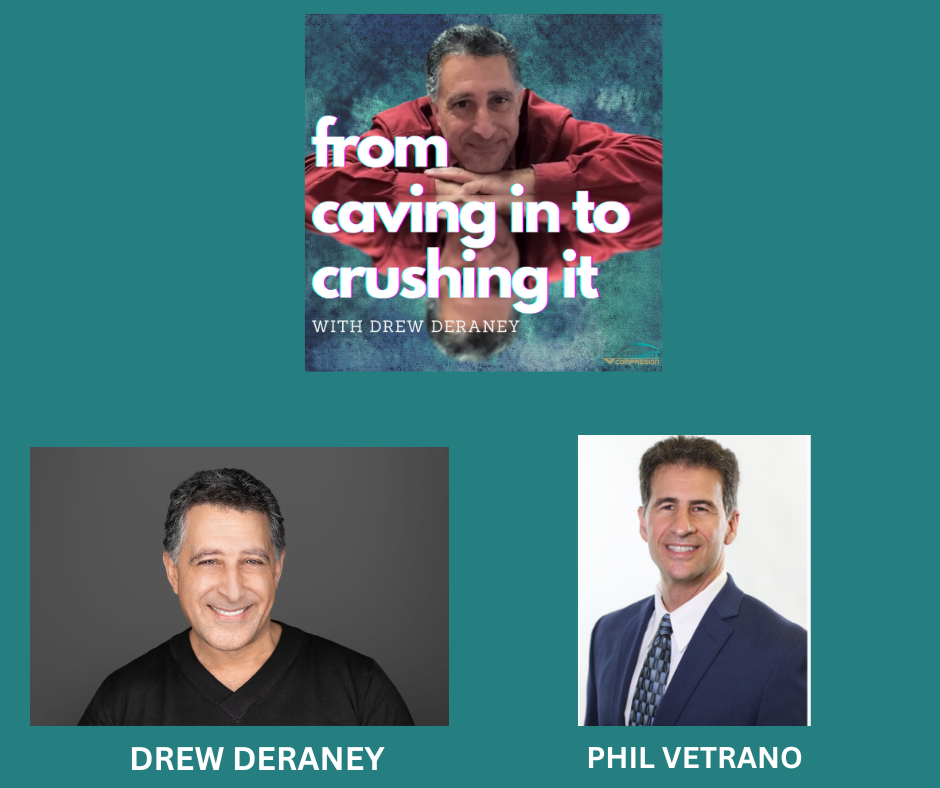
The podcast for those who find themselves immersed in adversity and choose to write their story instead of having others write it for them. I'm Drew Duraney and I'm your host. Today's guest is Phil Vetrano. Phil Vetrano has over 20 years of IT management and consulting experience.
His expertise is in identifying and analyzing challenges and delivering insightful and robust solutions to improve operations and performance.
He helps students and families optimize their investment in college. He provides students with a competitive edge in career planning and standing out in college applications and their resume. Phil Co founded 501C3 nonprofit organization to address the educational and skill gaps not covered in school or at home to set up our youth for life, college and career success.
Enjoy the show. Phil Vetrano, my friend, it's so good to see you.
[00:01:10] Speaker B: Thank you, Drew, for having me.
[00:01:11] Speaker A: It's my pleasure. So I always thank the person who introduces me to my guest and I haven't spoken to Jennifer Bernbach in so long. But Jennifer, thank you. You are the one who introduced me to Phil way back when.
It's probably close to four so years ago.
And now Phil's on the podcast. So I thank you again. Jennifer. Thank you so much.
So my audience knows I always start with after the thanking the the person who introduced me to my guests. I always, I always talk about how when we're young, we're taught something and it's not a malicious teaching. These people hope what they teach us is going to happen. They say life is linear, it's a straight path. If we do A plus B plus C D is going to happen.
And for the most part, our loved ones are correct until they're not.
Ultimately, an external circumstance gets in the way of one of those letters and kind of derails our straight path and really causes more of a circuitous route.
When that happens, I say that adversity has now reared its ugly head and depending on our level of self awareness, we either notice it or we don't.
When we don't notice it, that means that's we're man number one. We've got a ton of blind spots. We don't even see the adversity because we're living somebody else's life and we change nothing. I don't have man number one on this show.
Then there's man number two. Now man number two sees that adversity, yet he says, I'm the victim.
Life is doing this to me. That adversity is a barrier. I can't change anything. Life is what it is. And he goes on autopilot and changes nothing. And the difference here between man number two and man number one is man number two has a ton of regrets on his deathbed. A lot, because he could have changed something. Now I don't have man number two on the show either. I have man number three. It's the Phil Vetrano story. Man number three has a heightened self awareness, sees the adversity and says, I'm sick and tired of being sick and tired.
Life is doing this for me. This adversity is not a barrier. It's an opportunity to do something different, take a different approach, make, take massive action and become a strong man on the other side.
So, Phil, if you could, my friend, reach back as far as you need to for that defining moment, whether it was the tap on the shoulder, the whisper in the ear, or like what I needed 2x4 upside my head, that kind of transformed you from the man you were, whether it was one, two, or both, to the man you are now and how that transformation impacted you personally and professionally.
[00:03:48] Speaker B: Thank you, Drew. So I feel like I'm on the Dating Game. I'm man number three.
[00:03:53] Speaker A: There you go.
[00:03:56] Speaker B: So. So thank you, Drew. So I would share with you. So I've.
I worked in corporate America a long time, and I was always the helpful guy who always wanted to. To do more and support folks.
And I face a lot of challenges with that.
You would think that would be a successful model, that you would tell everybody.
However, sometimes that can offend people.
Sometimes it makes people uncomfortable. So I'm this continuous improvement mindset.
And so at the end of the day, corporate America was not aligned for me and. Or I was just at the wrong organization that didn't empower their folks to engage and discuss and debate and have open conversations.
It was ownership. It was the ownership of that particular individual. They made all the decisions and it was something that they controlled. And that authoritarian type of structure is not what I learned in my mba.
And it's something.
So I have this background in strategic management. And so it's. When you look at strategic management, you look at strategic learning. It is constantly receiving feedback of opportunities. And so that's my world here.
So. But I was going through the motions in corporate America. I wasn't making a difference in people's lives. I was just making a difference in the organization and doing my best to do that. But the impact I made were only the things that I owned could I make an impact.
I was really not having much success trying to accomplish greater things, exciting things. For the organization.
So the turning point was when I jumped into.
I was with a career coach, and he shared with me a variety of questions. And one of the things he asked was, what do you, what do you really enjoy doing? And so I was on this journey with my son in 2014, and I helped him perform a great deal of analysis. So I'm an, I'm a business analyst. And so the, this is something exciting to me. I enjoy comparing solutions to identify what's the best fit for my, my son. And there is, there's. There's really not a lot of material on this because there's not a lot of people who have the background that I do to make this work. And so, and I share with, I do presentations with students too, and I share with them, you know, know you need over a hundred skills to make an informed decision in 12th grade.
And so this. I'm sorry, I MEANT there's over 25 skills that are needed and there are over a hundred variables associated with the decision of which college to go to.
[00:07:07] Speaker A: Sure.
[00:07:08] Speaker B: So I apologize for that.
[00:07:09] Speaker A: No, that's okay. No, no, it makes sense now.
[00:07:12] Speaker B: Still, still, the impact is overwhelming, right? Because this, this is their blind spot.
And, and I share with this incredible knowledge with students about decision making and the skills that you need in order to make an informed decision.
And so this is something I'm really passionate about.
And I see the stats associated with the success of college. So folks out there, if you don't know, there's millions of students that will go to college that will not finish and get a degree in four years, and they won't finish and get a degree in six years either.
Millions of students.
This is nowhere on the radar of concern of millions of people.
[00:08:02] Speaker A: Right.
[00:08:03] Speaker B: And so our society is really, really weak associated with supporting our youth in the way that we can support our youth. And so this was the turning point for me. I recognized the huge disadvantage that students and parents have in this quest of journey of, of what should I, what am I going to do after 12th grade?
And which, which, you know, which military am I going to, which college am I going to, which trade school am I going to? What's next?
And so I provide so much valuable information to students to help them on this journey where they're not getting this from guidance counselors, they're not getting it from their teachers, they're not getting from their parents. I easily identify blind spots for all three parties.
And I share the wisdom that I have because I'm an analyst. I'm asking all the questions. And I'm a creative solution provider. I want the most robust solution for not only the student, but for the parents too. What makes sense for both parties.
[00:09:12] Speaker A: Yeah, Phil, this is interesting because I could see in corporate America why you hit a brick wall, because they don't want you to ask those questions more or less. And so you decided to go this route because you are helping your son. A real world example of helping your son navigate these waters of, of 12th grade.
And, and so all that wisdom and all that experience you gained helping your son, thank you for not keeping it to yourself because you could have, right, you could have stayed in corporate, helped your son move on, seen the data and done nothing about it. So I want to put it into context that, that had you made a different choice and just took that information and kept it with you and moved on your way, there'd be a ton of students now who aren't better off the way they are now because of you. So I want to thank you for that part because you could have made a different choice or not or no choice whatsoever. So. All right, so we'll get back to now. We know you're an analyst. You are now using this data to tell a bigger story.
So let it now. Now I want you to continue because I wanted to really let people know that you could have just kept that info you had learned on your son and walked away.
[00:10:30] Speaker B: Yeah, so I am, I'm not that I'm number three. I, I want to make a difference in the world. And I don't like when people are at a disadvantage. I don't like hearing about fraud. I don't like that people are taking advantage of. I don't like to be taken advantage of. And so the, the current process that is in place now is, you know, they parents have these colleges on pedestals, especially the prestigious ones, and they will throw money at it just so that their loved one could go there and get in.
And when I educate them on the colleges that they're targeting and I share with them is this piece of information.
Did you know about it?
Because assumptions are a massive thing that happens in our minds as it relates to decision making and not knowing how to dig deeper.
What are the variables associated with it?
And this is one of the most important element of this process is to ask the question. And, and we don't do a good job as it relates to society and encouraging people to ask questions. And it's okay because it's a learning process.
And the question is, does that person, are they Interested in learning.
[00:12:07] Speaker A: Right.
[00:12:08] Speaker B: The worst part is do they have the opportunity to learn this process?
I'm just one person.
I have not made the success of mass production of a book that is every, in every student's hands. And they have a choice. They could read it or they don't have to read. I haven't done it.
[00:12:30] Speaker A: Right.
[00:12:31] Speaker B: And so the only way they'll know is if they have incredible. And this is the only way.
Incredible mentors that have the knowledge and patience and time to go after this if they want to do it. Right.
[00:12:49] Speaker A: You know, that's a good point. And when I, I'm going to say the word guidance counselor and I'm going to ask you. And now generally speaking, generally speaking, strength or weakness, the guidance counselors in our public school system and private school system.
[00:13:07] Speaker B: So I will share with you. They have a role.
[00:13:10] Speaker A: Okay.
[00:13:12] Speaker B: The question is the scope of the role that they have has been dictated.
And in the world of education, it is pretty much four walls that they're dealing with.
So the barriers that they have to do more, plus when they're assigned to 600 kids, you just do the math.
There's no time.
And that's the, that's the challenge is that the parents don't know how much time it takes to do this.
[00:13:44] Speaker A: Right. Right.
[00:13:46] Speaker B: And there's an expectation for some reason of parents that the teenager is going to figure all this out when they've never done this before.
[00:14:00] Speaker A: Absolutely.
[00:14:01] Speaker B: And so this is, this is some of the assumptions that parents make and, or they made these decisions. They figured it out.
My child, of course, is going to figure this out.
[00:14:14] Speaker A: Which is ironic because we talk about that linear path. And parents, if you talk to the parents and ask them if they are, when they're in the workforce now, are they doing the work that they got the degree for in college, about 90% of them will say no. And yet they're putting their own child back on that straight path to try to almost fix what they didn't get. And, and I see that a lot. So they're really telling their kid life is linear and these poor kids are being pushed towards the four year schools. And I want to get into that with you because many kids, every child grows and matures at his or her own rate.
And we're telling them graduate high school in four years and go to a four year college. There's no really push in a lot of these public and private schools for trade, either trade schools or the community college or a transition, you know, transition years. If you have special Needs. So talk to me about, you know, what you see in the landscape of is it changing? Are they offering advice in schools? Do you know, for trade schools and community colleges or gap or transition years for these special needs kids.
[00:15:31] Speaker B: Excellent, great question. And that's. Those are a lot of questions right there.
[00:15:34] Speaker A: A lot of questions in here. Yes, true.
[00:15:36] Speaker B: So the. I have seen some progress.
[00:15:41] Speaker A: Okay.
[00:15:41] Speaker B: With some of the schools that I'm working with.
[00:15:44] Speaker A: Okay.
[00:15:45] Speaker B: That they are, they have the lens and understanding about the career paths that they're making an effort to help and support.
However, the buckets of career paths are limited.
[00:16:03] Speaker A: Okay.
[00:16:05] Speaker B: And it's because of the obvious.
High schools are not colleges.
And so because high schools are in colleges, they're not going to be exploring a lot of different things in high school.
And so the question is who's going to address the gap?
If you know your high school doesn't offer something that your, your loved one is interested in and passionate about, how are you going to get them there?
And do you know how to do it?
And it's not easy.
So there's lots of advice I could share with parents and students about this journey that they're taking on.
[00:16:51] Speaker A: Right.
[00:16:51] Speaker B: And it's. And, and what, what the challenge is, is the parents philosophy associated with this process. And they have it in their head. Right. They are not open to change. They're not open minded. Not all parents, but some parents are very linear in a path that they've know and trust because they are wise in the careers that they've seen happen, who's successful, who's unsuccessful. And they will make decisions based on someone else's journey until they hear options, the possibilities.
And this is what we don't do. We. But we're not all analysts now. We are not, we don't even have a goal to assess all our options.
[00:17:44] Speaker A: Right.
[00:17:45] Speaker B: And this is some of the challenges for the students.
They don't do it either.
Congratulations.
And I've only met one day. I've had conversations with adults those last nine years and only one adult has told me that her dad told her to be a doctor.
And she loves being a doctor.
[00:18:12] Speaker A: Okay. So one 101 rare case.
[00:18:16] Speaker B: This is the anomaly folks.
[00:18:18] Speaker A: Yeah.
[00:18:20] Speaker B: And I mean, I mean passionate about her work.
[00:18:23] Speaker A: Right.
[00:18:24] Speaker B: As opposed to. Yeah, I, I'm, I'm doing it. You know, I have the knowledge, I have the skills, I have the talent. But is it the passion? Do you that that goal for. I never worked a day in my life.
And, and you're, you're getting paid for It, Right, right. That is, that is something that can be considered through the first five, 10 years of the youth's life. That's when they're most nimble and flexible. And the question is, do they know all their options?
[00:18:56] Speaker A: Choice, choice, yeah.
It's.
I like when I hear the parents allow the student to at least voice what their interests are and be able to then look at the schools that have those interests to try to find alignment.
Many times these decisions are made like for the parents. I remember when I was in, in high school, my parents let me, they let Me apply to 12 schools, believe it or not. And so they let me find the safety schools and the reach schools and all that. And we did allow me to do it in conjunction with the guidance counselor at the private school I went to high school with. So I had a different approach there. Although I was growing up thinking I wanted to be a doctor because that generation, it was like we were growing up, you're probably, you and I are probably around the same age. It was doctor, lawyer, accountant. You know, there were about five jobs for boys and five jobs for girls and it was.
[00:19:57] Speaker B: A lot of options there.
[00:19:59] Speaker A: Majority of us aren't in or didn't go for what we thought we were going to.
So I'm curious now just because I do have a child with special needs, my 23 year old son is on the autism spectrum disorder.
How often do you encounter children with special needs and have to really help them navigate their world, their neurodiverse world in a neurotypical, you know, structure.
[00:20:27] Speaker B: Yeah. So I've helped a few students and the oldest was 21.
[00:20:32] Speaker A: Okay.
[00:20:33] Speaker B: And so I helped him. He had a variety of different challenges and he, but he was able to, because he was able to be, he was able to have conversations with me easily and there were times where he was adamant about things and I certainly respected his, you know, the opinions that he has and what he wants to do and what doesn't, what he doesn't want to do. But it worked because I was there to support him, to help him with his job search and, and that's just one example of helping a student land a job and, and help him with his LinkedIn account, his resume to support him and share with him career advice that is not in, is not on most of their radars to know how to do this because I was helping him with all his options and a variety of different careers that he was interested. So he is, he loves being a drummer.
[00:21:39] Speaker A: Okay.
[00:21:40] Speaker B: And so he, what's interesting is that he Has, So he, he does a lot of gigs. Okay. And, and so he had that engine running.
[00:21:49] Speaker A: That's great.
[00:21:50] Speaker B: But it was, it was, it's limited in, in the opportunities that he has, but he, he, he was, he was.
But he's going after it.
[00:21:58] Speaker A: That's great.
[00:21:58] Speaker B: And, and what's great is he, he met a, a famous drummer.
[00:22:03] Speaker A: Okay.
[00:22:03] Speaker B: And this famous drummer had another job.
And that really put things in perspective. So this is really valuable. Parents, if you're listening, the dad connected him with another drummer, someone who was connected and he shared the good and the bad and the ugly of the career.
Are you doing the same for your kids?
[00:22:30] Speaker A: Good question.
[00:22:32] Speaker B: And is it just one drummer?
Because we all have different experiences, different success, different failures. You want to learn from that. There's no history of drumming in high school.
[00:22:44] Speaker A: No, no, that's true.
I love that. I love that.
[00:22:49] Speaker B: So, so that's the value that I see in history.
[00:22:54] Speaker A: Yeah.
[00:22:55] Speaker B: If, if students could apply and understand the history of their industry, the history of their field, the history of college, they will learn so much.
This is the goal in any field that you want to master.
You want to be connected with all the people you can in that industry.
And what happens? Opportunities, options.
[00:23:23] Speaker A: Absolutely.
[00:23:24] Speaker B: And so, yeah, so this is something guidance counselors are not teaching students networking.
[00:23:32] Speaker A: No, no. And they're not, they're not told to. So they're, like you said, they're, they're in that four walls of that organization. So if, if they don't have some wiggle room for creativity and innovation, they got to stick to the, to the plan that's given to them. So that's where you come in.
[00:23:50] Speaker B: And so I was also blind in the world of networking when I was in corporate America.
[00:23:56] Speaker A: Okay.
[00:23:57] Speaker B: It was very limited. I was not doing the networking that I did after I started this business. And it, it opened my eyes to unbelievable opportunities.
And so again, I'm a solution provider, folks.
[00:24:15] Speaker A: Right? Absolutely.
[00:24:16] Speaker B: And when I see networking done right, oh my goodness.
If you didn't know this, networking done properly can make a huge difference in our society.
Unbelievable. This is the way to kindness.
So if you don't, if you're not really familiar with networking, how it works, you're helping the person you're meeting and they're doing the same as much as they can.
Imagine that.
Imagine if we taught our kids and united our kids to help each other and oh my goodness, let's put this, let's connect the dots.
[00:25:00] Speaker A: Yes, absolutely.
[00:25:01] Speaker B: To their dreams.
So parents out there, your kid has a dream Are you going to say don't go after it?
Are you going to give them the opportunity to try and. Or are you going to connect them with someone who can help him or her pursue their dreams?
[00:25:25] Speaker A: That's a, that's a good question. And you know, we parents, we want to protect our kids because that's, it's just, it's just natural. You want to protect your kids from risk. You know, don't take this there. Many parents nowadays have had to take their own risks and they are learning that risks are a good thing because that's how you learn and that's how you grow. So I love how you pose that question. Are you allowing them to follow their dreams and are you connecting them with people who have lived those dreams and succeeded in those, in those dreams? I love that, Phil. I love it. I love it, I love it. So we, we've talked a lot about what you do for the college student. Now I know that you're involved in a nonprofit as well and I'd love for you to share some of that with the audience.
[00:26:18] Speaker B: Sure. So, so when I was supporting, when I'm supporting students in high school and college, the. I see the challenges that they are facing and it's not my lane.
And so it's important because I'm a solution provider for me to be connected with a lot of different community partners, a lot of folks who have expertise to support both parent and child.
And so we started a nonprofit organization, helpopedia, where we are connecting lots of folks who care, just like Drew, care about others.
They care about the parents success, they care about the child's success.
You surround yourself with people like that.
Oh my goodness, it's an incredible community.
And this is something that excites me because there's not a lot of groups like that.
And so we started this group and we, we have a special needs chapter.
And we met a gentleman, Chris Myers, and he had a dream and he made the dream a reality, but was stale. It was, it wasn't as successful, monetized for the partner that he was working with. So it's, it's now, it's, nothing's changing on the website. So he came up with a special needs directory and it was for servicing Memphis, Tennessee.
And he saw the disadvantages that folks have when they're in the special needs world.
So one example is a dentist.
If the child cannot sit and open their mouth successfully and do the work necessary and the whole senses challenging things, this is a, this is a challenge because not every dentist provides this service.
And so it's now, it's a search, and I don't want to say destroy, but it's. It's now a search process to find. And so this is just one example.
[00:28:38] Speaker A: Yeah.
[00:28:39] Speaker B: And so I did a lot of analysis for Chris to see.
Is there anything out there?
And there's all these websites that has maybe 20 links to help. To help families, maybe 30 links, nothing robust to capture the hundreds of categories that can be looked for to support the.
The particular issue that you. That you may have face the disability, the, or the challenge or the learning aptitude, whatever it may be. There's no one site that does this. So we are pursuing, developing this extraordinarily thorough website to utilize and to dynamically create.
Because families out there have had success.
Right. They can share with us the links that were meaningful to them and essential to them. And it could be in person or it could be virtual.
And so there is no one sight fits all kind of thing. And that's what we're going for and helping and supporting the community. Because just like, you know, we were not trained and prepared for our child to have special needs.
[00:30:03] Speaker A: No, we were not.
[00:30:04] Speaker B: Unless you had a brother or a sister with the same condition. Exact condition.
[00:30:09] Speaker A: Yeah.
[00:30:09] Speaker B: And there's so many varieties that it's really extraordinarily challenged. So. So we're generally unprepared in. And not just this.
In most things we are unprepared because we haven't been trained to do. To do these things. We haven't practiced these things. Just like being a parent. Let's talk obvious.
[00:30:31] Speaker A: Yeah, right.
[00:30:33] Speaker B: We didn't go to parent 101 or parent 102.
[00:30:35] Speaker A: Were many classes in school about how to be a parent, that's for sure.
[00:30:39] Speaker B: And this is why your podcast is so valuable, is because we're educating parents to help them, you know, learn from the lessons of others, which is the back to history.
[00:30:52] Speaker A: Absolutely. Wisdom is from. Comes from experience and knowledge comes from reading books and learning. But the, the.
You can't underestimate wisdom. People who've been there, done that, gone through it, and are willing to share is. Is the best gift we can give. And that's what we do here. And that's what you're doing, Phil. Well, the audience certainly has captured the essence of Phil Vetrano. They're going to want to get in touch with you, Phil. So, folks, two different ways to get in touch with Phil. One is certainly his website planning and vision.com and you can book a call with him and that'd be the number one way. Another way is go to helpapedia.org that's help with an then an I and pd Org.
You can get involved, you can learn about it, you can donate many different things you can do on that website. But those are two ways to get in touch with Phil and you're definitely going to want to do that.
So Phil, is there anything I've missed that you want the audience to know? Whether it's for, for the planning and vision piece or the help of Pedia piece.
[00:31:58] Speaker B: So I, I missed the, the your.
[00:32:00] Speaker A: Two favorite questions that said the end.
[00:32:02] Speaker B: Man, that's oh, that's at the end. Oh, I don't remember.
[00:32:05] Speaker A: Now I got two favorite questions for you at the end but I don't want to short, short circuit this because I, I you have a wealth of information. I don't want to miss anything pertinent that you want to get out there.
[00:32:15] Speaker B: So.
Yeah. So parents, I'll give you a little story there. There's this guy named Joe Montana and you know, you know him as the greatest, you know, one of the greatest quarterbacks in our time.
And he had two sons and those two sons were quarterbacks.
Guess whose advice they never took.
So parents, don't be so hard on yourself if your kids are not listening.
Joe Montana couldn't teach his kids quarterbacking skills because they didn't want anything to do with their dad because they grew up with their dad and they knew all about his, what he did but they weren't going to learn from him.
Whatever you know, is in that 16 year old mind to not leverage that knowledge and wisdom.
It goes to show you about your teenager's maturity level as well as their, their, their brain development. So their, their brains haven't fully developed till they're 25.
So something to look forward to. But in the meantime Joe connected them with other quarterbacks.
That was the smart thing Joe did.
And the coaches, the right coaches for, for the his kids. So he was looking out for them even though they didn't want to take his advice.
So don't be so hard on yourselves as this challenging journey happens when they are teenagers and they stop listening to you. But please, you know that the, the Drew said it.
We, we want to protect our kids as much as possible and we teach them don't talk to strangers. Well, I'll tell you from 9th to 12th grade that's that's not good advice for your, their careers.
It is talk to as many professionals as they can. Think about that. No one's Ever said that to you? I'm saying it to you.
And you'll think about it.
Imagine you're introducing your kid to 10, 20 professionals in different fields.
Oh, my goodness. Career exploration is happening.
How else do they know and understand their options if you're not introducing them? And. Or do you want to be part of this? Now you may not be comfortable because you're thinking, who wants to talk to my kid?
Because you've grown up with them, you know them. But yes, it's not every parent that doesn't want to do that. But this is a game changer for you and your kids.
[00:34:57] Speaker A: Absolutely. I love that.
All right, now we get to my two favorite questions. All right, so I'm going to give you the opportunity. Phil. You're in your happy place. You're sitting down with 7 to 10 year old Phil and you want to give him advice about life. What are you going to tell him?
[00:35:16] Speaker B: So I'm going to share some of the wisdom that I've already shared because I think it's really important for 7 to 10 year old Phil to, to meet professionals.
And so that would be something important. I would have a huge advantage in life if I had multiple mentors because at 7 to 10, I could be influenced by the folks who were doing what they were doing and it could have helped me. Because there's one thing, and this is what I would say to myself.
I can't. I'm, I've done this. You know, I've been living on this earth for over 50 years and I cannot squash this statement that we know.
It's who you know.
Imagine if I expanded the people I knew, the options that I would have had during my high school years to prepare for it. Because if you do it early enough, it starts to be normalized, that I'm being introduced constantly to other adults and then I'm having conversations. By the way, I'm going to be interviewing with adults when I get a job. I'm not going to be interviewing with my classmates.
I know all these teenagers talk to classmates and they do it really well and it's easy to do, but preparing them, talking to adults is smart.
[00:36:54] Speaker A: Very true. Love that advice. All right, now switch gears. Now you're sitting down with young entrepreneur, young businessman Phil and you want to give him advice about business. What are you going to tell him?
[00:37:05] Speaker B: So I'm going to say, what, it's ironic because I, I knew that I knew the need to do this, but I didn't do it. I didn't take the plunge And I should have done it. And so I would have told myself, entrepreneur, Phil, you've got to work for someone who's doing this already.
That would have opened up my eyes to a lot of different things that I didn't. I still don't know. I'm still a blind spot for certain things and. And doors to open.
So I would have said, hay, Phil, you should. You should absolutely work for somebody, do this for three or four years.
And it would have whet my appetite for servicing more students, more parents, because the pipeline is difficult when you were never in this industry before. And that's it.
I was never in this industry, and all of a sudden, I made the career change, and now I'm on my own, and I'm meeting lots of folks who are in the same situation that I was.
And this was surprising to me because when you come from corporate America to meaning hundreds of entrepreneurs and they all have a specialty and they're all trying to win business, and it's. It's generally not an easy thing to do.
[00:38:32] Speaker A: Right. Great advice, Phil. Well, Phil, I want to thank you for coming on, coming into my life again. Jennifer Burnback, thank you so much for the introduction, Phil. Keep doing what you're doing. You're a wonderful human being, and you are doing some amazing things. And I thank you and implore you for not keeping this stuff to yourself. Great job, my friend.
[00:38:53] Speaker B: Thank you, Drew, for having me. And thank you for sharing all these great messages with the third man and perhaps the third female, too.
[00:39:00] Speaker A: Yep, when the woman's on, it's the third female as well.
All righty. Thanks so much. Hey, everybody out there. Please take care of yourselves.
Thanks so much for listening.
If you enjoyed the episode, please subscribe and give us a review to help others find it.
I'd like you to answer this question.
Are you living the life you want to live, or are you living the life others want you to live? I'd like you to think about that for a second, because I strongly suggest you live the life you want to live. If you want to learn more about what I stand for in my services and how I'm able to help many men get out of their own way, please go to my website at www.prophetcompassion.com.
feel free to also email me at drewrophetcompassion.com I'd love to have a conversation with you.
Take care of yourself, and choose to write your own story instead of letting others write it for you.