Episode Transcript
[00:00:00] Speaker A: Foreign.
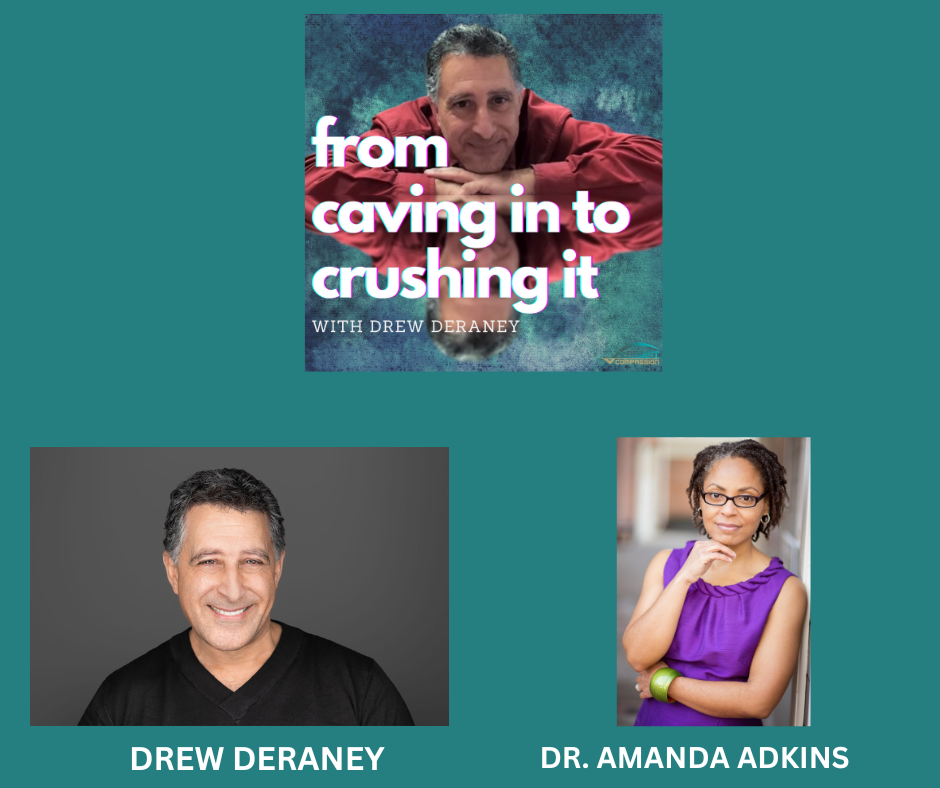
[00:00:09] Speaker B: The podcast for those who find themselves immersed in adversity and choose to write their story instead of having others write it for them. I'm Drew Duraney and I'm your host. Today's guest is Dr. Amanda Atkins.
Dr. Amanda Atkins is a double board certified internal medicine, lifestyle medicine, physician, health strategist, owner of Atkins Enlightenment Lifestyle Medicine. She has a deep passion for ensuring that everyone has a chance at a healthy and happy life. Her most recent focus has been to help women who are overweight prevent and possibly reverse chronic illnesses such as diabetes, heart disease, and high blood pressure.
Both through her medical and personal experience, she knows how our lifestyle can lead to remarkable changes in our health and our ability to fulfill God's will for our lives.
Enjoy the show. Dr. Amanda Atkins, it's so good to see you.
Hi.
[00:01:07] Speaker A: So good to see you again. I'm so excited to talk to you today.
[00:01:10] Speaker B: So am I. And I remember when we talked earlier a few better almost may have been a month or two ago. I've been looking forward to this. And we talked about how time flies. It's right now. It's, it's going to be the end of the December soon. We're, we're in the, you know, right now. It's like the December 9th, or it is December 9th and it's, it's going fast.
I always like to thank the person who introduces me to my guests, and this one is Kat Fleischman from Do Tell Public Relations. I want to thank you for finding us here on from Caving into Crushing it and introducing Dr. Amanda Atkins to me because she's a wonderful human being and the audience is going to get to see that and hear that right now. So thank you, Kat. Really appreciate it.
So the audience knows I always start after I do that introduction.
Thank you. I always talk about how when we're young, we're taught that life is linear. We're taught that life is a straight path. If we do A plus B plus C, D is going to happen.
And for the most part, it does.
Until something happens.
Right. It's linear until it's not.
Ultimately, an external circumstance comes in between one of those letters and it derails our straight path in life to a more circuitous route.
When that happens, that means adversity shows up. And with either we see the adversity or we don't see it. If we do see it, we have a choice. Do we meet it head on or we run away.
And with that scenario, I, I basically say there's three types of people out there. Three types of men, three types of women.
So with, with this episode today, I'm going to say there's three types of women out there. You have woman number one who has so many blind spots. She does not see that adversity. She just sees it as life going the way she was told to live it. And she doesn't change anything. And I don't have woman number one on this show. Then you have woman number two. Woman number two sees the adversity, yet she says the adversity is a barrier because she's the victim, everybody else is to blame. Life's doing it to her and she can't change anything. It is what it is. So she doesn't change anything. And you know what? On her deathbed, she has a ton of regrets. I don't have woman number two on the show either. I have woman number three on the show like, like Dr. Amanda Atkins. Woman number three has a heightened self awareness. She sees the adversity and she says, hold on, I am sick and tired of being sick and tired. This adversity is not a barrier. It's an opportunity for me to do something different, take massive action and become a stronger woman on the other side.
So with that, Dr. Atkins, if you could reach back as far as you need to for that defining moment, whether it was the tap on the shoulder, the whisper in the ear, or like what I needed, a 2x4 upside my head that transformed you from woman number one or two or both, to the woman you are now and how that transformation impacted you personally and then professionally. Care to share?
[00:04:13] Speaker A: Yes. So the way you put it, I would never have thought that my story would be something that would transfer my life to what I'm doing today. And I always go back to my own personal health story because I'm in healthcare.
But it was when I was a freshman in high school and at the time it was in the 90s. I grew up in Indiana and I had to get on the scale because they wanted us to weigh us and do our BMI and all that kind of stuff. And I weighed 199 pounds as like a 13 to 14 year old girl.
And that was so defining for me because I tell people, like, if it was already like 205, it probably wouldn't have been as much or if it was like 190, but because it was right there on that cusp of changing from one to two, it was like, oh my gosh, you know, what am I doing? And. And I had already knew that I wanted to become a physician back in the sixth grade. So I was like, okay, yeah, I want to do that just because of the way the human body worked. But at that time it was like more about my own health, like, what am I going to do to actually change my own health? So I'm not one of those doctors that's sitting there at £300 saying you need to lose weight because your blood pressure is too high, right?
And at that time I didn't know that that was going to be my story. I was like, I just didn't want to get heavier. I did not want to feel as bad as I did.
I did not want to necessarily have the illnesses that ran in my family like diabetes and high blood pressure because I would see like my grandmother's going through surgery and everything. And so I decided I was going to exercise. And you may think like, why in the world was a 13 year old girl not exercising at the time? Like, I only did it in gym class, otherwise I was sitting somewhere reading a book because I like to be by myself, introverted. And I was like, okay, I'm going to do exercising. And that helped me to lose some weight. But then what the big defining moment after that was, came like three years later. I was like, at the end of my junior year, I decided to become a vegetarian.
And again, this was in the 90s in Indiana. Vegetarianism, veganism was not something that we knew much about at the time, at least I didn't. And my father was a meat delivery truck driver at the time.
[00:06:25] Speaker B: So.
[00:06:25] Speaker A: So we had bacon, bologna, sausage, hot dog. Like hot dogs was a staple at every single birthday party. Like people knew when they came to our house for birthday parties they were having hot dogs, right? And so again, I didn't know it at the time, but like that was the defining moment for me because now later on I talk about plant based eating to help people, you know, prevent and reverse chronic illnesses. But it was that moment for myself that I decided I'm going to do something different for my own health. And again, it was more of like, I just wanted to do better, I wanted to feel better. I didn't know what it was going to end up. Like, I didn't know how long I was going to do it. And here, three decades later, I am still carrying on vegan, vegetarian, plant based eating habit and exercising on a regular basis, you know, and then helping others learn about the same thing. So it's amazing of how life turns out because that would not be my story. Like I, I wanted to be A cardiologist at first, because I just like, you know, the way the heart worked and that. That was the moment that in sixth grade that we learned about the cardiovascular system.
[00:07:28] Speaker B: Right.
[00:07:28] Speaker A: But it was my own health and my own defining change in my own health that made me want to switch over to doing lifestyle medicine.
[00:07:36] Speaker B: So. Wow. I love that. I love that story. And I'm curious how supportive dad was when you said, you want to be a vegetarian. He delivered meat.
How was that?
[00:07:50] Speaker A: So I tell people that I don't remember exactly, like, what the conversation was. I just know that they were like, both my mom and dad were like, well, you're just gonna have to figure it out. It wasn't like they're like, well, you can't do that. You're not gonna do that. It's like, you're gonna figure it out. I was the youngest of the three at the time in the household, so they're like, whatever. You're just gonna do what you want to do. But he still, you know, brought meat home. I just decided not to eat it.
But I tell people I don't think that they were not supportive, because I think that would have stuck out to me because I. I know I'm a very sensitive person, and if somebody would have said, you know, you have to eat meat. You got to do this, you got to do that, that probably would have stuck in my mind a bit more. But I don't think that was the case. And even now, like, my dad, he still likes to eat those foods, and we're trying to still work on him to change that habit. But.
But it's kind of funny, but I don't remember that they were saying that they weren't supportive, but it. I was thinking at the time it would have been more dramatic, I think, but it wasn't. It's just like, I just pick out the meat, and I'll do what I can in the meantime.
[00:08:54] Speaker B: Yeah. I give you. I give you credit at that young an age.
And I can understand when you see the scale right at that tipping point, that's going to stick in your mind and not. You're not going to want to go over the edge.
What was the first thing once you decided, like, how did you decide vegetarian in the 90s in Indiana? Like, had you read about it, had other people talked about it? How did that. Just curious how that came up.
[00:09:20] Speaker A: Yeah. So my cousin, who I love dearly, she was a vegetarian also.
She was in Indiana. But the biggest difference between me and her, like, she was an athlete, like, she already always did things her own way and was like, different in that way. So people expected that from her. Like, they're like, okay, but. But I was looking at her like, okay, she was an athlete. She was in shape. She. And like, she knew she was doing. She was. She's only two years older than me, so it's not like she. She was out in. In the medical field or something and knew about that, but it was just like, I saw how her body frame was and I wanted to model that.
And so I was like, okay, I'll try this and see, you know, what. What actually turns out from it.
[00:10:03] Speaker B: So that's great. Though. Many of us, when we want to change something, we don't look to people who already excelled and done well in that area. We'll just ask somebody in our family who is just. Let's ask mom and dad. If they've not executed it, though, that's not the best person to ask because they're probably going to say something different just to protect you. So the fact that you found somebody and happened to be within the family who had already done it, been there, done that, and you said, I want to be like that.
I give you credit for doing that.
And here we are.
So what was the biggest. I assume just the biggest change was just not eating meat. But was it that easy just to stop and find the foods you liked that met what your new guidelines were?
[00:10:51] Speaker A: So, no, because people ask me, like, how did you know what to eat? And I was like, I didn't. What I did was I would eat the foods that I normally eat and just take the meat out. So it's fine. Funny that I'll tell people my favorite meal at the time was a Big Mac with no meat. So, like I said, I didn't know how to put together veggies and things and cook my own meals. I still went to the places I went and I just said, don't put meat. Meat on this.
[00:11:14] Speaker B: Oh, my goodness.
No meat. I love that.
[00:11:18] Speaker A: Yes. And. And people were surprised. Like, it's like. It's a very good.
I still like that.
[00:11:27] Speaker B: When you take the meat out, what's left? You got the onions, you got the special sauce.
[00:11:31] Speaker A: Actually sauce, the cheese, the bread, and. Yeah. And the lettuce. Like it. I think it's the special sauce that would. That really did it for me because I was like, it wasn't just like ketchup and mayonnaise. It was that special sauce that got.
[00:11:44] Speaker B: That.
[00:11:44] Speaker A: Got it there.
[00:11:46] Speaker B: So imagine if you would be the spokesperson for McDonald's without the meat. That'd be kind of funny, like. But so. So seriously, once you, then, as you got older, I'm sure then you learned what was healthy to eat and what, what was best for you, because you don't want to lose muscle mass, you don't want to lose all that kind of stuff. So what did you finally do to actually get an idea of what's a balanced diet that's going to be healthy for you long term?
[00:12:14] Speaker A: Yes. So you'll be surprised that it was not. It was not anytime soon that I did that. So it was actually after I finished med school and residency, because before I was just. Yes. I would still just eat things that I would find that were. Did not have meat in there. Okay. I did not know how to put meals together and actually get a healthy diet. So again, most of the things that came out of what I do now is to actually find things for myself that was healthy.
But I did start eating, like, more vegetables. But as I went through med school, they had more of, like, vegan substitutes, like meat substitutes that were coming out. So I would do that to get things.
[00:13:00] Speaker B: And you lost the weight, obviously, at a young age, you were able to lose the weight that, that, that way anyway. And I'm sure it was a lot. Your mindset, you were, you were determined to lose the weight. So the determination led to the resiliency and the consistency. And then you were just be careful with what you ate. So I can, I can understand that.
So now you're putting that to practice in your, in your medical practice.
So what was the, what was the best thing you learned in medical school that could help you excel in this type of field?
[00:13:35] Speaker A: Nothing.
[00:13:36] Speaker B: Nothing.
[00:13:36] Speaker A: That's.
[00:13:37] Speaker B: I'm not surprised. Okay, this is interesting.
Okay.
[00:13:41] Speaker A: So people ask that, like, we do not learn about nutrition in med school. That's changing now. So I graduated in 2005. So nutrition was maybe one lecture in biochem.
That was it. Right. Because what we learned is how the body normally worked, the pathology that can occur, and then what treatment options that actually we could actually prescribe. Right.
They're doing better now, I can say years later. But it wasn't until after I finished and went and did like, continual medical education courses, and I was interested in nutrition and actually took a course with the Mayo Clinic with nutrition that actually learned more about different aspects of nutrition to actually implement those things in my diet. And that's when I actually started eating healthy. Vegan, Healthy vegetarianism.
Because before I tell people I was just a Junk food, vegetarian. I would just not eat meat and still eat a lot of processed foods. My favorite foods were Coca Cola and Doritos.
[00:14:47] Speaker B: So.
[00:14:49] Speaker A: So it's still, it still was out there. And it was like I said later on, after I finished through everything, of like when I decided to eat healthy. And I always like to give props to one of my patients.
He was an older gentleman that actually told me about Dr. Joel Furman, who is a nutritarian. And he gave me the title of his book, Eat to Live and actually got that book and then started to learn about actually how to eat better to actually prevent chronic illnesses. Because again, that was more my long term goal. So initially I wanted to lose weight and then I wanted to make sure I did not come down with like diabetes and high blood pressure and heart disease that ran in my family.
[00:15:30] Speaker B: So, yeah, something chronic.
For the layperson out there, what is the difference between vegetarian and vegan?
[00:15:38] Speaker A: Okay, so, so vegetarian is you don't eat meat, but you still eat animal products. So you still have dairy, eggs, cheese, things of that nature. Veganism, it can occur on two different levels. I tell people. So veganism to the extreme could be like, you don't do anything that has to do with animal cruelty. So whether that's the food that you eat, whether that's the products, skincare products, or any type of products that you use, your clothes. But if you look at pure veganism as a food, then you just don't have any type of animal products in your food at all. So that would include honey, that would include like gelatin and certain candies and things like that. But they're still not necessarily the healthiest. Because I tell people like Oreos are vegan.
There's nothing healthy about Oreos.
[00:16:27] Speaker B: Good point, good point.
[00:16:29] Speaker A: Because you think the cream, you think the filling is cream or dairy, but it's not. I don't know what it is, but it's not.
[00:16:35] Speaker B: Certainly not. It's not. Oh my gosh. So tell me what the best success story you have for one of your patients is.
[00:16:47] Speaker A: So one that I can think of is a lady that had high blood pressure and she's been dealing with this for a while. And she finally was given medication by her doctor.
And I worked with her initially for like 12 weeks and we were really working on her eating habits. She had done a few of my cleanses and then we did like a 12 week program for her and really working on eating more vegetables, really decreasing like saturated fat, decreasing salts for her, and then really working on her stress Level, because that, that played a big role. And we learned about that later during the 12 weeks. And then her. She went back to her doctor, and her doctor didn't even believe her medical assistant's blood pressure reading. She said, I have to check your blood pressure for myself because your blood pressure is never this good when you come into the office. She's like, oh my gosh, what are you doing? And she like, told her, you know how we were working together. She was like, oh, well, you need to continue to do that, because that's working very well. And it's just. It's just a few simple lifestyle changes that you can just make and that she was doing to implement in her life. And that, like, it made a big difference in her blood pressure.
So that's, that's usually the story I actually use because I work with her the longest and really trying to get different aspects of her lifestyle that she can actually, actually change to actually help with her blood pressure. Because I talk a lot about nutrition because that's where I.
I live. And that's made the biggest difference in my life. But it's not always for every single person. Nutrition is like, I would say 80 to 90% of issues for people, but then there's a few other things that could be changed to actually help with their chronic illnesses too.
[00:18:25] Speaker B: Right, that. And those isn't always food.
[00:18:28] Speaker A: Right, right, exactly.
[00:18:29] Speaker B: Could be exercise and sleep and all that kind of stuff.
[00:18:33] Speaker A: Exactly. Sleep is important.
[00:18:35] Speaker B: Oh, my gosh.
[00:18:36] Speaker A: People underestimate sleep.
[00:18:37] Speaker B: It's very underestimated. I wish we could take all the naps that we wouldn't want to take as kids and then push them forward to our adulthood. No, but you're right. You're right. The sleep is so important. And, and, and also, you know, sleep also helps with reducing inflammation.
[00:18:54] Speaker A: Right, exactly.
[00:18:56] Speaker B: That's. Inflammation obviously leads to pain, and that's like the biggest thing, you know, that we, we kind of underestimate.
So when you were in practice, did you get your MD or your do Maryland. Okay, what is the difference between an MD and a do?
[00:19:14] Speaker A: Do they do more manipulation type medic type care? So like osteopathic stuff? So like chiropractic. So you actually. The mix of like medical and chiropractor. And then they also learn more holistic type care than we do in, like, MD as far as practicing, they can do everything that MD does. Only in the US Though their degree is not recognized outside of the US So that's the biggest thing that I've heard the difference. I never Went to do school, didn't. Didn't even know it existed until I was actually out in practice. And people are like, oh, they're in do. And I was like, oh, okay, what is that? So, yeah, I had to ask them, you know, what was the difference?
But a lot of people like to see them, especially in primary care, because they offer things besides medication. Right. A lot of people don't want to just do medication. They want to do other care. And they actually learn that in school. And actually I can able offer that to their patients.
[00:20:18] Speaker B: And the reason I ask is I wonder that if you didn't have that 199 on the scale thing and then you still went to medical school, would you be where you are now? Like the type of doctor you are now with the more whole. You have more of a holistic approach than most md, I would think. Right?
[00:20:39] Speaker A: Yeah. And that's what they say. Yeah. And I don't think that would be the case because, like I said, it was more of, like, me actually learning for myself to do things for myself. And then people started to ask me, okay, what else can I do besides medication?
[00:20:52] Speaker B: Yeah.
[00:20:52] Speaker A: I was like, well, if I didn't do it for myself, I wouldn't have known because I wouldn't have looked into it.
[00:20:56] Speaker B: Right. And you said they don't. They don't really. They have one. One class in. In nutrition. You had to dive deeper than the one class. So. So, yeah, so it has a lot to do with your life experience as to what Dr. Somebody becomes, you know, you know, you find what you need to find to become who you want to be.
So what's the. What is the most challenging case you've seen for a patient before you're able to help them get to their goals?
[00:21:27] Speaker A: Most challenging patients, I want to say, a person that doesn't want to change, like, they only want medication, that's usually the hardest for me because I'm like, there's so much more out there. The medication only manages, and eventually you're going to get worse.
And that's usually the hardest for me to actually come to grips with, for people to. To actually choose that. Because usually in the beginning, I would give them a choice like, well, we could always just add in more medication, or we can, you know, make these two lifestyle changes. And I would get people to say, oh, just give me more medication. So then I just stopped giving them the choice. We're going to do both.
[00:22:10] Speaker B: We're going to do both.
[00:22:11] Speaker A: Both. We have to do both. Because I just couldn't couldn't go on. And I think, like, what am I really doing? Am I really actually helping them by just giving them this prescription?
[00:22:21] Speaker B: Right.
[00:22:22] Speaker A: And I couldn't live with myself. Even if they decided that they didn't want to make the lifestyle changes, I still had to, from my own conscious, tell them about what they're doing and how they can change and plant those seeds.
And then I would have some patients come back, even the ones I think not going to change. They're like, when I went to try to go eat my bacon, I heard you telling me that this is going to increase my blood pressure, you know, something like that. And so even the ones that I think will not listen and not change, like, I've learned that through the years, I still have to continue to plant that seed even if I don't see any of the changes that they make, that it will still come out some way somehow later on for them in their life and in their health.
And even if not them, they may actually say, may, it's too late for me. Even though it's not. They may go home to tell their, like, their children or their grandchildren and help them to do better.
[00:23:18] Speaker B: Absolutely, absolutely. I mean, there's, there's a time and a place for, for medication. There's some medication that really is really helpful and I believe the combination therapy of Western medicine, Eastern medicine, that's where we need to meet, I would think.
[00:23:31] Speaker A: Exactly.
[00:23:33] Speaker B: What are your thoughts about all the weight loss drugs? The ones with the injections of the world?
[00:23:40] Speaker A: Yeah. So again, I have mixed feelings because I actually still work with people and I actually do prescribe the weight loss medications.
And I tell them that it's not, it's not a miracle drug. It's not like you can still do whatever you want to do as far as lifestyle and take this, this medication and think that it's going to be okay. Like.
And I'm still surprised when people respond back and say, well, if I could do all those things, I wouldn't need the medication. I'm like, no, that's. That's not what we're telling you. That's not what we're telling you. It's just another tool in your toolbox that you can use in addition to the lifestyle changes.
And unfortunately, I've seen this with the weight loss surgeries also.
So back in the day when the weight loss surgeries became very big, I had patients that did that and they lost weight quickly because they didn't have to change anything.
And then they gained it back because they didn't change anything else. Right. And I tell people, like that's what's going to happen. Like the medication can only do so much. And you, this medication, do you want it for a lifetime? Because once you stop the medication, it does show that you will gain the weight back if you don't make other changes.
[00:24:50] Speaker B: Right.
[00:24:51] Speaker A: And so I just want people to know that because I was like, I'm not anti medication. I just don't use that as the number one thing to actually give you, to actually help transform your health.
And when I think about that and I always tell my story, I'm like, if these medications were available, because what I did when I was younger, I actually saved my lunch money to buy exercise equipment to exercise. I didn't, I didn't mention that. And I was like, would I be one of those people at that time? Like if I was my, you know, well, you had to be 18, but 18 year old self, would I have saved my money to like buy these weight loss medications? And I can definitely say that that possibly could have been me because I was like, I was just focusing on like, I just want to lose weight, I just want to lose weight. I just want to lose weight. And especially the times that you're getting like, you know, skinny is the way to go. That's beauty and all that kind of thing there.
So I like to really get out and really tell young women that, especially young women, because that was me that you want to make the changes for, for yourself, not for others, not necessarily just the way that you look, but for, you know, how you are on the inside to actually, like I said, prevent chronic illnesses that can come from being overweight, not just the number on the scale or just the way you look in clothes.
[00:26:12] Speaker B: Right. So I mean, individuals still need to be accountable for their behavior. And you're right. There's no magic pill out there. There's no magic injection out there. We still have to eat right and exercise and, and for a lot of people it's easier said than done.
[00:26:30] Speaker A: Right.
[00:26:31] Speaker B: If they want the lifestyle change enough though, they will do it.
[00:26:35] Speaker A: Yes.
[00:26:36] Speaker B: Whether, whether or not it's in combination with, with the medication.
So I love your approach. I love your approach though.
And is there anything else that we've missed that you want to let the audience know about your practice?
[00:26:52] Speaker A: Just that I'm open. I actually do focus a lot on Christians because I, that is my faith and I actually pull a lot of scripture to help with behavioral changes because usually people know what to do, but they need that that extra inspiration and where it comes from. So that is a really big part of my practice. So I tell people that and most people are drawn because of the scriptures that I use to actually help. A big one is your body is a temple. You should treat it as such.
So if you think about that and then you think about the foods that you're eating, like would you really want the trash to be all around your house and you know, you're, you know, have you know, the spirit of God that that's there within the mist. So and then we use a lot of other things to help. But that, that's the biggest difference I can think that people would see in my practice compared to some others.
[00:27:46] Speaker B: I love how you tie it. You can tie scripture and you're right, we all need that, that higher power that we're not in it alone. And so when you're reading from the Bible and reading scripture and putting it into a context of living your best life, I like that. Body is a temple. Right. It's just, it's our vehicle that's used. I love that. I love that. Well, I definitely. The audience certainly has captured the essence of Dr.
Amanda Adkins and they're going to want to get in touch with you and your website. Website's the best way to get in touch with Dr. Amanda. It's Dr. Dramandamd.com and what can they find on that website there? Dr. Amanda?
[00:28:28] Speaker A: So you'll find a few free resources of getting like healthy recipes because people always want to know what they can eat.
You can actually schedule appointment with me in certain states, 10 states I'm licensed in if you want like medical treatment and then I have coaching practice that you can be a part of whether what no matter what state you're in. So those three different aspects you can actually use to connect with me.
[00:28:55] Speaker B: That's wonderful, Wonderful. All right, so I have two final questions to ask of you. All right, the first one is you're sitting down with 7 to 10 year old Dr. Amanda Atkins. You're not actually at 7 to 10. You're not, you're just young Amanda right now. So you're sitting down with 7 to 10 year old Amanda and you want to give her advice about life. What are you going to tell her?
[00:29:21] Speaker A: I want to tell her to enjoy life as a kid, enjoy the journey.
Because I could say after I decided I want to become a doctor, that was my hyper focus and not to say I didn't have a good childhood, but I was just so focused on getting to a Certain point in life that I felt like. I feel like now that I didn't enjoy the journey along the way. I didn't enjoy a lot of things that people enjoy as they go through life. And so that knowing that you're going to get there, you're going to get to where you need to go, there's no need to box yourself in into one aspect of life and not think about all the other aspects of life that makes life enjoyable.
So have fun. Have fun. Laugh a lot.
Yeah, because I was so serious. Like my family still laugh at me as some of the pictures because of my serious face.
But, yeah, laugh a lot, which I'm still trying to do now. Laugh a lot and have fun.
And knowing that life is going to work out where you should be at 7 to 10. I never thought that I would be a doctor. I didn't decide I'm going to doctor until I was like 11 or 12. So like I said, life will, life will turn out like it's supposed to. But just enjoy the journey along the way.
[00:30:43] Speaker B: I love it. All right, so now you're sitting down with young entrepreneur, young businesswoman Amanda Atkins. What advice in business are you going.
[00:30:52] Speaker A: To give her that your voice matters again? I am introverted heart.
I was a person that did not like to speak.
And the more that you get your voice out there, the more you will hear that your voice needs to be heard. And don't wait, don't wait. Don't try to hide behind books and just go out there and speak because there's so many people that want to hear what you have to say.
[00:31:21] Speaker B: I love it. And I wouldn't have thought that you were an introvert when I, when I met you.
[00:31:25] Speaker A: Oh, goodness, yes.
[00:31:26] Speaker B: Way to go. Way to go. Well, Dr. Amanda, I want to thank you for coming on, coming into my life again. There's a reason why, why we met.
You have such an inspirational story and you're helping so many people out there in your practice and just being the genuine human being you are. And the fact that you smile consistently with a beautiful smile makes people feel beautiful themselves. So keep doing what you're doing.
[00:31:50] Speaker A: I appreciate it so much. Thank you so much for having me. I enjoy talking to you.
[00:31:54] Speaker B: It's my pleasure. Everybody out there, please take care of yourselves.
Thanks so much for listening. If you enjoyed the episode, please subscribe and give us a review. To help others find it, I'd like you to answer this question.
Are you living the life you want to live or are you living the life others want? You to live. I'd like you to think about that for a second, because I strongly suggest you live the life you want to live. If you want to learn more about what I stand for and my services and how I'm able to help many men get out of their own way, please go to my website at www.profitcompassion.com.
feel free to also email me at drewrophetcompassion.com I'd love to have a conversation with you.
Take care of yourself and choose to write your own story instead of letting others write it for you.