Episode Transcript
[00:00:00] Speaker A: Foreign.
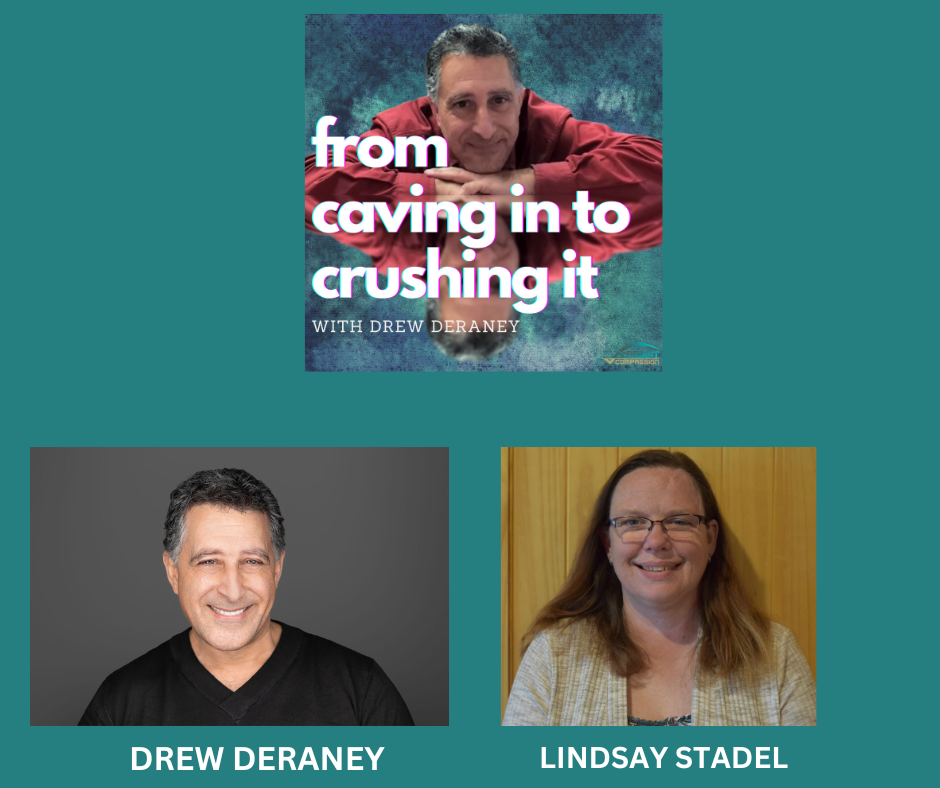
[00:00:09] Speaker B: The podcast for those who find themselves immersed in adversity and choose to write their story instead of having others write it for them. I'm Drew Duraney and I'm your host. Today's guest is Lindsay Stadel.
Lindsey Stadel is a devoted wife, mother and grandmother and and a highly successful entrepreneur. She manages four thriving businesses, Stottle Farms Incorporated, SNS Harvesting llc, Flint Hills Transport LLC and TLS Logistics llc.
Beyond her business accomplishments, Lindsay is deeply committed to mental health advocacy. Driven by her personal experiences with suicide and overcoming mental health struggles. Her mission is to support others battling mental health issues and suicidal tendencies. As an award winning author, she uses her voice and writing to address these important topics and she is now seeking opportunities to speak publicly to help fight the stigma surrounding suicide. Lindsay's journey reflects resilience, compassion, and a dedication to making a positive impact on others.
To learn how Lindsay can help your organization, connect with her today.
Enjoy the show. Lindsay, it's so great to see you.
[00:01:25] Speaker A: Thank you. It's nice to see you too.
[00:01:28] Speaker B: So I always love, before we hit record, getting to catch up on things and I'm, you really look good. I'm glad you're feeling better and we'll, we'll get into that kind of stuff. But I'm just happy to see you here with that smile on your face. It lights up the, lights up the room.
I always like to thank the person who introduced me to my guest, so this time, Emilio Roman. I want to thank you personally, my friend. Thank you for introducing me to Lindsay.
She's a wonderful person and you're a good judge of character, sir.
So my audience knows I always start out with saying that when we're young, we're taught that life is linear. It's a straight line. If we do A plus, B plus C, D is going to happen.
And for the most part, our lives are linear until they're not. Ultimately, an external circumstance will get in the way between one of those letters and, and derail that straight path into a more circuitous route in our lives.
And that just means that adversity has now reared its ugly head. And when adversity shows up, some of us see it and some of us don't. And for the ones who see it, we've got a choice. We either face it head on or we run away from it. And because of all this, I say there's three types of people in the world. Three types of men, three types of women.
For the, for the purpose of today, there's three types of women out There and women. Woman number one has a lot of blind spots. She doesn't even notice that adversity. She just living that life that other people told her, and nothing changes. I don't have woman number one on the show. Then you have woman number two. Woman number two does see the adversity. She considers the adversity a barrier, not an opportunity. She's the victim. Everybody else is to blame. Life's doing it to her, and she can't change anything. It is what it is. So she changes nothing. And on her deathbed, she's got a ton of regrets. I don't have woman number two on the show. I have woman number three on the show. Like Lindsay. Woman number three sees the adversity, says, I'm sick and tired of being sick and tired, says that adversity is not a barrier. It's an opportunity for me to do something different, take massive action and be a stronger woman on the other side. It's life doing it for me.
So, Lindsay, if you could reach back as far as you need to for that defining moment, whether it was the tap on the shoulder, the whisper in the ear, or like, for what I needed two by four upside my head to wake me up, what is that transformation for you that. That really impacted you personally and professionally?
[00:03:58] Speaker A: September 24th of 2017 was that day for me.
And I had been married for 12 years.
And on the outside, people would look in and see that I was happy that I had a husband, you know, two kids, a house, a career.
But what nobody saw was the inside where I was screaming.
And I decided that I was tired of pretending.
And so we got divorced in August of 16.
And after that, I turned into someone that I. I didn't know. I was lying. I was cheating, I was stealing. I was seeing two men at the same time.
One of them turned into my abuser in every way imaginable, and one of them turned into my rescuer. Literally, September 24th of 2017, I was with my rescuer.
We were driving around in his truck.
That's what we do out in the country, living in the country. You drive around in your truck, you drink, you listen to music, you talk, you have fun.
Well, that night, I knew that I was.
I had told so many lies, and I had hurt so many people.
I did not wake up that morning preparing to. To kill myself.
I. I had no intention of dying that day.
But something inside of me snapped.
And going 30 miles an hour down a gravel road, I decided to open the door and jump.
I don't Remember hitting the ground.
But I do remember opening my eyes in the hospital afterwards and thinking, why didn't it work?
And then very next thought in my head was, how do I explain to my kids what I did?
Because when someone's at that point, when someone gets to that point, they don't think about their family, their kids, their friends. They think about wanting the pain to stop, whether it be physical pain or emotional pain.
And that was where I was at. I needed the pain to stop.
And when I woke up, I realized what I had done, and I decided that that was not going to be my end.
I did die that night. I did.
But the new Lindsay was born.
And that was my decision.
That was my defining moment, because I decided to live through something that should have killed me.
[00:07:29] Speaker B: Yes.
How. How did you survive? Did that rescuer rescue you? Is that what happened?
[00:07:39] Speaker A: Basically, he did.
After I jumped out of his truck, he got me up. He saw that I was able to get up on my own.
I was talking to him. I don't remember any of this.
As soon as I grabbed the handle of his truck, I don't remember anything after that until waking up in the hospital about 24 hours later.
So he got me back to my house.
He called the ambulance, who in turn called the air life support, and they had to send me by helicopter to the hospital, which was about 60 miles away.
[00:08:30] Speaker B: Oh, my goodness.
[00:08:31] Speaker A: Okay. Yeah.
And I had a surgery because my face.
I landed on my face, essentially. And so my forehead, the skin from my forehead was ripped from my skull, hanging down in front of my face, and my head turned so violently that three of my nerves were completely torn from my spinal column.
And so my rescuer got me to the helicopter, saw me off, didn't know for two days if I was alive or not, because nobody would tell him.
So he is the reason why, to me, he is the reason why I am still here today, because he called the ambulance. He called emergency.
He could have just drove off and left me and nobody would have known.
[00:09:37] Speaker B: Right.
[00:09:39] Speaker A: But he did what he knew he needed to do.
Even though I was lying to him, even though I was cheating on him, he still rescued me that night.
[00:09:53] Speaker B: Wow.
That's unbelievable.
When you woke up in the hospital, do you recall who was there?
[00:10:03] Speaker A: The first face that I saw when I woke up was my mother's face.
And I could see the pain in her eyes. She was crying. She had already lost one child.
She had a stillborn baby in 1993.
So she had already lost one child.
And I almost made her Lose the second one.
And so she was standing there crying, and she asked me what happened, and still I was lying because I didn't want them to know the truth of what happened. I didn't want them to know that I tried to kill myself.
I wanted them to believe that it was a mistake, that I was trying to get away from him, even though he was the reason why I was still there.
[00:11:10] Speaker B: So at that point, the old Lindsay kind of was still there.
Yeah, because you still chose to lie and, and, and blame him. So, so what made the new Lindsay appear? When. When do you. When did that happen? And what was. What was really the. The reason for that, you think?
[00:11:33] Speaker A: The new Lindsay really appeared about two weeks later.
Because my family had an intervention.
See, most of my teenage years and most of my adult life, I was lying, okay?
I just, for some reason, did not feel like telling the truth was what I needed to do. I was lying to everybody.
And so my family had an intervention, told me that I needed help, and I knew that if I did not seek out help myself, that I was going to be ordered to by the court because of my children.
And so I committed myself to a mental health facility.
And at that point, I mean, there's nothing glamorous about healing behind a locked door.
You were on a schedule. You wake up, you have breakfast, you have your pills, you have group, you have individual therapy. You take your pills, you eat sep. You know, it's schedule. You have no freedom in there.
And so there was no reason for me to lie.
There was, you know, there was no reason for me to pretend like what I did wasn't what I did.
[00:13:05] Speaker B: Right.
[00:13:06] Speaker A: And so by telling the truth, the complete truth, for the first time in my life, it opened my eyes to the world and the life that I was supposed to be living in.
[00:13:26] Speaker B: Right.
At that point, did you forgive yourself or.
Or everything you did to others?
No, forgiveness was not part of the whole.
[00:13:41] Speaker A: No, no, I.
I did not forgive myself for probably about another three years after that.
Yeah.
My daughter, she was between 16 and 18 during this time of my life, and so she went through an intense mental anguish. You know, she had lived this entire thing. She knew what I did.
[00:14:21] Speaker B: And did you tell her initially or did you, since you lied to mom? So how did.
[00:14:29] Speaker A: I didn't have to tell her.
[00:14:31] Speaker B: I didn't have to. Okay.
[00:14:32] Speaker A: No, she knew because I had attempted twice prior to that. Okay, so she knew.
But my son, he was six, seven years old at the time, he didn't know. He just thought that I was In a vehicle accident.
[00:14:52] Speaker B: Right. Right.
[00:14:53] Speaker A: And it wasn't until I guess it was 2020, he texted me one morning on his way to school and told me that he and his father had gotten into a fight and that he didn't want to be here anymore. I said, what do you mean?
He said, if I knew the code to the gun safe, I. I would have killed myself last night. Oh, my God. And that.
That hurt me to know that my son was now feeling the same way that I did.
[00:15:37] Speaker B: Oh, boy.
[00:15:39] Speaker A: So I told him that he needed to go straight into his counselor's office when he got to school.
I called the school and talked to his counselor, so he knew that he was coming in to see him.
His father and I went and picked him up from school and took him straight into a mental health facility.
And it was there that I told him the truth of what happened to me or what I did to myself.
[00:16:13] Speaker B: Mm.
[00:16:14] Speaker A: And it was there that I saw him.
The way he looked at me changed.
He didn't look at me like I was broken anymore.
I think he knew.
I think in his mind, in the far back in his mind, he knew, but he was waiting for me to confirm it to him.
And once I told him what really happened to me or what I.
What. Not what happened to me, what I did to myself.
[00:16:50] Speaker B: Right.
[00:16:53] Speaker A: He.
Like I said, he stopped looking at me like I was broken, and he started looking at me like I was his mother again.
And he told me that he didn't care what I did because I was still here.
[00:17:11] Speaker B: No.
[00:17:12] Speaker A: And that he loved me no matter what.
And that was the day that I forgave myself because I knew that both of my kids forgave me for almost leaving them without a mother.
[00:17:26] Speaker B: Wow.
It's unbelievable. Sometimes we learn as much or more from our children as they do for. From us, you know?
[00:17:34] Speaker A: Yeah.
[00:17:35] Speaker B: But God bless your kids. They are so amazing and. And mature for their age, for the way they responded.
[00:17:44] Speaker A: Yes.
[00:17:44] Speaker B: You got to give you credit for that as your. As their mother.
So after you started the healing and the forgiveness piece, I know you've been in pain for so many years, physical pain because of the. Because of what happened.
And thankfully, I've been following you on Facebook and saw that you went in for surgery, and today you told me it was a success and you're no longer in physical pain like you were.
[00:18:12] Speaker A: That's correct. That's correct.
I suffered something called left post traumatic brachial plexopathy, which, in short, it's called a brachial plexus injury.
I had evulsions of nerves C7, C8, and T1, which means that those three nerves were completely torn out of my spinal column.
[00:18:42] Speaker B: Wow.
[00:18:42] Speaker A: And there's no fixing that.
[00:18:44] Speaker B: Okay.
[00:18:46] Speaker A: So my left arm. After the incident, my left arm was just flail. It just hung lifeless next to my body.
I had multiple surgery surgeries at Mayo Clinic to move tendons and muscles and reroute nerves into my left arm to try to get movement back, which I do have movement in my shoulder and in my elbow.
I do not have any movement in my hand.
But along with that came nerve pain.
It's kind of like phantom pain, like when a soldier loses a limb in battle and they have the phantom pain. That's exactly what this was. Because my brain was telling. Telling my body that.
Sorry. My brain was telling my body that something was wrong.
[00:19:47] Speaker B: Okay.
[00:19:48] Speaker A: And so the nerve pain felt like electric fire in my arm all day, every day.
So not only did I see the scars on my face, and I was reminded of what I did every time I looked at myself in the mirror, but I was also reminded every single second of every single day because of that nerve pain.
I couldn't get away from it. It would never die down. It would never shut off.
And so I had gotten a spinal cord stimulator implanted back in 2020, and that was supposed to help control the nerve pain, but unfortunately, it did not.
I was taking multiple prescription medications, and it started last summer, getting to the point that I couldn't even go outside without basically falling to my knees because a light breeze would shoot my nerve pain from a five to a 50.
You know, the. The ray, the sun rays, the cold, the heat, the.
The sleeve of my shirt, you know, if someone touched my arm, it was horrible.
My quality of life diminished rapidly, and my husband and I decided that we needed to try something else.
So we contacted Mayo again, told them what was going on, and we got in touch with a neurosurgeon who does a procedure called Drez.
It's D R E Z. It stands for dorsal root entry zone.
This procedure has been around since the 70s, but it's not very common. It's not widely known.
Basically, what they do is they cut into your spinal column.
[00:22:06] Speaker B: Wow.
[00:22:07] Speaker A: And they carterize those nerves that were torn.
[00:22:11] Speaker B: Right.
[00:22:13] Speaker A: And that essentially kills them, which is supposed to take that pain away. Okay.
Well, every single surgery is different for every single person. Right.
And so I was doing research, and I was seeing people who.
They had great success. They had some success. They had no success.
But I My husband and I got to the point.
My husband actually was my rescuer that night.
The man, the man that I. Yes, the man that I am married to today was my rescuer that night.
But he and I decided that, you know, what, what have we got to lose?
We, we're gonna take the leap and go have that procedure done.
[00:23:05] Speaker B: Okay.
[00:23:06] Speaker A: And so on December 31st of 25, which three weeks ago tomorrow. Wow.
I went under the knife.
And the evening of December 31st of 2025, I woke up a completely different person because my nerve pain going into the hospital was at a daily five.
You know, I had learned to live at a daily 5 pain level.
[00:23:39] Speaker B: Right. Oh my gosh.
[00:23:41] Speaker A: So I went in there at a five and I woke up at a zero. And I've been at a zero ever since.
[00:23:45] Speaker B: Yay. Oh my gosh. That is, that is amazing. I mean, because I was following you and I was so looking forward to talking with you and just to see that smile on your face is worth, worth it all.
So thank God you have a new lease on life without pain.
[00:24:03] Speaker A: Yes.
[00:24:04] Speaker B: And I don't like.
What kind of goals do you have now? Feeling as good as you do? I mean, do you have any personal goals or professional goals?
[00:24:18] Speaker A: Well, you know, on December 31, 2025, I am prior, I was just surviving.
[00:24:28] Speaker B: Yeah.
[00:24:28] Speaker A: Surviving from day to day.
[00:24:30] Speaker B: Right, right.
[00:24:31] Speaker A: And when I woke up that evening with zero nerve pain, I realized that I can start living now.
[00:24:38] Speaker B: Yeah.
[00:24:39] Speaker A: I have three grandchildren.
[00:24:42] Speaker B: Oh my gosh.
[00:24:42] Speaker A: A four year old boy and two. Two year old girls. Okay. And I'm going to be able to go outside and run around with them now.
I'm going to be able to actually enjoy getting together with people because I won't have to excuse myself into another room because my pains are so bad.
My goal now, number one, is to learn how to start to live my life with no pain. Good.
[00:25:16] Speaker B: Go.
[00:25:16] Speaker A: Yeah. Because I, I, I forgot what life was like.
[00:25:20] Speaker B: Yeah, absolutely.
[00:25:22] Speaker A: My second goal is to turn into the grandmother that my grandkids deserve.
And my third goal is to write my own book.
[00:25:38] Speaker B: Ah, there you go. There you go.
[00:25:40] Speaker A: Because I've got so much. You know, I was depressed, I was anxious, I was diagnosed with depression and anxiety. I was diagnosed with ptsd.
I, you know, I went through so much that there, unfortunately, not very many people survive something like that.
[00:26:00] Speaker B: Absolutely not.
[00:26:01] Speaker A: And I want to be able to prove to people that there is life after death for one, because I wasn't supposed to survive. So I, I, there's a reason why I'm here and I believe that my reason is to share my story with others, to help people realize that it's. Suicide's not the answer.
[00:26:31] Speaker B: Right.
[00:26:33] Speaker A: It is a very scary word. I will give you that. You know it, it is a very scary word, but it's not a bad word and it needs to be talked about as openly and honestly as having a flu or having a broken leg.
And I also want to help people notice the signs.
You know, there are all. There are signs of people who are having a mental health breakdown and there are signs of people who are contemplating suicide. And I was there and I didn't notice these signs, but my, my rescuer did and my daughter did, but they could not convince me not to do it.
[00:27:20] Speaker B: Right.
[00:27:21] Speaker A: So I want to be that person for others because I can honestly say I have been there.
I know exactly what you're going through.
[00:27:30] Speaker B: Right.
[00:27:33] Speaker A: So my goal is to write a book about my story that will also include, you know, signs, warning signs to look for, but will also include what my life is like.
Post pain.
[00:27:57] Speaker B: I love that. Now, how old is is your son now?
[00:28:01] Speaker A: He's 16.
[00:28:02] Speaker B: How's he doing?
[00:28:04] Speaker A: He's doing great.
[00:28:05] Speaker B: That's wonderful.
[00:28:06] Speaker A: Yes, wonderful. Yes. He is one of my biggest supporters.
[00:28:11] Speaker B: I can tell, I can tell that you guys have formed a tremendous bond.
[00:28:16] Speaker A: Yes, we have.
[00:28:17] Speaker B: And your daughter is how old now?
[00:28:19] Speaker A: She is 26 already and she's the
[00:28:24] Speaker B: one with the two kids.
[00:28:26] Speaker A: She's got one kid. She. She's got a two year old daughter.
[00:28:30] Speaker B: Okay.
[00:28:30] Speaker A: Huh.
And then I've got two bonus sons.
[00:28:35] Speaker B: Okay.
[00:28:36] Speaker A: Yes. And one of them is married, but they don't have kids yet. And then the other one has the son and the daughter.
[00:28:48] Speaker B: Okay, so you got three grandkids?
[00:28:49] Speaker A: Yes, yes. A four, four year old son and two two year old granddaughter. Or sorry, a four year old grandson and two two year old granddaughters.
[00:29:00] Speaker B: What a life you're leading. Now that's finished. That's fantastic.
[00:29:04] Speaker A: Yes.
[00:29:05] Speaker B: Professionally, what had you been doing? When. Before all this happened. And what are you doing now?
[00:29:12] Speaker A: Before all this happened, I was working outside of the home.
Different jobs. I never really could hold down a job.
But then after it happened, I tried to go back to work, but the pain was so severe that I could not.
And so my husband and I decided that I would not work out in corporate America anyways and that I would take over running the office for the four family businesses that we have.
[00:29:56] Speaker B: Okay.
[00:29:57] Speaker A: Because at least there I can get up and walk away from my computer or take a Break or you know, whatever I needed to do because of my pain.
[00:30:09] Speaker B: Right.
[00:30:10] Speaker A: And so that's what I'm doing now. My daughter and I run the office for our four family businesses.
And then our three sons work right alongside us. So all four of our kids work with us in some aspect every day?
Yes. We get to see our, all three of our grandkids almost every single day of the week.
[00:30:34] Speaker B: That's wonderful. So tell us a little about the four family businesses.
[00:30:38] Speaker A: Yes, they are all in the agriculture field.
[00:30:43] Speaker B: Okay.
[00:30:43] Speaker A: We have a farm and ranch.
[00:30:45] Speaker B: Right.
[00:30:46] Speaker A: We can run up to like 1500 head of cattle at any given time.
[00:30:52] Speaker B: Oh, wow.
[00:30:53] Speaker A: Yes. My husband's actually at a cattle sale right now.
[00:30:56] Speaker B: Okay.
[00:30:58] Speaker A: And then we have a silage chopping business which I don't know if you've ever driven by like a cornfield and you see this big huge green machine out in, inside of the field.
It could be a combine or it could be a cutter.
[00:31:18] Speaker B: Okay.
[00:31:18] Speaker A: We do both. But our silage chopping business is where we go out into these fields and we cut, you know, and we basically, we essentially turn these gigantic 10 foot tall corn stocks into fine little pieces for cattle feed or livestock feed.
[00:31:40] Speaker B: Oh, okay.
[00:31:41] Speaker A: Yes. And then we have an over the road trucking company where we haul cattle, not just ours, but for other people all across America.
[00:31:52] Speaker B: Right.
[00:31:53] Speaker A: And we also haul like feed commodities for livestock.
[00:31:58] Speaker B: Wow.
[00:32:00] Speaker A: And then the business that my daughter and I run is a brokering business where we find loads, like commodity loads for outside truck drivers to keep them on the road so they don't have to be hunting for loads themselves.
[00:32:18] Speaker B: Wow. You got, you guys are busy.
[00:32:20] Speaker A: We are very busy. And we have six employees that work for us year round.
[00:32:28] Speaker B: Okay.
[00:32:28] Speaker A: And then we have eight South African employees that come over throughout the year as well. So we have a very large crew.
[00:32:38] Speaker B: Absolutely. And all four of the businesses seem to work kind of together, like.
[00:32:43] Speaker A: Yes, they do.
[00:32:44] Speaker B: And they're all in the process pro. In the same like kind of process.
[00:32:47] Speaker A: Yes, yes, they're all in the agriculture field.
[00:32:51] Speaker B: Wow. So he's at a cattle, what is he. A cattle sale. What is he doing then? Like what is he actually selling or.
[00:32:59] Speaker A: Yes, today we're selling. Yes, he, he took our sons took cows to the, to the sale barn yesterday and they're being sold today.
[00:33:11] Speaker B: Okay.
[00:33:11] Speaker A: And then on Thursday there we're going to be selling like, I want to say it was like 125 head of cattle at the, at Thursday sale.
And he, he'll be buying. He was buying every Day last week. Basically, he was there looking to buy, I should say.
And I think he came home with almost 100 head of cattle last week. And so he'll be looking to come home with. With more this week. That's. That's kind of what he does. He goes and he buys and he sells every. Every month.
[00:33:47] Speaker B: Okay. Wow. How did I. I don't. I'm just learning this now with you. So how do you know when to sell and then when to buy and what you're buying? And how does that work?
[00:34:00] Speaker A: That is a great question. I love going to the sales with him because I learned so much. I was not born into the agriculture field. I was born a city girl.
It' that had four legs and mood was a cow. I. I didn't know that there was anything different besides, you know, a bull. I knew what that was.
But we typically buy calves that are between 400 to 500 pounds.
[00:34:31] Speaker B: Okay.
[00:34:32] Speaker A: And we. You've got to really look at them when they're in the ring being sold, because if. If they. If their ears are droopy, then they're probably sick. They might have something wrong with.
Really got to look at them as they're in the ring.
But, yeah, we usually buy in between 400 to 500 pounds. We bring them home, we feed them for about 60 to 90 days.
[00:34:57] Speaker B: Okay.
[00:34:57] Speaker A: And then once they're between 750 to 900 pounds, we take them back and we sell them.
[00:35:04] Speaker B: I see. Okay. All right. That makes sense.
[00:35:07] Speaker A: Yes.
[00:35:07] Speaker B: Any other animals you have on the farm, or is it specifically the cows?
[00:35:11] Speaker A: We have some horses.
A couple of the horses. See, the two older boys used to rodeo, and so a couple of the horses are, like, trained for rodeo, but they're all just leisure horses now.
[00:35:26] Speaker B: Right, okay.
[00:35:27] Speaker A: Yeah.
[00:35:28] Speaker B: That's wonderful.
I love, I love. I love hearing that, Hearing that. And then so. So that's it? Just the horses and the cows, you know?
[00:35:35] Speaker A: Yes.
And the huge pack of dogs.
[00:35:39] Speaker B: Gotta have the dog.
[00:35:40] Speaker A: I'm sure you've heard. We've got one dog.
My daughter, she has two. Our second oldest son has two. Our oldest son has one. Our employee, one of our employees, has one. Who's here? He's. He's. Actually, I'm. I'm puppy setting this week because he's over the road. So that's. That's the dog that keeps voice, you know, making his voice heard while we're talking.
He loves being part of the conversation.
[00:36:10] Speaker B: He's more than welcome.
Oh, my goodness. Wow. This has been amazing. And the audience, I'M sure has captured the essence of Lindsay Stadel and they're going to want to get in touch with you. So, folks, two ways. Go onto Facebook, Lindsay's personal page. You'll find her easy to find Lindsay Stadtle there. Or you can go to her Facebook group. And is it, is it public group to join?
[00:36:33] Speaker A: It is a public group, yes.
[00:36:35] Speaker B: It's called you are enough. Just like on the, this, the sweater that she's wearing right now.
[00:36:40] Speaker A: Yes. And the COVID page of the group is this black wristband.
[00:36:47] Speaker B: Okay.
[00:36:47] Speaker A: That says you are enough.
That way you know that you're at the right group.
[00:36:52] Speaker B: All right, so black wristband that says you are enough. And that's the correct Facebook group. Thank you, Lindsay. Thank you. Thank you.
[00:36:58] Speaker A: Yes.
[00:36:59] Speaker B: Two other two last questions for you.
Okay, so the first question is, you're sitting down with 7 to 10 year old Lindsay and you want to give her advice about life. What are you going to tell her?
[00:37:12] Speaker A: Always tell the truth.
I, I don't remember a time in my life where I wasn't lying about something. You know, I, it just, it goes all the way back as far as I can remember. I, I was never able to just tell the truth all the time.
And so I would tell her that there's nothing that you can do that's so bad that your parents will be that mad about, you know, if you tell the truth the first time, they'll be happier than if you lie.
[00:37:54] Speaker B: Right.
[00:37:55] Speaker A: And then have to follow up with the truth later because they found out.
[00:37:59] Speaker B: Absolutely.
[00:38:00] Speaker A: So always tell the truth.
[00:38:03] Speaker B: All right, switch hats. And now you are speaking with young Lindsay, the young businesswoman, young entrepreneur, and you want to give her advice about business. What are you going to tell her?
[00:38:13] Speaker A: Oh, my goodness.
I think what I would tell her is to go in, jump in the pool with both feet because there is so many people out there who can benefit from not only your personal story, but also your professional story.
Because see, when, when my husband and I got together after my incident, we only had two businesses.
So since 2020, we've started two other businesses.
[00:38:52] Speaker B: Right, right.
[00:38:53] Speaker A: And so there's so much knowledge that I have that I can share with people that I would say, like I said, jump in with both feet and, you know, hit the, hit the ground running. Like I've said before, watch out, world, here I come. I'm pain free.
So I would tell her just to, to go, go for it. Whatever you decide you want to do, whatever your passion is, go for it, because nothing can hold you back anymore.
[00:39:28] Speaker B: Great. Advice.
Well, I. I admire you. You're an inspiration, Lindsay, and I thank you so much for coming on and coming to my life. Emilio, thanks again for the intro.
Keep doing what you're doing, Lindsay. Amazing human being, amazing mother, amazing wife.
Great job.
[00:39:46] Speaker A: Yes. Thank you. Emilio will forever be part of my redemption story.
I love that man to death. Him and him and his wife Daniella, they will always be part of my redemption story.
So, yes, my little shout out to Emilio and Daniella. I love you guys to death. And thank you for trusting my story to thank you for publishing my story and. And allowing me a platform to tell it on. And same with you, Drew. You. You have changed my life as well, because you're letting me tell my story.
You're letting me be raw and real.
[00:40:29] Speaker B: Well, I'm grateful to have you in my life. So thank you. Thank you, everybody out there. Please take care of yourselves.
Thanks so much for listening. If you enjoyed the episode, please subscribe and give us a review. To help others find it, I'd like you to answer this question.
Are you living the life you want to live, or are you living the life others want you to live? I'd like you to think about that for a second, because I strongly suggest you live the life you want to live. If you want to learn more about what I stand for and my service and how I'm able to help many men get out of their own way, please go to my website at www.prophetcompassion.com.
feel free to also email me at drewrophetcompassion.com I'd love to have a conversation with you.
Take care of yourself and choose to write your own story instead of letting others write it for you.