[00:00:00] Speaker A: Foreign.
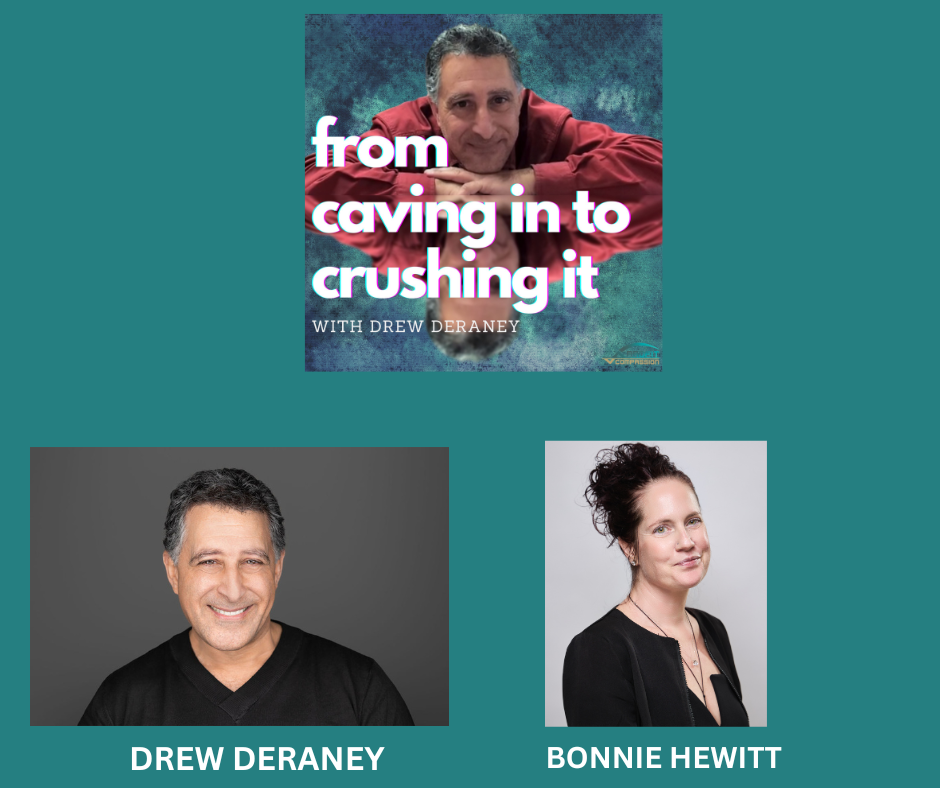
The podcast for those who find themselves immersed in adversity and choose to write their story instead of having others write it for them. I'm Drew Duraney and I'm your host.
Today's guest is Bonnie Hewitt.
Bonnie Hewitt says we teach money.
She's a licensed financial educator and life insurance professional.
Building our next leaders. Helping individuals and agents align purpose, protection, and prosperity.
Bonnie says you can't let life get in the way of living.
Today, as a partner with hall of Famer Marshall Falk and entrepreneur David Meltzer at Virtuity Financial Partners, Bonnie helps individuals and agents create financial stability, protect their families, build generational wealth, and align their money with their mission.
In 2011, her entire life came to a halt. This solo mama building an accounting career from home was suddenly struck down by a rare illness that initially left her paralyzed.
Guillain Barre Syndrome attacked her immune system and attempted to take her out. It didn't succeed. Over the next 14 years, Bonnie transcended multiple chronic health conditions, welcomed two more children, and even tried to return to her old life. But the universe had other plans. Healing wasn't just recovery. It was rediscovery of body, mind, soul, and purpose. That rediscovery sparked a new chapter of leadership and freedom. She built a vision for her life rooted in impact and intention, started a business, and pitched her way to winning $50,000 on David Meltzer's Bloomberg TV show Two Minute Drill.
She's turned adversity into impact, earning the 2023 Pittsburgh Steelers woman of Steel Game Changer Award and founding Unbreakable Stories and Posh Notions where creativity and empowerment inspire others to rise. Still healing, still growing, still leading. One cup of dark coffee and one conversation at a time.
Enjoy the show. Bonnie, it's good to see you.
[00:02:17] Speaker B: Hey, it's great to see you, too.
[00:02:20] Speaker A: So I always love how we get to talk before we hit record because we get to catch up on things. It's. And you're right, we could have hit record and just had the whole episode in the. In the. In the pre recording piece. But it's all good.
I always thank the person who introduced me and. And even though he didn't introduce us directly, it's because of him. And it's Jason Croft, who I owe a phone call to because I haven't talked to my brother from another mother in a long time. So. But Jason either posted something and I commented on it. I think that's what it was. And then Bonnie commented on it. That's how we got to meet each other. So it's the power of LinkedIn when you use it appropriately. So thank you, Jason. Indirectly.
So the audience. You guys always get used to me talking in the beginning of an episode that when we're younger, we're taught that life is a straight line. It's linear if we do things the right way. And if we do A plus B plus C, D is going to happen. And, you know, it's not a malicious teaching. People want that for us. And for the most part, our lives are linear in the beginning, until they're not.
Until that external circumstance or multiple circumstances kind of gets in the way of one of those letters and derails that straight path to a more circuitous one.
And that's really when adversity rears its ugly head. And when adversity shows up in our lives, we either see it or we don't. And that's what made me really think about that. I believe there's three types of people out there. There's three types of men, three types of women. You got woman, man number one, who's got so many blind spots, they don't even see the adversity when it pops up because they're so used to living a life that people told them to live that they just think that's just part of life, and they go about their business without changing anything. And I don't have man or woman number one on this.
Then you have man or woman number two. They see the adversity, yet they believe they're the victim. Life's doing it to him, to them. They can't change anything. It is what it is. And adversity is a barrier that they can't change. And they don't make any changes. And unfortunately for them and for others on their deathbed, they've got a ton of regrets. And I don't have man or woman number two on either. I got man or woman number three. I bring on the show, like Bonnie Hewitt. Man or woman number three.
They see the adversity, and they say, I'm sick and tired of being sick and tired. They see adversity now as an opportunity to do something different, take massive action and become a stronger person on the other side. Life has now done that for them.
So, Bonnie, with that philosophy, think back as far as you need to go for that defining moment. Whether it was the tap on the shoulder, the whisper in the ear, or like, what I needed two by four upside my head that transformed you from that woman. You used to be the woman number one or two or both, to the woman you are now and how that transformations has impacted your personal life and your professional life. Would you care to share with us?
[00:05:16] Speaker B: Yeah, and I'm trying to think, I mean there's been two by fours is very relatable by the way.
I think I've, I've had, I've had multiple versions of that or points of that throughout my life that have.
Not to go super like in depth, but I have like many other people, unfortunately, trauma that stems back to childhood. Right, right.
And to your, to your point, I, I was, I was oblivious to it. Like I didn't even understand that that was an issue. Like what was going on was kind of an issue until I got much, much older and, and learned that those things weren't exactly right per se.
But I tend to be a person overall who wants the thing is, is done and over with kind of like, oh, that's a blip that happened. We're moving on. Right. So there was a lot of those types of situations in my life. I kind of grew up with, with a dad who, you know, don't cry about it, move on type of situation.
[00:06:22] Speaker A: Right, right.
[00:06:24] Speaker B: Like, it really wasn't that bad. Like whatever it was, there's a lot of minimalization going on.
But I think the most. There were two very big ones for me and one was when I got sick in 2011 with Gain Barre syndrome, which initially left me paralyzed.
[00:06:37] Speaker A: Oh, wow.
[00:06:40] Speaker B: And you know, I was, I spent about two and a half, three weeks in the hospital, ended up going to rehab, learning how to walk and talk and eat and all the things again.
Um, and still came home and was like, yeah, that was a blip that happens. Moving right along. Like I tried to go right back to work. Um, it's a very. I don't even know if it's an. You would consider that like an optimist attitude. It was more of.
What's the word I'm looking for.
It was almost like a. Just a delusional disregard for what had happened. Right. It.
They completely like, yeah, that, that was, that was no big deal.
And then the most recent one, I would have to say was walking away From a nearly 22 year abusive relationship with my ex.
And that in that moment I made a very conscious choice though, however, that I wasn't doing what happened I had been doing for so long and I was going to move on and kind of figure out what was going to happen next.
Like, I'm not doing this anymore. In fact, I love the way you phrase that because a lot of the best Decisions that I've made have been. I have no idea what the hell I'm gonna do next, but I'm not doing this anymore.
[00:07:59] Speaker A: Yeah, absolutely.
[00:08:00] Speaker B: You know.
[00:08:01] Speaker A: Yeah, definitely. So the getting back to what was the illness you had?
[00:08:06] Speaker B: It's called Gambire Syndrome.
[00:08:08] Speaker A: What it. What is that? For the people out there? There's no. Who don't know what it is.
[00:08:11] Speaker B: So it's where the immune system. It's an immune system attack, essentially.
And I'm learning more about it now because I was actually told by one doctor a couple months later that there was no way I could have had it because I didn't have the symptoms anymore.
So it disregarded it for a long time. That didn't even have. That didn't even happen to me. Right.
But it's where the immune system starts to essentially attack itself, and it can cause things from extreme pain, it can cause paralysis.
I mean, and in some cases, it actually leads to death.
But, yeah, it's.
It was a very interesting time in my life, for sure.
[00:08:57] Speaker A: All right, so you said that's. This is back in 2021, which is not that.
[00:09:01] Speaker B: 2011.
[00:09:02] Speaker A: 2011, 2011. So that was. Okay, so you're talking about 14, 15 years ago, going back to that time, what type of stress may have been your. Because I know you and I talked about the effects of stress on our bodies, and if we don't address it, it tends to turn into something physical. So can you recall the stress level of your life back then?
[00:09:23] Speaker B: Yeah, I don't even think you could put a number on it at that point. I mean, I was a single parent.
Two kids at the time, 9 and 11, boy and a girl. And my oldest has autism, among other challenges that he was dealing with at the time. And I ended up working from home that summer because I couldn't get childcare. And so I had the two of them at home running around doing what kids do, on top of the fact that we didn't even know at the time that my son had autism. He was just having some behavioral differences, difficulties, challenges, whatever, PC, however you want to put that. He was struggling, I was struggling, his sister was struggling.
And then he was also going through. I mean, he was 11, so he was also entering, you know, puberty and all that fun stuff. So hormone changes, things were all over the place.
[00:10:10] Speaker A: Absolutely.
[00:10:13] Speaker B: So I was trying to make ends meet. I was working as an accountant, which is. Can be highly stressful in and of itself at a time when most people weren't working from home.
[00:10:23] Speaker A: Right.
[00:10:23] Speaker B: In a Situation where my home life was somewhat chaotic.
[00:10:26] Speaker A: Right.
[00:10:28] Speaker B: So that's just like the tip. Right. Of the iceberg.
Yeah. My nutrition was off. I mean, everything was just.
Nothing was ideal by any definition of the word.
[00:10:42] Speaker A: Absolutely. So yeah, I mean, he. How old. So how old is your son now?
[00:10:47] Speaker B: He just turned 26.
[00:10:49] Speaker A: 26. So I've got a 23 year old with. On the autism spectrum too. So that puts something in common with us.
Think about way back then.
We didn't really know much about autism back then. Or. And before we hit record, we were talking about finding services for kids in, in that age. Because you said he was diagnosed at around age 11.
[00:11:10] Speaker B: He was diagnosed in 2012. So after I got sick.
Yeah. There he had been. We had been using mental health services, wraparound services.
[00:11:22] Speaker A: Right.
[00:11:22] Speaker B: I mean, had people at my house four or five days a week. Behavioral health, you know, all of the things.
[00:11:27] Speaker A: Right. Yep. And. And with that, that, that had to that stress level. You said the tip of the iceberg when you started getting sick. I mean, I give you a lot of credit because the resilience you have still taking care of your two children and being sick.
What, what ended up happening with, with the kids while you were in the hospital,
[00:11:49] Speaker B: interestingly enough.
And I, I now believe it's the first time I'm sharing this publicly. I now believe that part of this kind of full body shutdown, it's the best way I can describe it.
[00:12:02] Speaker A: Yeah.
[00:12:04] Speaker B: My now ex and I had been split up for six years at that point. So we were together, we split up and we had just talked about reconciling. And within a couple of days is when I ended up getting this mysterious illness. Right.
Yeah. So I, part of me wonders, I mean, I don't blame him, it's not his fault. But part of me wonders if it wasn't my body trying to kind of like put up a warning sign of like, hey, why are we doing this again?
[00:12:30] Speaker A: Okay.
[00:12:32] Speaker B: And ultimately it turned out to not be the best choice. But he ended up taking the kids for the, for those couple of weeks, thank goodness.
And then they were going back to school. They went back to school a couple of, I think a couple of days after I got. Initially went into the hospital.
[00:12:52] Speaker A: Okay.
[00:12:54] Speaker B: But when I came home, that was a completely different story.
He had left.
He went to Texas. And so I was at home with both of my kids alone.
And it was a lot of asking them for help.
Like I couldn't walk on my own.
[00:13:12] Speaker A: Right.
[00:13:13] Speaker B: They ate a lot of Chef Boyardee for a Period of time, say they
[00:13:17] Speaker A: had to fend for themselves.
[00:13:18] Speaker B: Yeah. I mean, luckily, 9 and 11, everybody thinks little, little kids, but like my 9 year old and my 12 year old know how to cook. My 9 year old, I just taught him how to cook multiple different things. But like, I, if you can imagine, like, I couldn't really lift myself, so I wasn't able to lift a pot of boiling water.
[00:13:32] Speaker A: Right, right. Yeah.
[00:13:34] Speaker B: I just physically couldn't do it. And it would have been a safety issue. So it was, it was a lot of just pushing through. I had learned my whole life to just keep pushing. Pushing.
[00:13:45] Speaker A: When you're in the hospital, what was your mindset to be able to allow you to get out at least and be honestly?
[00:13:52] Speaker B: I was like, I gotta go home. I was like, I'm pissed to be here. I don't want to do this anymore. Like, I didn't give myself an option. Like, I didn't know I wasn't supposed to be able to make it home until like a year later. One of the doctors was like, hey, you know, you weren't supposed to make it out of the hospital. I'm like, that thought never crossed my mind. It was, I got to get home. Like, I have stuff to do. I have work, I have kids, I have a house to clean. Like, yeah, it.
All my thoughts were, I've got to get out. What do I need to do to get out of here?
[00:14:25] Speaker A: Okay, okay, well, so. So you make it home. Trouble walking? Your kids are growing up fast because they have to. Because. Because mom can't do the things they're doing.
When did you finally get back to, quote, unquote, normal physically?
[00:14:44] Speaker B: I.
I don't know.
I mean, it took a good six months just to really be able to walk any length of distance, like down the sidewalk and back. Right. And so.
[00:15:03] Speaker A: Right.
[00:15:05] Speaker B: But again, I was, I was pushing. There was never a.
A thought in my mind that this wasn't gonna happen. Like, I had doctors telling me, oh, well, you're gonna be stuck with this for the rest of your life. Oh, we don't know what's wrong with you. Oh, this diagnosis, that diagnosis. And it did end up resulting in, not that I can say one cause the other for sure. But I ended up diagnosed with fibromyalgia. I ended up diagnosed with rheumatoid arthritis. I ended up diagnosed with several other autoimmune conditions in the beginning, in the first couple of years after that.
[00:15:38] Speaker A: Right.
[00:15:40] Speaker B: But again, I was, I was hell bent on pushing, like, make forcing things to happen. Which I'm gonna say wasn't the right thing to do, because it actually kind of put me backwards, to be honest with you.
[00:15:54] Speaker A: Yeah. And I can. I could see why. Now, if we look at the way we talked about the woman number one, two, and three, that's still a lot of blind spots there. You were not.
So we're still woman number one.
And at what point did you start to. Did you ever. You ever end up transitioning into playing the victim and blaming others? Because you're not that way now.
You don't blame others. You take full responsibility. But was there any time. Where did you go from woman number one to woman number three?
[00:16:24] Speaker B: I think in some areas, there were things that I was upset about. Like, I was upset with my previous ex for leaving me with a bunch of debt. Not the same guy.
[00:16:32] Speaker A: Right.
[00:16:33] Speaker B: I was upset with people for very specific things that they had done.
[00:16:37] Speaker A: Right.
[00:16:38] Speaker B: Or not done.
I think the closest I came to that was being upset with myself after my ex finally did leave this final time a couple years ago.
[00:16:54] Speaker A: Okay.
[00:16:55] Speaker B: Because I. I put up with things for so long. So I wasn't blame. I wasn't even blaming him. It was like, I can't blame him for being who he is.
[00:17:03] Speaker A: Right.
[00:17:03] Speaker B: I'm upset with myself for putting myself through this for as long as I did. Like, why didn't I see the signs kind of back to the woman number one.
[00:17:11] Speaker A: Right. Right. You know, and then I did talk about other. A lot of other stuff, but. So let's say you're kind of like, blaming yourself. So at this point. And how did you get out of that?
[00:17:27] Speaker B: Yeah. The last two years have been heavy, heavy, heavy on.
I'm not even gonna say. Rebuilding myself worth and building myself worth. Learning what self love really looks like.
[00:17:40] Speaker A: Right.
[00:17:41] Speaker B: Going inside a whole lot. I mean, when my ex left, I went radio silent. Like, I used to do interviews like this all the time. I had a blast. I was very social and. And on social media.
And I very consciously said, I don't want anybody's opinions, outside influence. I don't want to share because I'd never, ever given myself the opportunity or the chance to figure out what do I want? Who am I? Sure. Like, you know, that was probably the closest thing to what you're asking or what you're describing that I can really identify with.
Taking the radical accountability for the part that I played in the things. Although I'm not condoning what went on by any means.
[00:18:33] Speaker A: No. Nope. There's accountability on both sides. Right.
[00:18:36] Speaker B: Right. I could have at any point in time, chosen to walk away. Like, yes, there would have been consequences for that, but I could have done that. That was an option, you know.
[00:18:47] Speaker A: Right, right. But, you know, we, we, you and I talk before we hit record about forgiveness, about, you know, saying no and worrying about what the consequences might be and all this kind of stuff. But you do it, did a lot of inside work within, and you found you were able to heal from within using a lot of different skills. What are some of the skills that you used to kind of build yourself up to forgive yourself from stuff that happened in the past and then how to wipe out anxiety for what the future might hold?
[00:19:24] Speaker B: That's a two part question. And they're kind of backwards for me because I. So, so going back a little bit, you know, I built a comp. A business in another space making custom apparel. Landed me on a TV show. Ended up doing a bunch of interviews after the TV show in 2021.
And I bring that up because we went back and we talked about my story, and time and time again, people were like, wait a minute, how did you go from being this depressed, anxious mess, dealing with all of these different, you know, health struggles and mental health challenges and all the things to going on tv. And through all that, I discovered that I had kind of beat my own anxiety. Right. And so I built a program to help other people with that in that time frame.
So being able to beat the anxiety while still in the chaos of a somewhat abusive relationship prepared me for everything else that was about to happen.
So I had, I had kind of built the tools while in the fire and then used the tools to get me through the next few years. In addition to that, I confided in a couple of people who was. I was really close to. I didn't go public, I didn't share it with everyone, but there were a couple of people that I trusted. Their input and I could rant or go off or, or whatever I needed to do. There was a safe space there.
But all these people are also the kind of people, they'll give you kick in the butt at the same time. So there was that. Yeah, Last year, specifically, I.
I had a. I had a total hysterectomy in March.
[00:21:05] Speaker A: Okay.
[00:21:06] Speaker B: And within that process was like, okay, I'm gonna get the healthiest I've ever been. And so I started doing dynamic meditation every morning. I integrated some exercise. Right. Once I was cleared to go back to that. And then shortly after that, I started the Somatic Healing dance class that I take.
[00:21:22] Speaker A: Okay.
[00:21:23] Speaker B: Seven days a week. So that was a huge component for me because in contrast to traditional therapy, where we spent a lot of time talking about the thing and bringing the thing up over and over again, which can be very harmful for a lot of people, and honestly kept me stuck for 15 plus years, you. You end up bringing the stuff up and out without having to think about it.
[00:21:47] Speaker A: Right.
[00:21:47] Speaker B: So you start detaching the feelings that are in your body from the thoughts and the stories that you create about them. And that for me, was, was very, very, very instrumental in my healing.
And it also has the great benefits of, you know, the healthy, the healthy body and losing weight and the mental health and, and, and, and so all of that kind of worked together, right?
[00:22:11] Speaker A: Yeah. There's no, there's no magic. There's no one magic pill.
[00:22:15] Speaker B: No, there's not. There's one. There's a lot of other things.
[00:22:17] Speaker A: Aspects. Yeah.
[00:22:18] Speaker B: Yeah. Like, I'm fortunate to have a very supportive group within the team that I'm building. And, you know, the work that I do and my job is to help other people, so I'm able to refocus if I'm having a day.
[00:22:30] Speaker A: Right.
[00:22:30] Speaker B: You know, my focus goes back to service and so I can kind of get out of the pity. So there's a lot of different things that I built in.
[00:22:37] Speaker A: Yeah.
[00:22:38] Speaker B: In order to get to where I'm at now.
[00:22:40] Speaker A: It's interesting because when we think about what you were doing professionally was doing accounting work back in 2011, 2012, before you got sick, and then you transitioned from the accounting work to be an anxiety coach at some point. Correct?
[00:22:54] Speaker B: I did do that for a short period of time. Yeah. From like, like all of like maybe 18 months from 2021 into 2022, because
[00:23:05] Speaker A: you were living it. And so with. I know what you're doing now is you're in the financial industry still doing accounting stuff, or is it more financial wealth management or something like that?
[00:23:16] Speaker B: Yeah. So we're, we're more in the financial services space. I mean, I don't do accounting work anymore. I mean, I'm familiar with it and it comes in handy having that knowledge.
But what I found is the work I was doing as an anxiety coach was. I was doing within the space, coaching people on finances. And so I stop trying to separate them.
[00:23:36] Speaker A: Good for you.
[00:23:37] Speaker B: Two completely different things. And it's kind of integrated. Yeah.
[00:23:40] Speaker A: Right, Right. So tell us. Yeah, so tell, tell us about what you're doing now with the financial industry and, and, and, and it'll, it will help how you incorporate the anxiety coaching with, you know, what, what's our relationship with money? Because as I know, that's a big deal.
[00:23:57] Speaker B: Yeah. So I work in the financial education space.
We do everything from teaching people basic budgeting all the way through, say, life and life insurance and annuity type information, all the way through securities products. Now, I'm not securities licensed, but there are people on our team who are.
But there's a large portion of the population whose anxiety is wrapped up in finance or wrapped up in money, whether it's not enough money or they don't know what to do with their money or, you know, are they going to have enough money to retire? All of the different things.
And so we're able to alleviate that through the work that we do because we work very closely one on one with our clients or with it with their families.
And we also do work in group situations as well. But when you're working one on one with somebody, you're able to identify kind of what's going on, get a holistic view of what's going on with them, and then help them with the financial anxiety without highlighting the financial anxiety. So I don't have to put a spotlight and be like, oh, you're anxious about your money. Right. Which, what is it going to do? Make people more anxious.
[00:25:03] Speaker A: Right.
[00:25:04] Speaker B: I can just guide and kind of through the words that I use and the conversations that we have, just help alleviate some of that and give them a strategy and a plan for what they're going to do, which in turn also, you know, have. Not having a plan is a big part of the stress and anxiety that most people have when it comes to finance.
[00:25:23] Speaker A: And that's, that's so true. What's the, the common phrase if you fail to plan, you plan to fail?
[00:25:29] Speaker B: Basically, yeah.
[00:25:30] Speaker A: Yeah. So tell us maybe a success story with one of your clients on where they did not have a plan and you helped them develop a plan and, and how that helped them with their, their relationship with the anxiety with, with money and whatnot.
[00:25:44] Speaker B: That's a really great question.
So specifically, I'm going to say I had a young woman that I was working with who had her own salary, her boyfriend had his own salary, but they kept their finances very much separate. And so there was, there was kind of a disconnect like, well, he pays this part of this and I pay this part of this. And helping her understand that, you know, his salary was three times what hers was.
[00:26:26] Speaker A: Right.
[00:26:27] Speaker B: And being comfortable speaking up and not, not like speaking up to him having Conversations with him.
[00:26:37] Speaker A: Right, right.
[00:26:37] Speaker B: About how she felt about the way things are kind of being divided up and so making those conversations more comfortable within the home. And he was completely unaware that it was affecting her in the way that it was.
And so once they were able to do that and sit down and have those conversations, communication was more open. She doesn't feel like she was walking in eggshells. She didn't feel like she had to, you know, cut corners and. And not maybe enjoy some things that she wanted to because her half of things, you know, needed to be paid out of the salary that she had. That was a whole lot smaller. So that's one example.
Just giving. Helping her find her voice in that, with the confidence of speaking up, was. Was a really big deal. And they're. They're young, too. Like, they're in their early 20s.
So that's something that she's going to help carry her carry with her, you know, throughout her adult life, which feels really good. To be able to help somebody do
[00:27:28] Speaker A: that is a wonderful example, because when you think about our society, I. I say there's four taboo topics that we're told not to discuss publicly. And usually that trickles into our relationships early on, and that's money, sex, religion, and politics.
And if we're avoiding that stuff publicly, we sometimes. We tend to avoid that stuff early on in a relationship. And when we decide to be committed for the long term, if those four topics are not addressed, they come up deeper into the relationship and sometimes uproot the whole relationship. I don't know how many times I've heard stories of learning for the first time about one of those four things, and it uproots the whole relationship.
So you helping that couple in their early 20s at least have the discussion about money and learning how to have effective communication, that's probably going to help them. The other topics down the road, because it's not just when you're afraid to broach a subject with somebody because you're afraid of what their reaction is going to be, it's you. Your fears are usually not as bad as what the ultimate reality will be. Like, you said he was unaware. Awareness is the first step, right?
[00:28:42] Speaker B: Yeah, absolutely. And it is that. It's the fear of the unknown kind of goes back to what we were talking about before. It's just that uncertainty piece.
[00:28:48] Speaker A: Right.
[00:28:49] Speaker B: And sometimes it's having, you know, having had a conversation with maybe somebody else or about something else where somebody did have a strong reaction to it, and then you kind of. Some people can kind of shut down altogether and not want to talk about any of the difficult things.
[00:29:05] Speaker A: Before you suggested that I had a two part question and I did. We talked about the depression and. Or about the past and forgiveness of yourself. Let's talk about anxiety of the future. And it doesn't have to necessarily be about money, but generally speaking it can be. How did you overcome that anxiety of what might happen in the future when you were going through what you went through after. After your ex left a couple years ago?
[00:29:31] Speaker B: Yeah. So I really didn't have any. It was kind of. It's kind of funny how it happened. I got really into Gabby Bernstein's work back in.
It was 2021. We had a fire here.
[00:29:42] Speaker A: Oh, and fire at your house?
[00:29:45] Speaker B: Well, it was outside, but yes, it was at my house, but it was outside. And it, it was a whole. It was a whole involving my son and I. And I laugh because this kid has escaped so many things that should have added him.
He's got some kind of divine something on his life.
I just. Yeah. So I can laugh about it now, but at the time I was terrified. I was terrified of what was going to happen. I was terrified of the fire. And I happened to lean into Gabby Bernstein's work and it was when I was starting to really, really recognize signs, whatever, however you want to call them, they were. They were happening very frequently. So I was. I walked in the house after something was going on. I looked up and I happened to see her book that I had bought. I don't even remember when, but hadn't read yet. And it's called the Universe has yous Back Transforming Fear to Face.
[00:30:39] Speaker A: Okay.
[00:30:39] Speaker B: And so I immediately read that. But I just got chills. Me read that book and then read like three more within like a month, like back to back to back back was just literally devouring her work.
[00:30:48] Speaker A: Right.
[00:30:50] Speaker B: And so I kept following her work. I'm also very involved with David Meltzer and his work and trusting the universe. Trusting the universe. Trusting the universe was so big for me that when I.
The night that the. Or the day that that happened, that he walked out the night before he left to go take care of some things. We'll just call it that.
And so when he wasn't home at like 11 o' clock, I went to bed. I kind of already, I kind of had already like resolved that this, that something was going to happen. Right.
And I was at peace with it. So I woke up at 1:23 in the morning. So 1:23 is for those who follow angel numbers. As new beginnings. I was like, oh, so this is how it happens. And I very peacefully went right back to sleep because I was like, things were already leading to the end. I just hadn't been brave enough up until that point to. To make the jump myself. Okay.
[00:31:47] Speaker A: Okay.
[00:31:49] Speaker B: That's a whole conversation for another day maybe, Right?
So when I woke up again in the morning, the regular morning, and he was. Still wasn't home. I was like, okay. And went about my day, took care of the kids, went out to the yard, and I sat down to listen to and meditate to some Gabby Bernstein in my backyard. And partway through that, he walked in the gate. And I was so at peace in that moment.
[00:32:14] Speaker A: Yeah.
[00:32:14] Speaker B: So calm. There was, like, zero anxiety because I was like, okay. Everything has been leading me to this point. This is. This is kind of it now. The. The.
He was not so calm.
[00:32:27] Speaker A: Right.
[00:32:28] Speaker B: There was a whole altercation. I don't even know what to call it. Interaction.
[00:32:32] Speaker A: Yeah.
[00:32:33] Speaker B: Where I could tell that he was clearly intoxicated with something.
We tried to put my kids in the car, and I was like, no. And it was in that moment. Drew.
[00:32:40] Speaker A: Yeah.
[00:32:41] Speaker B: He was like, well, I told them I told you where we're going. And I was like, no, you didn't. And he said, well, I told them where we're going. They were like, no, you didn't. I'm like, oh, my God. It was like the whole last 20 some years of my life, I was like, this wasn't me. I'm not the crazy one. I'm not the one, like. So anyways, there was. When you asked about the anxiety. Yes, it did follow after that. Like, there was a. There was a whole. He was screaming at me, and I'm like, you can leave. I was just, like, so calm and peaceful, like, you can go. I'm not holding you here.
A couple of weeks later is when the anxiety set in.
[00:33:17] Speaker A: Okay.
[00:33:18] Speaker B: Because there was a lot of uncertainty. He was acting erratically and saying things and doing things. And for me, it was terrifying because it was me at home with the. With the boys. Right. And I didn't know what he was gonna do.
[00:33:31] Speaker A: Right.
[00:33:31] Speaker B: And so I know that was a really long answer to your question. For me, it was like an ebb and flow. It was like I had to just keep trusting that the universe was gonna make things right. I had to keep reaching out to my support systems. There was two people in particular, and I had to go through the court system, and I had to trust that the money was gonna. Like, I had to really, really, really dig into universal trust because I still didn't really trust myself.
[00:33:57] Speaker A: Yeah.
[00:33:57] Speaker B: With this at that point.
[00:33:58] Speaker A: Yeah.
[00:33:59] Speaker B: And that's where a lot of people's anxiety comes from it. That's the uncertainty piece and then not trusting that you're going to be able to handle absolutely whatever surprises are going to pop up. Right.
So, I mean, I tapped into the tools that I had been teaching other people and just did my best to continuously recenter the best that I could to get grounded.
[00:34:24] Speaker A: You know, it is amazing that we're able to give good advice when people need it and we don't follow our own. So it's about time we do start following our own.
Audience certainly has captured the essence of Bonnie Hewitt and they're going to want to get in touch with you, Bonnie. So everybody go on to LinkedIn. LinkedIn is the best way to find Bonnie and reach out to her. Just DM her, message her on LinkedIn. But the best way to get in touch with her, the stuff she's doing for financial advisement and, and wealth management and everything for others, it's kind of like what the 1% elite is doing in this world that you want to teach others.
It's the way I, I thought about it, especially the annuities piece and using life insurance and stuff. That stuff is, I think, gold. So definitely ask Bonnie about that.
Two final questions before we go.
I want to give you the opportunity. You're sitting down with 7 to 10 year old Bonnie and you want to give her advice about life. What are you going to tell her?
[00:35:24] Speaker B: Listen to your gut.
[00:35:28] Speaker A: Love it.
[00:35:29] Speaker B: Yeah.
[00:35:30] Speaker A: All right. And hopefully hope she listens to you. And, and ideally we hope that the Bonnie 10 years from now will listen to this. Bonnie, be continue listening and somebody out there is going to listen. Listen to your gut.
All right, now we're switch gears now. You're sitting down with young Bonnie, the young businesswoman, young entrepreneur and you want to give her advice about business.
What are you going to tell her?
[00:35:50] Speaker B: The same thing. Honestly. Yeah, yeah. You got to listen to that inner voice because if you do, if you can really learn how to tap into that.
[00:35:57] Speaker A: Yeah.
[00:35:59] Speaker B: It doesn't, it's never going to steer you wrong.
[00:36:01] Speaker A: I love it. Love it. Well, Bonnie, I want to thank you for coming on, thank you for coming into my life again. Thank you indirectly, Jason Crofton.
Bonnie, keep doing what you're doing. You're a wonderful human being and you're helping so many people in many, many different ways and I want to thank you for that.
[00:36:17] Speaker B: Thank you. I appreciate that. Appreciate the work that you're doing as well.
[00:36:20] Speaker A: Thank you everybody out there. Please take care of yourselves.
Thanks so much for listening. If you enjoyed the episode, please subscribe and give us a review to help others find it.
I'd like you to answer this question question Are you living the life you want to live or are you living the life others want you to live? I'd like you to think about that for a second because I strongly suggest you live the life you want to live. If you want to learn more about what I stand for and my services and how I'm able to help many men get out of their own way, please go to my website at www.prophetcompassion. com.
Feel free to also email me at
[email protected]. i'd love to have a conversation with you.
Take care of yourself and choose to write your own story instead of letting others write it for you.