Episode Transcript
[00:00:00] Speaker A: Foreign.
The podcast for those who find themselves immersed in adversity and choose to write their story instead of having others write it for them. I'm Drew Duraney and I'm your host.
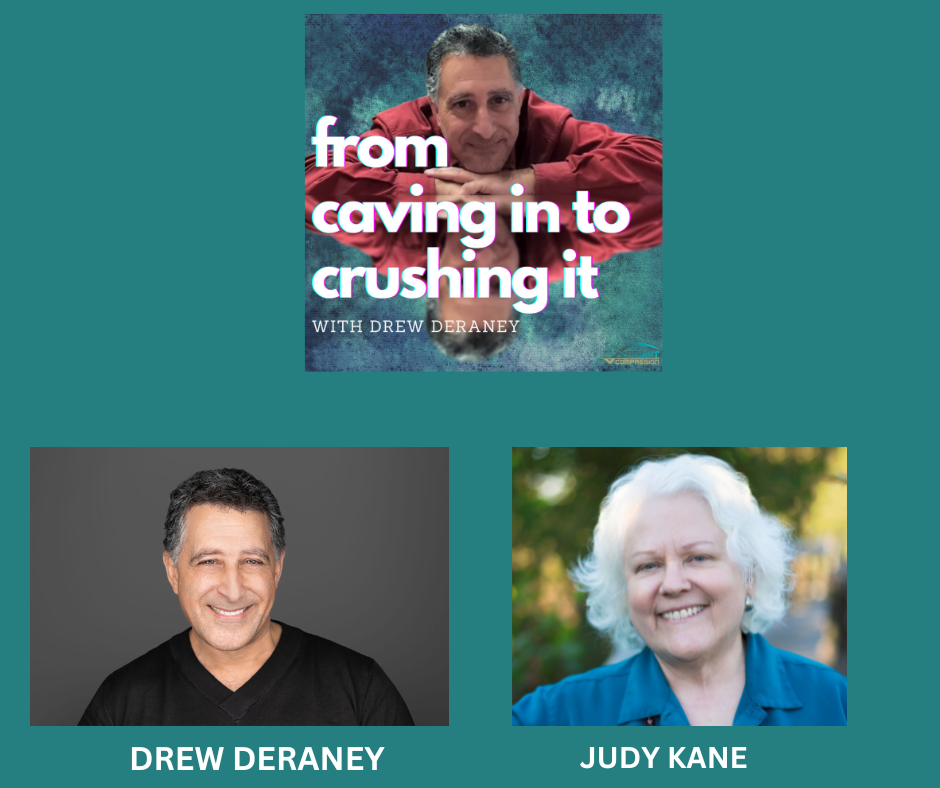
Today's guest is Judy Kane. Judy Kane, author of your Four Truths How Beliefs impact your Life, is dedicated to helping individuals get past barriers that are keeping them stuck or causing them discomfort. She helps people identify and change the limiting subconscious beliefs that are holding them back. Through speaking engagements, workshops, and individual client work, Judy empowers others to achieve their goals.
Enjoy the show. Judy, it's so good to see you.
[00:00:52] Speaker B: It's good to be here.
[00:00:54] Speaker A: All right, so I always love how we have the pre talk before the recording, before we hit record, and we get to know a little more about the person in doing that, and then I can bring some of that in in the conversation if appropriate.
In the beginning, I always thank the person who introduced me to my guest. And once again, this is probably like the fifth time I get to thank Suzanne Taylor King for introducing me to a guest on my podcast. So, Suzanne, Stk, thank you so much. I appreciate you introducing me to Judy.
And as the audience knows, in the beginning, I always talk about in the beginning. When we're young, we're taught that life is linear, that life is a straight line. If we do A plus, B plus, C, D is going to happen. And for the most part, our lives are linear until they're not. Ultimately, there's an external circumstance that gets in the way of one of those letters and derails our straight path to a more circuitous route.
When that happens, that means adversity has now reared its ugly head, and we either notice the adversity or we don't. For those who do notice it, we have a choice. We either run away from adversity or we go through it and become stronger.
And because of that, I really feel there's three types of people in this world. There's three types of men, three types of women, man and woman number one is that person who does not see the adversity, has a ton of blind spots and just lives life the way he or she's told to live. And they don't change anything. I don't have man or woman number one on this show.
Man or woman number two does see the adversity, yet says, I'm the victim, everybody else is to blame. Life is doing it to me. It is what it is, and I can't change anything. And. And that person doesn't change anything. And on their deathbed they've got a ton of regrets. I don't have man or woman number two on the show. I have man or woman number three on the show. Like Judy Kane, man or woman number three sees the adversity, says, I'm sick and tired of being sick and tired.
That that adversity is not a barrier. It's an opportunity to do something different, take massive action and become a stronger man or woman on the other side.
So, Judy, for the audience, if you could reach back as far as you need to for that tap on the shoulder, the whisper in the ear, or like what I needed two by four upside my head, that kind of transformed you from the woman you were, whether it was woman number one or woman number two, to the woman you are today and how that transformation impacted you personally and professionally.
[00:03:33] Speaker B: Okay, sure.
Well, I would go back to 1997.
I was in IT management for a large company.
It was stressful. Right. But you have projects, and so there's a lot of stress and a lot of hours that can go into jobs like that.
And I had two children and a marriage that was still intact on paper, but not in reality.
[00:04:04] Speaker A: Yeah, right.
[00:04:06] Speaker B: And a bunch of things happened all at the same time that ended up where I was in the hospital for five days, just. And it was. Clearly, it was stress related.
[00:04:19] Speaker A: Right, right, right.
[00:04:20] Speaker B: But it was, it was. I wasn't gonna die, but it was. You. You had a sense of what it would be like if you were gonna. Right. It was just. And I just.
I was looking at what was going on and going well, thinking about. The children were older. My daughter was going to go off to college in another year. The other one was in high school. And it was like, I've got to change things because this is, you know, the future looks pretty bleak if I don't see something different.
[00:04:51] Speaker A: Right.
[00:04:51] Speaker B: So that was my wake up call, basically.
And so one of the things that happened was we put a formal end to the marriage, which was, you know, nobody's happy in an unhappy marriage. So it was way past due to do that. Right.
Nothing much changed in terms of work, but just getting the personal life changed up a little bit made a big difference.
But the part two of where things really changed was where I found out about the process that I use now.
And it wasn't finding out about the process so much. It was more an understanding of what subconscious beliefs can do in your life.
[00:05:39] Speaker A: Okay, okay.
[00:05:41] Speaker B: And the power of those things and knowing that it's your choice how you view events in your life and your Self worth and all of those things. And that was a powerful thing to learn about.
[00:05:55] Speaker A: Absolutely, absolutely. How did you stumble upon.
You know, we all know what the term subconscious is, not necessarily what some people don't know, even know what it means. How did you stumble upon that and how did it help you?
[00:06:12] Speaker B: Well, my second husband had. I don't even know what it was. It was an ache or a pain. It wasn't anything major. It was. But a friend knows this process that now I now use, and she offered to help him get rid of it. And he said sure.
And I was watching. And in less than five minutes, the pain went away.
It didn't come back. I was impressed.
But the thing that stunned me was that that was being caused by a subconscious belief that he had.
And I mean, you hear about the subconscious, but I really didn't understand the full impact of what those beliefs are. They're your default.
[00:06:54] Speaker A: Right.
[00:06:54] Speaker B: I mean, it's, it's your perception of almost everything out there that you encounter. You know, how you interpret events and people and yourself and all those things.
And they, they can cause you to have different levels of ability to take risk.
Right. Or different confidence levels of what you're able to do.
The physical symptoms of stress can show up with physical ailments. I mean, there, it's. It's all of that stuff. And I had no idea.
[00:07:27] Speaker A: Wow. Yeah. I read a. A statistic that says that 85% of physical ailments are due to unaddressed internal stress. Yeah. Yeah. Our body finally says, fine, you want. You're not listening to me this way. I'll give you a pain.
[00:07:41] Speaker B: What does. It's a dashboard. Right. And to say, hey, something's. Something has to change. And, you know, if you just take an aspirin, that's not addressing what needs to change.
[00:07:53] Speaker A: Right, Right.
So.
And I think I might know the answer. Do you think that if you knew this process during your marriage that you may not have ended up in the hospital?
[00:08:06] Speaker B: I'm sure of it. Right. I mean, there's so many things I would have done differently for myself and just in sharing that information with my children, I mean, it could have made a huge difference.
[00:08:19] Speaker A: Absolutely.
[00:08:19] Speaker B: And I used to volunteer with a lot of, of, you know, where you can go and help children that need help during school, you know, extra help and that type of thing.
You know, that would have been fabulous information to have had to help them as well. You know, kids get a message sometimes when they're little that they aren't worth anything or they're stupid or. I mean, all these terrible beliefs that get put into their heads and it.
I mean, it definitely makes a difference in their life trajectory.
[00:08:56] Speaker A: It sticks with them through adulthood. And a lot of the things we learn that our subconscious teaches us when we're young worked when we were young, but we carry it through to when we're adult and it doesn't work anymore. We gotta. We don't realize it, and unless we're aware, we don't change anything.
So.
So tell me, so when you noticed it work on your. Your second husband with the pain, what did you do next? Did you like. Because you were still in I T. At the time, right?
[00:09:27] Speaker B: I was, yeah.
But I was getting ready to come out of that. Oh, yeah.
I can't tell if you're speaking or not. Your mouth is moving, but I'm not hearing you.
[00:09:42] Speaker A: No, I'm. That's something probably wrong with the technical. But no, I'm fine.
[00:09:46] Speaker B: Okay. All right.
So, yeah, I was getting ready to come out of it and we had decided when I was going to do that, I was going to become a realtor. I did that for five years.
That was not a good match. But at the same time, I started taking courses to learn this process because I could see it was really impactful and it looked like something I could learn how to do. It's not as woo woo as it sounds. It's a pretty straightforward process that didn't require me to have special knowledge or sensory perception to be able to do this stuff.
And so I started taking the courses just for me and people I knew to begin with.
[00:10:33] Speaker A: Right, right.
[00:10:34] Speaker B: So, you know, I had the first class in 2011, and then it was too good. I had to share it with more people. So I started the business in 2014.
[00:10:43] Speaker A: That's wonderful. So did you start the business while you were still working in it or did you leave first and then start the business?
[00:10:49] Speaker B: I left I t. And I was in the middle of. Well, when I started the business I was coming out of. That's right, Yeah, I was. I was a realtor in 2014, but I was. I had already decided I was gonna stop that too.
[00:11:04] Speaker A: Okay. All right. So you stopped it both and went full time.
[00:11:07] Speaker B: Yeah.
[00:11:07] Speaker A: With what you're doing now. So tell us a little about how the beginning of the business was and how you've, you know, kind of on that journey grew or learned or what you did right, what you did wrong, all those kind of entrepreneur stuff.
[00:11:24] Speaker B: Sure, yeah. So where I had been, it was a big corporate place. Right. So I didn't have any entrepreneur skills or experience when I was walking, working for corporate.
I got a chance to see more of entrepreneurship when I was a realtor, because that is kind of your own business now. My husband is a realtor and I went in to help support his business, basically.
But it gave me a sense of networking and how to get referrals and that type of a thing.
The thing that. That was overwhelming to begin with when I started my business was you were getting all this advice about you have to have a website and, you know, post five times a day on five different social media platforms and do this and, you know, and send out newsletters every week and write a blog every week and do.
It was like just. It was too much. Right. It was just. I froze for a while because it was just. You didn't even know where to start. There was so much there.
And then I thought, I mean, I just sat down and relied on myself and it was like, well, you know, I'm going to prioritize it.
[00:12:42] Speaker A: Right.
[00:12:43] Speaker B: I'll do one thing that works and then I'll add something else. What's the most important thing to do? What's the next? And I started doing it that way.
And along the way, I made the decision that if it didn't feel like something that was a good match for me, I wasn't going to do it. Right, right, right.
[00:13:01] Speaker A: I mean, it's your choice.
[00:13:03] Speaker B: Yes. Yeah, yeah. Every so often you have to go, it's my business. What am I going to do? Fire me if I don't? I mean, it's like, I know I get to make the rules up.
[00:13:13] Speaker A: If I don't post today, who's going to get. Who's going to yell at me?
[00:13:16] Speaker B: Exactly.
So, you know, I changed it up to do. I only do the things.
I'll amend that. I am on social media enough to people for people to see that I'm there.
[00:13:28] Speaker A: Right, exactly.
[00:13:29] Speaker B: But it's not my marketing strategy. The way I get business is networking like we met and referrals from people that have worked with me before. And that's how I get my business. And being on podcasts like this, the
[00:13:46] Speaker A: podcast are a very good vehicle for that.
[00:13:48] Speaker B: Yeah, yeah. And those are all things I really enjoy. I do have a newsletter, but my promise to myself and my readers is it's my monthly.
[00:13:56] Speaker A: Good for you. Good for you.
[00:13:58] Speaker B: There's a blog and it's monthly.
[00:14:00] Speaker A: I can do once a month, inundated with emails now.
[00:14:04] Speaker B: Right, right.
[00:14:06] Speaker A: So tell me a big Success story for one of your clients that you. You could. You could share.
[00:14:12] Speaker B: Oh, okay.
I had this one client, and she had come in. Not many people come to me first for a physical symptom of stress, but this woman did.
She had terrible pain in her shoulders and numbness in her arms.
And she had been to many doctors, and they really couldn't figure out what was causing it. The next step was exploratory surgery to go in and see what they could find, basically.
And I don't know how she heard about me. I can't remember how she heard about me. I knew it at the time.
But she came to see if there was anything I could do to help with that, because she was already aware of the fact that beliefs can cause physical symptoms. So she was exploring that before she scheduled surgery.
And she signed up for six sessions.
And by the fourth session, the numbness and the pain had gone away, which was. She was just so excited about it. But the thing that was really cool is in the process of finding the beliefs and changing them and finding more beliefs and changing. It's a fast change process. You can usually change any one belief in less than five minutes with what I do.
But. But coming back and coming back after, you know, hey, we had an hour's worth of belief change.
Next time you come back, we'll see where you are and what we need to work with next. Right. It's kind of a. It can be complex with some situations, but by the end of the sixth one, not only was the shoulder and the pain and the pain and the numbness all gone, her marriage improved considerably and she taken off in a slightly different direction with work, and that was looking very promising. So it was like, you know, extra benefits.
[00:16:11] Speaker A: I love hearing that. You often hear that people in pain because of inflammation. It affects every aspect of your body, your mood, your emotions. So. So of course you're carrying that negative energy around. It's going to disrupt any kind of relationship that you have. And a lot of times it's, again, subconscious that you're doing what you're doing. So I can certainly see the work you do, how it actually can change, not just the relief of pain, but some kind of. Some of the enhancement of relationships around that individual. So.
[00:16:47] Speaker B: Absolutely. And some of the beliefs are about self worth, right? I mean, with relationships, if you're not being treated in a way that feels supportive, you can't change how somebody else treats you. But if you change how you view their behavior and how you respond to it, their response is going to have to be different because you're different.
[00:17:13] Speaker A: Absolutely. And then there you have another choice.
[00:17:16] Speaker B: Yeah.
[00:17:17] Speaker A: How you react to their response is your. You have the power of that decision.
[00:17:24] Speaker B: Yeah.
[00:17:24] Speaker A: You know, so. Yeah, that's awesome. What was the most challenging encounter you've had in your career so far with the. With the aligned consciousness?
It was.
[00:17:38] Speaker B: It was when I learned not to necessarily agree to see people that somebody else were going to send to me.
[00:17:49] Speaker A: Really interesting.
Tell me how that came about.
[00:17:54] Speaker B: I had several people that came to me and were very happy with the results.
And so then they decided that they wanted to send a loved one to me to change something that they were doing.
[00:18:07] Speaker A: I love it. Oh, that's funny. That's funny. That person doesn't want to change, but I want them to change.
[00:18:12] Speaker B: Yeah. Yeah. It was two or three times and it was, I mean, you know, one. Actually there was one poor husband that came in and I said, so, so what's going on and what would you rather be experiencing? And he says, I don't know. I don't. I said, well, what, you know, it was. He had no idea why he was there.
[00:18:29] Speaker A: Oh, that's a riot. Yep, I could see that. Yep. That is funny. Well, I mean, the person's got to be there to want to change.
[00:18:37] Speaker B: Exactly. That was my learn. That was my lesson.
[00:18:40] Speaker A: That's an awesome lesson to learn. So when we were talking off. Off camera, we both learned that we're Clemson parents.
[00:18:48] Speaker B: Yes.
[00:18:49] Speaker A: So tell me, tell me about you. Have you have how many. How many children?
[00:18:53] Speaker B: I have two daughters.
[00:18:54] Speaker A: Two daughters and one goat. Went to Clemson, graduated in 02. You told me.
[00:18:59] Speaker B: Yeah.
[00:18:59] Speaker A: How about the other daughter? What does she do?
[00:19:01] Speaker B: She actually, she is here in Richmond with me.
[00:19:05] Speaker A: Okay. And.
[00:19:07] Speaker B: Or not with me, but we're both in Richmond.
[00:19:10] Speaker A: Yeah. Yeah.
[00:19:12] Speaker B: And she works for a.
An online estate sale.
Oh, auction company. Yeah.
[00:19:21] Speaker A: Okay.
[00:19:22] Speaker B: So she was the one who let I have moved into a community. Now that is one of those, you know, quote unquote, forever places.
My next move, I will not be organizing. We'll just leave it like that. But she was the one who told me about it because she had clients that are bringing all their downsizing thing to her and they all loved it here. So she was the one who let me know about this.
[00:19:47] Speaker A: Oh, that's awesome. Now can she do remote estate stuff too, across the country or just enriching?
[00:19:54] Speaker B: It's all local.
She. Some of them are on site and some of them are in their showroom, but it's all, I mean, within an hour or two of here.
[00:20:04] Speaker A: I wish there was a million of her around because I know people. My, my friend's parents both died. They passed away within 18 days of each other and he had to get an estate person. And she was not good in the house. The stuff in the house got trashed because the, they were, you know, just through the invitation out there and people from everywhere came and didn't respect the home. So the very important thing that your daughter does now your other daughter does something important too.
[00:20:32] Speaker B: She does.
[00:20:33] Speaker A: What does she do? The one that's.
[00:20:34] Speaker B: Well, she, yeah, she. She's got a master's in counseling psychology, but she is, she's more. Moved more into the mental health management systems.
So she's got a corporate. She doesn't see individual clients now. She works more from the management side of mental health.
[00:20:59] Speaker A: Ultimately what she does ends up helping the patient.
So getting back to you, Judy, because there's a term that whenever I hear I think of you. Head trash. So I want to know where the heck you got that from. And because it's such a perfect term to what we sometimes are subconscious in our head does to us. Tell us about head trash, Judy.
[00:21:23] Speaker B: So one of the networking groups that I have been in, and it was really funny because there were two different guys that said the same thing. It might have been the same week, but it was within a couple of weeks of each other from the same networking group independent of each other. You know, they had breakout rooms.
And both of these guys said you should say you help people get rid of their head, your head of their head trash.
Right? And it's like, oh, that's a lot easier than going, oh, I help people change subconscious self limiting beliefs. And people are looking at me like, what?
So yeah, it's a short way of, you know, I can do my 30 second introduction in 10.
[00:22:04] Speaker A: Yep. No, I remember when I first heard you say it, I knew exactly what you were talking about because every one of us has some amount of head trash. Where.
And I like the term trash too because we, but we either take the word trash as being garbage or there's a term like a verb. You trash yourself. You keep beating yourself up and knocking yourself down. So it is, it, it is an impactful term and it is unfortunate because even the most secure people who are secure in their own skin still do some sense of, of trashing themselves.
And, and a lot of it comes from external, you know, views, other people. And when we're young, I mean the, the, you know, you're five to seven years Old. We're sponges, man. And we absorb what we hear around us.
And so tell me how you can help people remove that head trash.
[00:23:05] Speaker B: Yeah. So when I see people, they come in, except for that poor husband, knowing they want something to be different. Right.
They don't necessarily know what's in the way, but they know things aren't working the way they want them to work. Right. So that's where we start. What's going on and what would you rather experience?
And from that we start figuring out what are the subconscious beliefs that are in the way. Right. So if I'm working with somebody that a lot of times people have conflicting money beliefs that are keeping them from being more successful with business.
Well, having money is a measure of success. But then a lot of homes, you have the belief that you're.
You shouldn't want more than you need because it's greedy. Or the only way you're going to get money is to work really hard 247 all the time.
Or you don't want to be like those people who have too much. We don't like how they behave. Or it's the root of all evil. Or there are things in there that cause your subconscious to say, well we don't want too much of that stuff because it's not safe.
Right. Or maybe you believe you didn't deserve it. Yeah. I mean there's, there's all sorts of things there that can get in your way.
[00:24:24] Speaker A: Yeah.
A lot of us you hear about not. Not feeling worthy. Right. I'm not deserved. Deserve it of this. I don't. You know, and, and that, that is. Would that be the number one thing you hear or what would be like the number one of all your clients?
[00:24:42] Speaker B: The number one thing that I think I see. Although I mean they're. The two top ones are both very prevalent. But one is safety where it's just. Yeah. Not, not necessarily physical safety, but.
[00:24:57] Speaker A: Yeah.
[00:24:57] Speaker B: You know, feeling like it's okay to say what you think.
[00:25:01] Speaker A: Right. That's okay. Okay.
[00:25:03] Speaker B: Or to respond in an authentic way because people might, you know, it might not be okay if people saw who I really am.
[00:25:11] Speaker A: Okay.
[00:25:12] Speaker B: So, you know, visibility, all those all taking a risk and not being willing to fail at something or.
[00:25:20] Speaker A: Yeah.
[00:25:20] Speaker B: You know, that time that, that's a whole big. Absolutely big category of being safe.
And the other is the worth. You know, we've, we've got. A lot of the things are actually tied to Maslow's theory, you know, with his pyramid.
Yeah. And the self worth.
There are two. Two Aspects of worth. One is how you feel about yourself, how worthy are you.
And then it's also important how you think other people view you, what their opinion of your worth is.
Right. And all of those are all in that subconscious realm, Right? It's what you picked up along the way, right?
[00:26:04] Speaker A: Absolutely.
The amount of thoughts we have per day versus the amount of thoughts we have per day that we are aware of.
Is that part of your, your help to like. I think we have 7 70,000 thoughts a day, yet we're only aware of like.
Like 1000 of those thoughts.
[00:26:29] Speaker B: I honestly do not know. I've seen numbers about that. It's not something I store.
[00:26:35] Speaker A: Yeah, yeah. I mean it's the thing.
I think not many people us are, are aware enough of our thoughts and, and we go on autopilot. And I think, I think that the point, the point is, is that we don't. What we're. We're aware of maybe a fraction of what our thoughts are. And most of our thoughts are in our subconscious. So the more that we can make sure we're aware of what we're thinking, the more we can change it during our conscious. When we're conscious of it.
[00:27:05] Speaker B: Right. Well. And you know, when I do presentations and stuff, you know, people, I tell people the clues of how. How do you know if subconscious beliefs are getting in the way or if you just weren't trying hard enough or you know, whatever and you look for the patterns.
[00:27:22] Speaker A: Okay.
[00:27:24] Speaker B: You know, if something, if you start. If you feel uneasy with the same thing over and over again and it really doesn't make sense. Sense.
[00:27:30] Speaker A: Yeah.
[00:27:32] Speaker B: Or you just, you put off or self sabotage, but there are patterns of that behavior. But also paying attention to your self talk. Right. If, if everything you're saying to yourself is criticism and putting yourself down and pointing out all the things you've done wrong.
[00:27:48] Speaker A: Right.
[00:27:50] Speaker B: There's a good chance there's subconscious beliefs in there that are not supporting you.
[00:27:54] Speaker A: Okay. All right. So those are some of the, the, the signs that you could. Yeah, yeah, yeah. So I'm sure you could rattle off a bunch of signs. I can, you can probably tell like almost right away when you're speaking with somebody if they'd be a good candidate for you to work with them. Because if you're hearing negative words about themselves, if you're, you know, if they, they put, even put other people down, that's another sign that, that could be.
[00:28:21] Speaker B: Absolutely. You can hear all those things are a real good indicator of how they view the world, how they view Other people.
And one of my bigger challenges when I first learned how to do this is not letting people know when I heard a self limiting belief when they said it, but when it was not when they didn't invite my opinion.
[00:28:47] Speaker A: Interesting. So, so if you heard somebody with a self limiting belief but they're not your client, if you're in like a networking thing, you want to help them but you don't want to like, like. So how do you let it go?
[00:29:02] Speaker B: Oh yeah, yeah, yeah. I mean, unless, unless it's, I mean sometimes it's conversation where either it's a good friend or we've already been talking about it and I go, you know, oh, by the way, you know, there's one. But, but not just in general conversation. Oh, there's a self limiting belief, right? Yeah.
[00:29:22] Speaker A: Well, I mean the reason I say that is because I remember talking when I used to work in the health care field and I would have a nurse say, well I'm just the nurse.
Stop them right there with the word just. Please don't say just. So without you the doctor can't do his job. Yeah, it's like. Yeah, that, that's, that was always a, that's a self limiting belief when you say I'm just this, you know.
[00:29:46] Speaker B: Absolutely.
[00:29:47] Speaker A: Yeah. It's fascinating what you do. I love, and I love the name of the, your company, Aligned Consciousness.
[00:29:53] Speaker B: Thank you.
[00:29:53] Speaker A: How'd you come up with that?
[00:29:55] Speaker B: It came to me, I was just sitting. It's, it's what I do when I'm trying to get, when I'm trying to think of something as I just get quiet and, and just, you know, things occur to me.
[00:30:07] Speaker A: I love it because it makes sense to me.
So the audience certainly is captured the essence of Judy Kane. They're going to want to get in touch with you, Judy. So folks, I asked Judy best way to get in touch with her is her website Aligned Consciousness. So A L I G N e d c o-n s c I-o u s n E-S-S.com lots of letters in there but alignconsciousness.com and you. She has a contact button there. You can, you can get in touch with her.
Definitely worth doing. Not, not only because of what she does professionally, but probably the kindest human being I've, I've spoken to in a long time and that's no joke.
[00:30:47] Speaker B: Thank you.
[00:30:48] Speaker A: You are Judy, you're like, you are so sweet and yeah. So you have something coming up that you're doing with Nikki.
Nikki and Lindsay and Then Lindsay Hack. Is that a public thing you could talk about?
[00:31:04] Speaker B: Sure. We're really excited about. It's a collaboration.
[00:31:08] Speaker A: Yeah.
[00:31:08] Speaker B: All right, so. So Nikki is a really good coach who also uses hypnotherapy and nlp, all sorts of tools. But she is a coach. I'm not a coach. I don't do behavior strategy tools.
I help people change their subconscious beliefs that are keeping them from whatever it is they want to be doing.
[00:31:31] Speaker A: Right.
[00:31:31] Speaker B: Lindsey does amazing AI vision boards with your own image in the pictures.
[00:31:40] Speaker A: Love it.
[00:31:40] Speaker B: Okay, so we have a new program that we are launching tomorrow.
[00:31:46] Speaker A: Yeah.
[00:31:47] Speaker B: I don't know when this is coming out, but we're launching it on January 9th called Beyond Limits. And it's a multi week program where people come through and see each of us individually several times.
And we go, you know, they identify something specific and impactful that they want to be different.
And we help them get themselves lined up, identify it well, you know, see what the signs of progress are going to be, change the blocks that we find and create the images so that. That supports the whole thing.
[00:32:24] Speaker A: I love it. Now do they start with you and then go to Nikki and then go
[00:32:27] Speaker B: to Lindsay or they start with Nikki because she's. Yeah.
[00:32:31] Speaker A: Okay.
[00:32:32] Speaker B: They start and then they go to Lindsay and then they go to me and then we change it.
Then it's Nikki, me and Lindsay. But so it.
[00:32:38] Speaker A: Okay, so the framework doesn't. Doesn't mean that everybody goes to the same. It depends. Did you just change it up based on what the client needs or change?
[00:32:47] Speaker B: No, it's just the first round. It needed a different sequence than the second and the third.
[00:32:52] Speaker A: Okay. Okay, Neat.
[00:32:54] Speaker B: But we've. So we did it with ourselves first.
[00:32:56] Speaker A: You did.
[00:32:57] Speaker B: And then we had a. We've got a. Our first cohort is the beta cohort. There are five people in that that we've been working with.
[00:33:05] Speaker A: Good.
[00:33:05] Speaker B: And so we're far enough along that we're. We're ready to open the doors.
[00:33:10] Speaker A: That's exciting. All right.
[00:33:11] Speaker B: Yeah.
[00:33:11] Speaker A: So if. If now. I know that. So the first one that starts tomorrow, January 9th, how long does that go?
[00:33:19] Speaker B: Well, it's. Everybody's on their own pace. I mean, tomorrow's a workshop, but so people can kind of understand what we're doing. But.
[00:33:26] Speaker A: Right.
[00:33:26] Speaker B: But the actual. We calling it an experience instead of a program. But the actual experience, you know, depends on when somebody speaks starts.
[00:33:35] Speaker A: Okay.
[00:33:35] Speaker B: And typically it would be like 10 to 12 weeks. But people have individual schedules and stuff.
[00:33:41] Speaker A: They're Right.
[00:33:42] Speaker B: They're seeing Us one to one. So it's, it's not a group that goes through.
[00:33:47] Speaker A: I see. Okay, so, so when this, this will probably be out in a couple weeks. So would at. So we're ready at some point people are going to be able to register for it. Yep.
[00:33:59] Speaker B: Starting tomorrow they can register.
[00:34:00] Speaker A: Right. So but after that, when this is live in a couple of weeks, they'll still be able to register.
[00:34:04] Speaker B: Absolutely.
[00:34:05] Speaker A: Yeah.
[00:34:05] Speaker B: Because we'll just keep adding because one at a time. So it's not like a.
[00:34:11] Speaker A: All right, what's the registration process? That was an easy one that you can tell the audience or.
[00:34:16] Speaker B: I don't know that we could. I mean it's not something I could describe. It's a link to sign up for.
[00:34:24] Speaker A: So there'll be a link. So. All right, so if any of the audiences, if they're interested, they just jump on your calendar and, and set up.
[00:34:31] Speaker B: Absolutely, yes. Schedule a free call. I have free 15 minute calls for people who have questions and if they want to know it, that. Absolutely. And eventually the links will all be on all of our websites. So.
[00:34:43] Speaker A: Yeah, that's exciting. I'm looking very, Looking forward to hearing about. Hearing.
[00:34:47] Speaker B: Thank you. Excited about it. We've seen some fabulous results.
[00:34:51] Speaker A: Oh, I'm sure, I'm absolutely sure. Knowing the three of you and what you do. Absolutely.
All right, so I want to ask you two final questions.
[00:34:59] Speaker B: Okay.
[00:34:59] Speaker A: All right, first question. So you're sitting in your happy place and you're sitting down with 7 to 10 year old Judy Kane and you want to give her advice about life. What are you going to tell her?
[00:35:12] Speaker B: I am going to tell her to focus on the lighter things in her life.
I, I had a real, a tendency to focus on drama when I was younger and as you know, once you get into adolescence and teens, that's not unusual, but it makes such a difference what you choose to notice.
And if I had known when I was earlier that what you notice affects how you feel and I could choose to be noticing things that made me feel better, that would have been a lovely thing to learn early.
[00:35:55] Speaker A: Absolutely. That's great advice. All right, switch gears. You're now sitting down with young businesswoman, young entrepreneur Judy Kane and you want to give her advice about business. What are you going to tell her?
[00:36:05] Speaker B: Yeah, listen to myself. Look for the stuff that resonates for me.
[00:36:09] Speaker A: Right.
[00:36:10] Speaker B: On how I want to move forward with my business. And you know, other people's advice might work very well for many people, but if it's not something that feels like it's my thing to do. Don't. Don't do it. It won't work.
[00:36:25] Speaker A: Love it. Love it, love it. Well, Judy, I want to thank you for coming on. Thank you for coming into my life. You are an awesome human being and you are doing some wonderful things for people. So keep. Keep it up. Keep it up.
[00:36:37] Speaker B: Thanks so much. I've thoroughly enjoyed this.
[00:36:40] Speaker A: Drew, this was great.
Everybody out there, please take care of yourselves.
Thanks so much for listening. If you enjoyed the episode, please subscribe and give us a review. To help others find it, I'd like you to answer this question.
Are you living the life you want to live, or are you living the life others want you to live? I'd like you to think about that for a second because I strongly suggest you live the life you want to live. If you want to learn more about what I stand for and my services and how I'm able to help many men get out of their own way, please go to my website at www.prophetcompassion.com.
feel free to also email me at drewrophetcompassion.com I'd love to have a conversation with you.
Take care of yourself and choose to write your own story instead of letting others write it for you.