Episode Transcript
[00:00:00] Speaker A: Foreign.
[00:00:09] Speaker B: The podcast for those who find themselves immersed in adversity and choose to write their story instead of having others write it for them. I'm Drew Duraney and I'm your host.
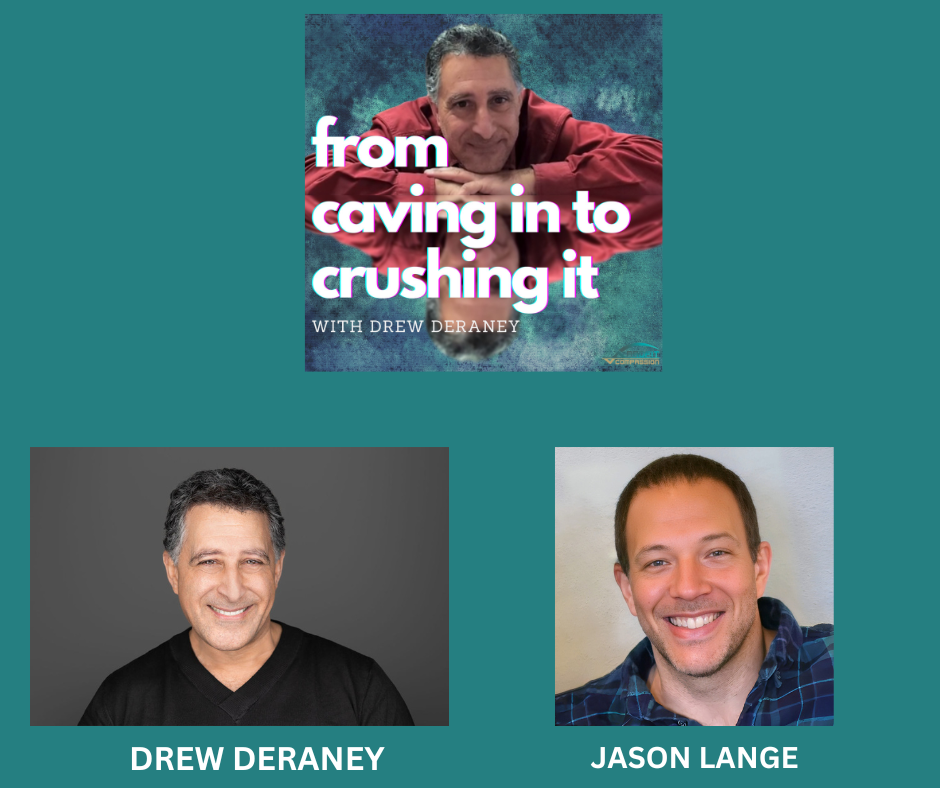
Today's guest is Jason Lang. Jason is a men's embodiment coach, group facilitator, Certified no More Mr. Nice Guy Coach and evolutionary guide. He helps men drop in and wake up to deeper clarity in their life's purpose and relationships. He believes every man should be in a men's group for the growth and support opportunities they provide.
Enjoy the show. Jason Lang, great to see you. Thanks for coming by.
Yeah.
[00:00:52] Speaker A: So pumped to be here. Thanks for having me.
[00:00:54] Speaker B: It's my pleasure. So I always start by thanking the person who introduced me to my guest. And I have the great pleasure of thanking Rob Wentz for introducing me to Jason Lang, our guest today. So thank you so much, Rob. I really appreciate you, my friend.
So, you know, we always talk about in the beginning of this show how, you know, when we're young, our family, our friends, whoever's around us teaches us that life is a straight path. You know, if we do, A, B, C, D is going to happen. It's not a malicious teaching. They want it to be that way for us. We believe it. And for the most part, life is linear until it's not right for all of us. At some point, an external circumstance comes and kind of derails that straight path into a more circuitous one.
When that happens, that means adversity is now hit.
And when adversity shows up, we, most of us have a choice. And I say most of us because I believe there's three types of men now. Man number one doesn't even notice the adversity. He's living with so many blind spots that he's just living life the way he's told to. So he doesn't even notice the adversity. It's like just part of the part of life, right? And he just lives life and doesn't do anything. I don't have man number one on the show. All right, then there's man number two. Man number two notices that adversity, and he says, oh, man, that's a barrier. I'm the victim. Everybody else is to blame. I can't change anything. It is what it is. That's the way life is. And he goes about his life without making any changes. And on his deathbed, he's got so many regrets.
I don't have man number two on the show. I bring man number three on the show Jason Lang, man number three, sees the adversity and says, I'm sick and tired of being sick and tired. I'm going to take some massive action, take this adversity head on, see it as an opportunity rather than a barrier, and I'm going to become a stronger man on the other side. So with all of that, Jason, if you could reach back for that defining moment, reach back as far as you need to, whether it's the tap on the shoulder or the whisper in the ear or I needed the 2x4 upside my head, that kind of woke you up and transformed you from man number one or two or both, to man number three, the man you are now. And how that transformation has impacted you personally and professionally.
[00:03:22] Speaker A: Yeah, absolutely. You know, like you said, life happens in phases. So I can think of a few different moments, but the. The most powerful one that's coming to mind that really changed the trajectory of my life and even the work I do now in a lot of ways, was in my mid, mid-20s, probably around 26.
[00:03:43] Speaker A: I had struggled with intimacy and connection to women, heterosexual in my case, since I was a young boy.
Just not feeling comfortable in my body, not feeling comfortable around women. Particularly as I got into adolescence and went through puberty and did not have any success. Right. Would get around women, would get all kind of clammy in my body. Didn't know how to talk to him, did not know how to physically reach out to them, and created a lot of pain in that. As my teenage years went on, as I went through college, all my friends were having relationships and were having experiences with women, and I was not.
And I couldn't figure out what it was that froze up in my body and made me so uncomfortable when I was around them.
In Cut to, there was a point where I actually was on a date with a woman I really liked.
And there was. We were out at a music show, and.
[00:04:42] Speaker A: There was some energy exchanging between us. We were dancing, and I was admittedly, in retrospect, absolutely desperate for physical connection and intimacy. Like, touch was just not something that had been part of my life, really, forever. As I. As I became clear about, in retrospect and was dancing with her and could tell she was getting a little, like, okay, I need a little space. And then we left this concert, and we're walking down the street, and I go to put my hand around her, and she just shoved me. She just pushed me away, said, get off me. It's not that I don't want that, but I just. I need Some space.
And here's the moment that really I totally collapsed. I just, I froze. I withdrew completely into my system in shame.
I could barely talk to her about what was happening inside of me. And I essentially became about a three year old on the whole way home. And that was it, that was the end between the two of us. Because she had no idea what was going on for me. It was very confusing for her.
And that was a wake up call to me of like, what's really going on here?
And eventually, through a lot of great fortune, actually got into my first men's groups and men's work and was in a. A healing weekend with an older male mentor and had done some talk therapy, trying to figure it out. And, you know, to be honest, I was pretty sophisticated in being able to kind of talk around my experience to my therapist. And I just kind of. I knew how to kind of play it safe and tell her just enough to not really go anywhere new.
And attention's on me in this circle.
The man leading it is facilitating. Suddenly I'm on my back, laying on the ground.
[00:06:29] Speaker A: And my arms are up in the air and I'm yelling, hold me, hold me. Where are you? Where are you? And I sound like a three year old. And I just started bawling, just absolutely bawling and crying like a little baby essentially.
And I came up from that and I was like, what just happened?
Like, whoa. Like literally what just happened there?
And that was kind of the moment of me starting to take responsibility for the pain I had experienced in neglect growing up, in realizing how this unfelt grief and lack of touch had been showing up in my nervous system every single time I interacted with a woman I was attracted to.
And some major shifts just literally started to happen after that meeting. But then it gave me a doorway into really continuing to dig into the work, look at my family history, learn how to get more comfortable with touching my body, and bring my story forward with other men.
And that trajectory just kept going.
Right. Once I got a taste of that work, I just kept doubling down on it myself and then eventually guiding other men on that journey. In terms of what I think really links up really well with what you're saying about man number three.
What I call is.
[00:07:53] Speaker A: A man who takes responsibility for his pain.
Right? It's that simple. We become aware of our pain.
Most of us did not ask for the pain we've received in our lives. But the honest truth is, while sometimes it comes at the hands of other people, only we have the means and responsibility to actually transform our relationship to it as we get older. And no one can do that hard work for us. Right. Nobody could get down on the floor and get, and have me get in touch with this young part of. I had to do it. I had to do it to, to liberate that part of myself.
So that was kind of a constellation of the moment that made me realize I really need help. And, and then the moment that actually started to tip the needle to, oh, and I don't have to be stuck. There's actual ways to work with this vague, unknowable confusion where I did feel like a victim of like, I don't know why does it work for everyone else and not for me when it comes to relationships? And then I started to put the pieces together and actually move some of this very old emotional wounding in my nervous system.
[00:08:59] Speaker B: Jason, this is, it's powerful and there's a lot there too, because there was a safe space for you to let go. And had, had that space not been there, you would not have let. Let go like that.
Exactly. Just, and just the awareness and the desire, you were willing and able to look inside and take responsibility because if you weren't, that wouldn't have happened.
Right. But there were a lot, there was a lot of work you did to get to that place.
[00:09:32] Speaker A: Yeah, it takes a lot of courage to do that kind of inner work for any man or, or to even just ask for help, which I think.
[00:09:38] Speaker B: You know a lot about. Just thinking, man, you're on your back, you're wailing like a three year old.
The reaction of the men there is now very important. What were their reaction, their response? How did they welcome that and, and applaud you for that?
[00:09:56] Speaker A: Yeah, Well, I can say the part of what made it safe was the group had very tight agreements. Like there was a very explicit agreements on how we were going to be in the circle together. And the leader of that held a very strong frame. And so I was celebrated. Right. People had other guys had tears in their eyes, feeling how deep my pain had gone. And I had, luckily, the way this process worked, I had witnessed some of them going into their own versions of that pain and, and it starts to create a deep level of trust in a group when that's possible of, oh, the rules in here are very different than the rules out there. We don't have to tough up and pretend like it's okay. Actually, this is the most, this is the place that takes the most courage because we just, we get at it and we go right to the things often we've been avoiding or unaware of in our nervous systems our entire lives that then end up.
[00:10:55] Speaker A: Completely changing how we act in the world, whether we're conscious of it or not.
And so I, that was a, that was one of the positive experiences for me that really had me fall in love with men's groups and men's work.
[00:11:07] Speaker B: Right. I mean, if you haven't been in a group of, of men who are trusting and vulnerable and then you got to do it. Because the deep discussion that we have is very different from the, on the surface conversations that happen in the quote, unquote, real world.
And once you can dive beneath the surface and you're with people who gave you the permission to be vulnerable, not just the permission that when it, when the vulnerability occurs, it's embraced.
Many men in the real world are, are afraid of being vulnerable in front of women, even if the woman gives permission for it because they've burned before.
Right. How many men out there, guys have been vulnerable to the wrong woman?
And you get the role of the eyes or the, you know, the, the, the, the body language that states that that permission was false, you know, and then, and then we never do it again. So kudos to you for allowing it to happen, for taking responsibility for, for your pain.
And one now, once that occurred and you wanted to move forward with the men's stuff, how did you develop? Because I know now you have an organization called Evolutionary man, and how did that come about and impact you personally? And then how did you make that a monetizable profession?
[00:12:42] Speaker A: Yeah, so essentially, I mean, the first decade after that, men's work to me was just what I was doing for my own well being and healing.
So I got hooked in a sense, being in such deep community with men and got into a men's group and was meeting every other week with men essentially for the next 10 years of my life.
And it started to really change things for me. Right. I had structure, I had support, I had love, I had accountability, I had social connection.
And it helped me navigate, you know, moving across country, trying a new career, getting into my first really deep relationship, leaving that relationship, meeting my now wife, having our first children, finding out our first daughter was deaf after she was born and navigating that challenge as a caregiver of a child with special needs.
And essentially what started to happen after about 10 years is honest to God, I just wouldn't shut up about it. But I was just telling everyone like, yeah, I'm going to my men's group I love my men's group. It's so awesome. I see them every two weeks. Like, we do this together, we do that together.
And my enthusiasm for that in a, in a sense started to magnetize other men who were, who were interested. They're like, can I join? Like, what does that look like? And at the time, the group I was in, we just met in the office of one of our guys who was a therapist. And it wasn't a very big office, so we could only fit about eight of us inside that space. And so there wasn't a way to invite more men in.
And then I was like, okay, well, I want to share the gift of what I've received in this work with other guys.
So essentially I got on meetup.com and started hosting drop in groups in Central Los Angeles every other Monday for a couple of years.
And men just started coming in and having this experience of, whoa, I didn't even know this way of being was an option.
And the very common experience, I think you, I imagine, see a lot with people you work with, of particularly men, feeling this burden of, I have to hold it together for everyone else as the provider, as the son, as the father, as the brother, as the entrepreneur, whatever that might be.
And so because I'm holding it for everyone else, there's no time for me to get support in any means.
And so over time, my body gets more wound up, I get more stressed, I don't take as good care of myself. My emotional world gets completely shut down.
And essentially a lot of what a men's work, men's circle and men's group ends up being that I. I got to really see here as a place for men to just share their burdens and realize, oh my God, all the things I thought were broken or messed up about me or hard about my life, turns out I actually share a lot of that in common with some men who are very similar to me and some men who are very different than me.
And paradoxically, the very connection often men have been seeking, that feeling, a part of feeling close to people. We get that not from sharing the I'm tough all as well. We actually get it from sharing the tender stuff inside. When another person's like, wow, yeah, I've been there. That sounds really hard.
Here's what happened for me. And suddenly we're like, whoa, I'm not alone. And we start to feel more connected, which helps us relieve some of that burden and frankly, just resource us to go back and tackle the challenges of life.
[00:16:24] Speaker B: Absolutely, 100% so you had up to that point you were talking about, you met your wife. I'm curious now, you had the epiphany in the men's group, and how long after that epiphany did you meet your wife and tell us about how you met and the difference in your behavior in that encounter?
[00:16:51] Speaker A: Yeah, it was, it was about a decade in between. And in between I did start to have my first experiences. I started dating, I started having some short term relationships, and then I got into my first long term relationship, which was about five years long and super deep and super powerful and got pretty clear that there were just some deeper things we weren't aligned with.
First and foremost was I was really into personal growth and transformation and she just hadn't arrived there yet.
And I started to feel that gap more and more as we progressed and had to go through the experience of letting go of a relationship and breaking up with someone that I cared a lot about, which was so challenging for me as kind of a more traditional, nice guy, not so good speaking up for myself, not really great at boundaries.
And I thank God for my men's group because I literally remember, I think I, I broke up with her on a Sunday night and I just happened to have group on Monday and I literally just walked into the room and burst into tears. And my guys had me, you know, they had my back for navigating that, that challenge. And then it was about a year after that that I met my, my current wife at a social gathering and noticed I was attracted and unlike many years past, just walked across the room and introduced myself and the, the rest was kind of history. So felt a lot more comfortable in my own skin and naming what I wanted and desired and was very clear that I wanted a partner who was deeply on her personal growth path as well.
[00:18:24] Speaker B: That's part of what found the alignment with her.
[00:18:27] Speaker A: Yeah, part of what I found was.
[00:18:31] Speaker A: Was a partner who was doing that. And, and then, yeah, we, we, we, we went deep pretty fast. Learned to navigate some different challenges in the relationship and where I was engaged within a year, I think.
[00:18:45] Speaker B: Beautiful. It was, it was ready. You were ready. She was ready.
[00:18:48] Speaker A: I was definitely ready.
[00:18:50] Speaker B: I love that. So now let's fast forward to the birth of your daughter and the, I'm sure the surprise or the shock of, of the hearing impairment.
[00:19:03] Speaker B: Can you share that with us?
[00:19:05] Speaker A: Yeah. Yeah. We had a home birth in December 2019 and was a fairly smooth birth. It was a little long, so that part was challenging for my wife. But baby, baby daughter Ruby came Out great. You know, she was alive, she was happy, she was vital. And she was born in early December.
And so the holidays kind of quickly came up and.
[00:19:32] Speaker A: Our pediatrician was like, yeah, you know, since you had a home birth, you should do a, at some point you should do a newborn hearing screening. Because usually they would do that in the hospital if you had a hospital birth. And you know, I called a couple places and they were just closed because the holidays they weren't taking appointments. So, you know, we just kind of nestled in for the month of December and then just not even thinking about it, booked one for January. You know, she seemed very alert, very active. We had never had a kid before, so we didn't really have anything to compare to. And yeah, it was just like a, probably a Tuesday or Wednesday morning. Walked in for what was supposed to be a 15 minute quick appointment. And you know, first.
[00:20:10] Speaker A: Spidey senses went off when the woman got up and she's like, actually I need to go get my supervisor, I'll be right back.
And then supervisor came back, did some more tests and they were like, yeah, she's failed all her tests. She needs to come back for a much more in depth brain scan. We can't exactly tell you what it is this. It's pretty common sometimes that there's fluid in the canals or things after birth so, you know, don't freak out too much. But we suddenly, we started to put the pieces together of realizing, oh yeah, she's never really startled when our dog barks or.
And then, you know, we go home for the two weeks and then there's just this kind of starting to track it all. And then came back and yeah, pretty quickly discovered she was profoundly deaf. So just no hearing at all.
And then it just began a kind of mad dash of that was February 2026. We got conference or sorry, 20, 2020. Right. We got confirmation and the world shut down about a month later.
So we're racing into hospitals to get blood work and tests to see if it's part of something deeper or not.
And got very lucky with resources in terms of a local community in Los Angeles that was a community for kids who had hearing loss that we luckily got connected to before everything shut down. And they helped us get, get a clear trajectory of here's what needs to happen, here's the tests you need to do, here's who you need to talk to.
And so then it just began a pretty crazy process of battling with insurance and seeing doctors and getting her resources and education.
She now hears using Cochlear implants, and it's beautiful language and beautiful hearing.
But we had to lean heavily on community in resource. And by that time, frankly, I think I was in three men's groups. One that met locally, two that met online, and. And I leaned heavily on those guys at that time in terms of just somewhere to share my uncertainty about my future, her future.
And I can tell you, being around some older men who were on the other side of child rearing and whose kids had had their own challenges and issues was an immense relief of just. Yeah, like, I know it's hard, and I know it's scary. Here's some things that happen with my kids, and you're going to get through it. And here's how I got through it with my wife and my partner. And.
[00:22:39] Speaker A: I honestly can't even imagine, you know, what it might have been like, particularly in that time, had I not had my groups. Because one thing we. I felt really lucky about is, you know, I started working with men a little bit before that because of my men's groups, you know, whether the online ones or even my local group, we would just meet in backyards, you know, outdoors, kind of fresh air and whatnot.
I felt extremely buffered from the impacts of all the shutdowns and lack of socialization because I still had my connection. Just boom. Men that knew me, men that loved me.
[00:23:15] Speaker B: That's great.
[00:23:16] Speaker A: Like clockwork and regularity. And so for me, it wasn't nearly the intense experience it was for some of my clients, because I still had men in my life and we had a framework with which to meet that didn't require being out in public or doing activities or any of that kind of stuff. A lot of typical male socialization is around. Orients around.
[00:23:36] Speaker B: Yeah. And, yeah, I love how you did not allow the lockdown to affect your connection with other men. And because isolation was what that caused. And when you look at the suicide rate for men, or 50% of the population, 80% of the suicides exactly. Points to lack of connection and isolation as to why men do take their lives.
[00:24:09] Speaker A: Yeah.
[00:24:09] Speaker B: For the most part.
And the effects of the lockdown are. We're still seeing the effects and we're going to for a long time. So good for you not bowing to pressure and continuing with your men's groups, whether in person or virtual. Very powerful.
Lead us into professionally how evolutionary men works, how people can learn about it. How does that work?
[00:24:40] Speaker A: Yeah. So my mission at this point, because of the experiences I've had, and those are just some of the challenges in my journey, but the most abundant thing I've had in my life, more than health, wealth, and is just incredible men. I have incredible men around me, which is a type of social capital that I now realize is desperately lacking for so many men. So the mission of my organization is very simple. Every man should be in a men's group. I think the world would be a much healthier place if men were getting this kind of deep connection and support that we so desperately need. Because, frankly, it's not even just about surviving. It's where we end up thriving when we have men around us who have our back and care and we know how to cut.
Cut underneath the surface level, right? To get real about that very real experience most men have when a crisis hits or when middle age hits of, whoa, I was on the escalator, right? I was told, go do this, and then you do this, and then you start the family and then you do this. And, you know, I work with a lot of men who the crisis comes or the middle age comes, and they've been working so hard to provision in the traditional way. Their. Their partners. Like, we haven't had a relationship in 15 years. I'm not in love with you anymore. The kids are out of the house. Like, I'm done. There's. There's nothing here. And that's a hard moment for a lot of men. Or just the realization that, wow, I've put all this energy trying to get somewhere. Do I even like where I'm at? You know, it's just like, such a simple thing that some men never even take the opportunity to think about in a good group can really help reorient and give men somewhere to go in that place. So my organization essentially supports men in creating or getting into men's groups.
So I do. I lead some of them myself. Men's groups around dating and relationships because I particularly know that pain men's group around deep shadow work and healing. The kind of stuff I did when I was on the floor crying. Men's groups just for men who are lonely and just want to have the experience of getting connected to other guys and then live retreats where we really get the deepest dose of connection. And this realization, oh, the culture. I've been taught as to how men are supposed to relate. It's just a choice. And we can choose a different culture that resources us so much more powerfully to really be able to be present for the people in situations we care about the most in our life. So I have a podcast that talks about the stuff ad nauseam, just everything about men's groups and why you should join them and what it takes to grow and be healthy as a man right now. And you know, the good news is it's rarely a week goes by now that someone doesn't forward me an article or something from a major news publication or something about the boy crisis, the male crisis, the loneliness crisis, the. The awareness is starting to percolate and I think we're at actually at a crucial time for the intervention because. Right.
The two choices being dangled in front of us right now are kind of what I'm leaning into, of real community with real people, virtual or in person, but real people versus wow, we have all this loneliness. So what if we just start dangling chatbots in front of guys that make them feel like they have friends or a therapist or whatever. And there's so much money people want to make off that right now on the backs of lonely men that I think it's really important to get the word out right now that we, we need real nervous systems around us to thrive in the ways we're talking about.
[00:28:21] Speaker B: Absolutely.
[00:28:21] Speaker A: Very true.
[00:28:22] Speaker B: Let's dive into the live retreats. Many men don't know what those are like. So give us a little glimpse of what happens at a men's retreat.
[00:28:32] Speaker A: Yeah. So there's two primary retreats I lead these days. One is kind of just a one off men's weekend where we get together in a beautiful location, beautiful nature, food is all catered, and we go very deep into masculine practice of getting into our bodies, getting more connected to our feelings, getting more connected to our desires, and getting really connected to both each other in the land around us. Because the one thing I think, you know, we're kind of dancing around here is what so many men crave.
So many men crave is a sense of belonging and a sense of purpose. And when those two things link up, life gets so much easier. And male community paradoxically can do both. Right. Suddenly we have a place where we feel like we belong. Other men understand us and we have purpose in that our being actually matters to the other men. Being present for them, sharing our truth, getting vulnerable, it actually matters. So it starts to serve both. And we go really deep into that, into these retreats and. And they're pretty physically demanding. Right. One of the easiest ways I found to open men up emotionally is wear them down physically. And I don't mean like just, you know, hitting the gym hard, but meditative practices, breath work practices, certain different physical practices that really Force us to get out of our heads and into our bodies. And then once we're in our bodies, guess what lives there? All those feelings that we haven't wanted to deal with. And so we start to deal with those in community.
And the other retreat I lead is part of a program. It literally just wrapped. One had the retreat two weeks ago, which is a shadow work men's group, which is really for men who want to get together and get to these deep, unfelt, protected, shadowy places in our nervous systems, which almost always come from previous life experiences we just didn't know how to handle or feel or make sense of. And we get together and we just go in super deep, do the type of work I was talking about. And the bonding that comes out of those is, like, unlike anything I've seen. The closest thing I can map it to is when servicemen and women who have been overseas or, you know, served together, that feeling of, wow, we've been through something really intense and like, I've got your back forever now. Yeah, I just trust you with my life. That's the closest I can. I can kind of map the experience of what happens when men tackle this deep inner work together.
[00:31:13] Speaker B: It's fascinating. I'll tell you, the audience certainly has captured the essence of Jason Lang. And you guys are going to want to get in touch with Jason. So very simple. Go to the website Evolutionary Men, and you're going to find a lot of stuff there. Tell the folks what they're going to find at your website, Jason.
[00:31:28] Speaker A: Yeah, you'll find my podcast, which talks about all men's groups of all kinds. You'll find some writings I've done. You'll find free webinars. You'll find links to all my programs, men's groups, men's retreats, all that kind of stuff is there. And if nothing else, what you'll find is a contact form where you can always just write me and say, where do I start?
Like, when I say I want every man to be in a men's group, it doesn't have to be mine, right? So if you're like, here's where I live, I don't even know where to start. I'm very well connected into the communities now, and I can give you some pointers of where to start looking and where to plug into to get involved, because that's. That's that choice, Right. One of the best ways I've seen for men to take responsibility for their pain, shift out of that victim is, hey, I need help. Just so simple, right? I'm a man and I need help. And men's community is a great way to do that. So I will support you in finding a solution near you.
[00:32:24] Speaker B: Love it. Love it. All right, I got two final questions for you. All right, so find your happy place. You're sitting down with 7 to 10 year old Jason Lang and you want to give him advice about life. What are you going to tell young Jason?
[00:32:41] Speaker A: Yeah, I'm going to tell him to be very gentle with himself and that he's not broken.
Just didn't receive certain types of connection and it's going to feel awkward to learn to receive that type of connection. And it's okay. He's going to do a good job at it. And that more than anything else, the, the, the pathway to feeling better is just to start to talk to other people about what's happening inside, even if you don't have the words.
And that life's absolutely gonna get easier.
[00:33:21] Speaker B: All right, let's, so let's like switch gears now. You're sitting with a young businessman, young entrepreneur, Jason, and you want to give him a life advice about business. What are you going to tell him?
[00:33:32] Speaker A: Biggest thing is be patient.
It takes time.
It takes, particularly in the work where you do, we're doing, it takes time to really get comfortable in terms of what you're creating and leading. And that more than anything else, more than any marketing, more than any, any of that stuff.
[00:33:54] Speaker A: Changing your life is what's going to attract other men to work with you when you can say, here's the pain I was in and here's where I am now.
So know that that doesn't happen overnight and you just got to stick with it. You just gotta stick with it even when it feels impossible or scary.
And if you stick with serving again, maybe the best way to summarize this is it. This transformation happens one man at a time.
And you just gotta focus on one man at a time in over a decade.
Turns out that really changes things, makes an impact, and your business starts to grow itself.
[00:34:40] Speaker B: Love that. Fascinating. Well, Jason, I want to thank you for coming on, for coming into my life again. Rob Wentz, thanks, man, for introducing me to Jason. Jason, keep doing what you're doing. You are helping so many men and in turn, you help the men, you help the women in their life. I mean, that's just automatically happens.
So thanks again, my friend, and take care of yourself.
[00:35:02] Speaker A: Thanks so much.
[00:35:04] Speaker B: Absolutely. Everybody out there, take care of yourselves.
Thanks so much for listening. If you enjoyed the episode, please subscribe and give us a review to help others find it.
I'd like you to answer this question.
Are you living the life you want to live, or are you living the life others want you to live? I'd like you to think about that for a second, because I strongly suggest you live the life you want to live. If you want to learn more about what I stand for and my services and how I'm able to help many men get out of their own way, please go to my website at www.profitcompassion.com.
feel free to also email me at drewrophetcompassion.com I'd love to have a conversation with you. You take care of yourself and choose to write your own story instead of letting others write it for you.