Episode Transcript
[00:00:00] Speaker A: Foreign.
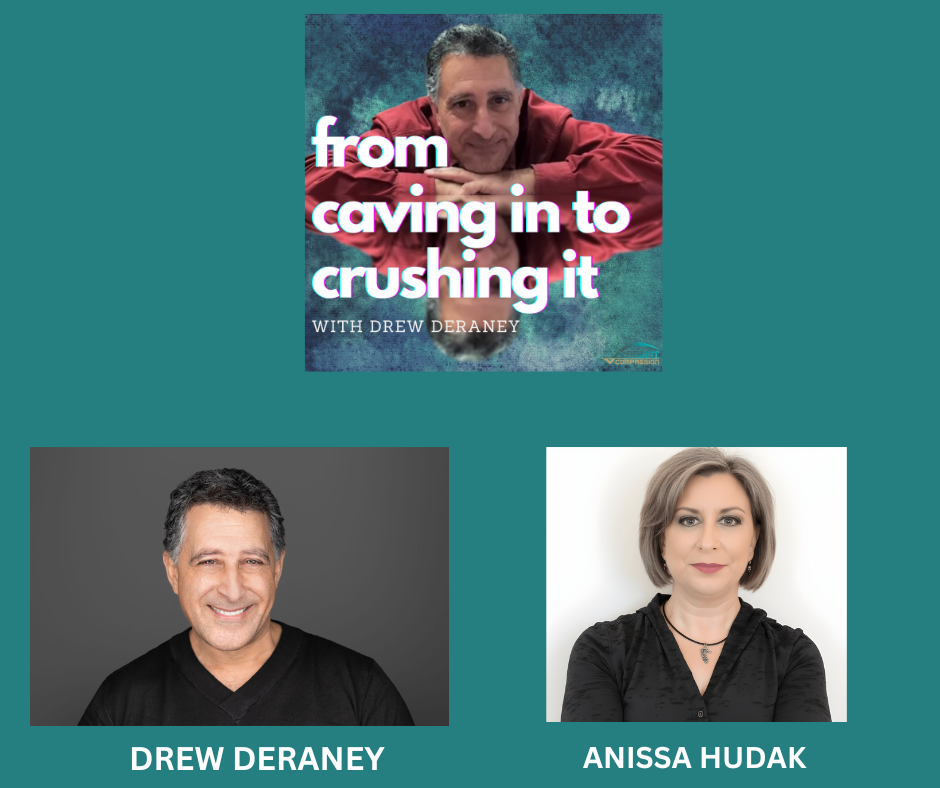
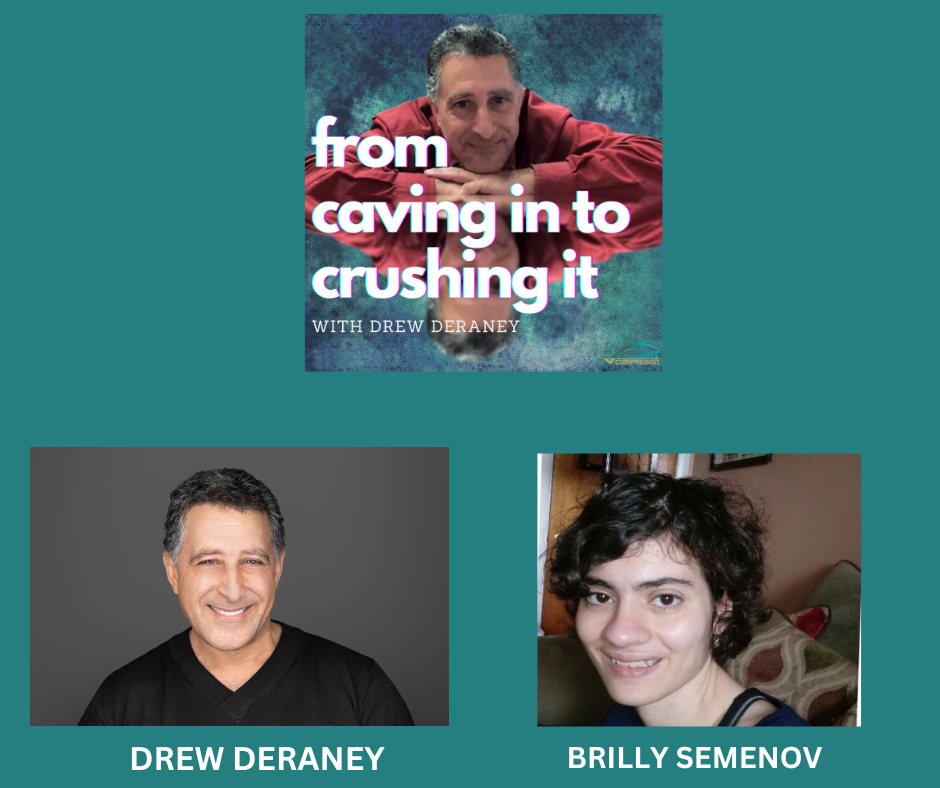
Welcome to From Caving in to Crushing it the podcast for those who find themselves immersed in adversity and choose to write their story instead of having others write it for them. I'm Drew Duraney and I'm your host. Today's guest is Anissa Hudak.
Anissa says, my life has been intertwined with ptsd, trauma and the military.
Not only am I the daughter of a Vietnam veteran, I was also married to an active duty member and Iraq Afghanistan veteran for over 23 years.
I earned my 200 ryt, 500 ryt and in 2017 was awarded my certification in Yoga Therapy from the International association of Yoga Therapy.
Additionally, I've completed a 120 hour yoga fit warriors training and the MBSR which is Mindfulness Based Stress Reduction online course through the center for Mindfulness and Medicine, Healthcare and Society at the University of Massachusetts Medical School.
For three years I volunteered at the Warrior Transition Battalion and at Fort Riley, Kansas providing yoga therapy, meditation and other holistic treatments to soldiers, family members and staff.
I've worked with people with all types of physical conditions, however, I specialize in working with Those suffering from PTSD, TBIs and all trauma related issues.
I also saw private clients for individual and group work in yoga studio setting.
Over the years of working with clients, one theme seemed to be always present fear. Whether it was being triggered, having to relieve or go there to deal with their experiences or how their experiences dictated their decision making process and shaped their futures, clients were living in fear. After doing a tremendous amount of research, I found that most people were utilizing thought process and coping strategies that were developed when they were between the ages of 7 and 9.
Obviously this doesn't equip anyone for processing adult situations, especially those that are PTSD producing experiences. I was inspired to learn a way that helped my clients up level their thinking processes and coping strategies while taking fear completely out of their healing journey. In 2023 I was awarded designations as a Master Hypnotherapist, Master NLP Practitioner, Master NLP Results Coach and a Master Timeline Therapist by the American Board of Hypnotherapy and nlp. NLP is Neuro Linguistic Programming. These techniques are the top mind body modalities and are accepted in over 42 different countries.
The work I do with women who have been sexually traumatized, rape, sexual assault or abuse, etc. Is the most important to me. As a two time rape survivor, I intimately understand the needs these women face and look forward to guiding them in their healing journeys.
Enjoy the show Anissa. It's great to see you.
[00:03:20] Speaker B: It's good to see you. Thank you for having me on.
[00:03:22] Speaker A: Oh, it's my pleasure. So I always thank the person who introduces me to my guests. So, Mike Weiner, once again, sir, at nrg, you get to thank you for introducing me to Anissa.
I'm very grateful that you did that and I appreciate you, sir.
And you know, my audience knows that. I always talk about in the beginning, how when we're young, we're taught that life is linear. It's not a malicious teaching. Our family, our friends, society wants it to be a straight line for us. They want to be able to say, if we do A plus, B plus, C, D is going to happen. And you know what? For the most part, life is linear until it's not.
Ultimately, we get an external circumstance or adversity rear its ugly head and then we have. We. We can do something or we can ignore it.
And the way I look at it, I think there's three types of people out there. Three types of women, three types of men. So let's say there's woman number one. I believe woman number one, when adversity rears its head, she doesn't see it. She's got a ton of blind spots.
So she's just on autopilot because she's living the life people have told her to live, and she doesn't make any changes. I don't have woman number one on this show.
And then there's woman number two. Woman number two sees the adversity, yet she says that adversity is a barrier. That's life doing it to me. I can't change anything. Life is what it is. And she makes no changes. And on her deathbed, she's got a ton of regrets. I really don't have woman number two on this show. I have woman number three on this show. Woman number three has a heightened self awareness.
She sees that adversity and she said, you know what? That adversity is an opportunity. It's not a barrier. It's an opportunity for me to do something different, take massive action and become a stronger woman on the other side.
So with that, Anissa, if you could reach back as far as you need to for that defining moment in your life, whether it was the tap on the shoulder, the whisper in the ear, or like I needed the 2 by 4 upside my head, that kind of transformed you from the woman you were, whether it's woman number one or two or both, to the woman you are now and how that transformation impacted you personally and professionally. You share that?
[00:05:32] Speaker B: Well, yeah, I can.
I remember sitting there one day after a yoga therapy class that I had just taught, and I was sitting there thinking about my clients who had been in the class with me. And these women had said to me, okay, we feel great after your class.
And then we go into talk therapy, and we feel like crap again.
What can we do?
Like, why is that? Why?
What is? What else is there?
And, you know, I remember telling them, just stay the course.
But in the back of my mind, I was like, you know, I'm right there with you because I'm doing the same thing. I was in talk therapy at that moment, and I did. I felt like crap every time I went. You know, I hated it, but I knew that that was what I should.
[00:06:36] Speaker A: Right.
[00:06:37] Speaker B: Be doing. Air quotes.
[00:06:38] Speaker A: Absolutely.
[00:06:40] Speaker B: And I said, you know, there's got to be a better way. There's got to be a better mousetrap. We are, you know, in. In 20 something here, and there's got to be a better way.
[00:06:53] Speaker A: Right?
[00:06:55] Speaker B: So can I rewind the tape and give some more context?
[00:06:59] Speaker A: You know? You know what? I don't even edit this, to be honest with you. I just keep it as it is, and I slap on the beginning and the end, and it's authentic. It's honest and vulnerable. So go put it into context for us.
[00:07:10] Speaker B: Okay. So When I was 18, I was date raped.
And this gentleman not only attacked me once, he attacked me three different times.
[00:07:20] Speaker A: Oh, my gosh.
[00:07:22] Speaker B: The one time he was successful, the other two times he was not.
And afterwards, I did what I thought I was supposed to do, and that was to go into talk therapy.
And for many years after that, I was in talk therapy, different therapists. I would peel back another layer of the onion, process, go back to maybe a different person, do some more work, process what have you.
Never finding any completion.
[00:07:51] Speaker A: Right?
[00:07:53] Speaker B: Feeling isolated, not knowing what to do, what. What resources were available to me.
I knew that what had happened was wrong, and I. There was a thing called date rape at the time, so I. I knew that that's what happened, but I didn't know many people who were like me.
So life happens, and I wind up finding myself in a yoga teacher training class for ptsd.
[00:08:28] Speaker A: Okay.
[00:08:30] Speaker B: And at that point, I'm sitting there saying, oh, oh, that's what this is.
The first person I need to work on is me before I can help anybody else.
And so my journey began at that point, and that was about 2014.
[00:08:47] Speaker A: Okay.
[00:08:51] Speaker B: 2015Ish.
I was raped again by someone else.
Now this time I had some tools in my toolbox.
[00:09:02] Speaker A: Okay?
[00:09:03] Speaker B: I was a yoga therapist specifically trained for PTSD and traumatic brain injuries, right? So I.
I knew kind of how to help myself and I was moving the trauma out of my body utilizing my tools of yoga therapy. That's great.
However, here I am teaching yoga therapy classes and my clients are coming up to me and saying, I feel great. Here I go into talk therapy and I feel like crap.
And I felt like that way too, right? I was right there with them, right?
And I said, okay, something's gotta give, right?
So I started doing some research.
One of the things that I really sat down and thought about was, what do I need, right?
What do I want?
I know I feel isolated. I know women who are like me feel isolated, okay? So first thing I want to do is I want to create a community where we can just be together.
We don't have to talk about it because we all know why we're there, right? We don't have to talk about it, but we can just be there together with other people who understand what we're going through, support each other.
So that was number one. That was the first thing I did. I created an online community for women who could just join us and be there.
[00:10:27] Speaker A: Okay, good.
[00:10:29] Speaker B: And then I started thinking about, okay, what is available to us for techniques and therapies and, you know, what, what comes next, right? And it really made me think how, you know, when you are diagnosed with cancer, all of a sudden, you know, what, 12 specialists walk in your room and you've got a care team already put together, right?
Well, when you have a mental health issue, what do they tell you to do? Oh, go get a therapist. Well, how, who, what, where?
[00:11:06] Speaker A: Right?
[00:11:07] Speaker B: There's no book, there's no game plan. There's nothing.
You were left to your own devices.
And I said, okay, that's wrong.
And I started doing research about what can we do?
What does a care team for mental health look like? And I created a whole thing where you can create your own self care master plan, okay? So you can create that care team to surround you.
The other thing was talk therapy and meds.
You know, talk therapy is great. It's the first step.
Everybody should take it, right? But what comes after, right?
I started doing more research and finding out about the brain and how it processes trauma.
It doesn't process trauma in talk therapy because that's part of your conscious brain, right?
Trauma is stored in the unconscious.
So you can spend years talking about it in therapy, but you're never Going to get it out of your unconscious.
[00:12:18] Speaker A: True.
[00:12:19] Speaker B: How do we do that?
So that was the next thing.
[00:12:22] Speaker A: Okay.
[00:12:24] Speaker B: Meds. Meds are great.
They don't have to be forever.
Maybe it's just for a certain time or season of your life.
However, people are so afraid of getting on meds.
[00:12:37] Speaker A: Right.
[00:12:38] Speaker B: And with mental health, the way they do it is, you know, you. You start a med, usually the doctor's favorite, and you do it for six to eight weeks for it to uptake into your system and then you see how you feel.
[00:12:53] Speaker A: Right.
[00:12:54] Speaker B: Sometimes people don't have six to eight weeks to feel better.
[00:12:58] Speaker A: No, no.
[00:13:00] Speaker B: Yeah. I understand that there is technology available that is like a DNA test.
[00:13:08] Speaker A: Okay.
[00:13:09] Speaker B: You swab the inside of your mouth, then you send off the results. A week later, you get a playbook back of all of the mental health drugs that work best for you based on your DNA.
[00:13:20] Speaker A: Okay.
[00:13:21] Speaker B: People don't know that this exists.
[00:13:23] Speaker A: Is that the Genesight one?
[00:13:25] Speaker B: That is Genesight, yes.
[00:13:27] Speaker A: Yeah. Okay.
[00:13:29] Speaker B: A lot of insurances will pay for it. And it's actually not that expensive out of pocket.
[00:13:35] Speaker A: No. Because we did it for our son. It was like three grand, but only 300 out of pocket. Something like that.
[00:13:42] Speaker B: Totally worth it.
[00:13:43] Speaker A: Is.
[00:13:43] Speaker B: And that playbook will never change.
[00:13:47] Speaker A: Right.
[00:13:48] Speaker B: Because his DNA isn't going to change.
[00:13:50] Speaker A: Right. Exactly. Yeah.
[00:13:53] Speaker B: So there are certain things that you can do to really help yourself, but a lot of people don't know about it.
[00:13:59] Speaker A: Yeah.
[00:14:01] Speaker B: And so I was like, okay, we gotta get the word out. Like, I know I'm not the only person who was like this for so many years.
[00:14:10] Speaker A: Right. Absolutely.
[00:14:12] Speaker B: And it's kind of sad how that part of our medical system is very broken.
[00:14:20] Speaker A: It's true.
It's true. Because that really should be a first step, basic 101, a test like that, because it actually helps the provider start with the right medication, the right dosage, the right class of meds and. And all that. And it's a good starting point, but got to spread the word.
[00:14:43] Speaker B: And that's the thing. And you know what I found very interesting is that I've had the test done and one of my sons has had the test done.
[00:14:50] Speaker A: Okay.
[00:14:51] Speaker B: Providers actually aren't really keen on it.
[00:14:55] Speaker A: Okay. I didn't know that.
[00:14:58] Speaker B: Some of them are. Some of them are not. I had to be a huge advocate for both my son and I.
[00:15:03] Speaker A: Interesting.
[00:15:04] Speaker B: And they wanted to put us on their particular, you know, cocktail or whatever it is that they wanted us to start with. And I said, but according to the gene site, we shouldn't be taking that at all or it's going to have little to no effect on us.
[00:15:20] Speaker A: Right.
[00:15:21] Speaker B: You know, we need to be taking this or that and they really. Well, we really want to start with this. No, we're going to go with that.
And being an advocate for yourself, because nobody else is going to advocate for you.
[00:15:36] Speaker A: No, it's true.
[00:15:39] Speaker B: And so it's helping people not only get the resources, find the information that they need.
[00:15:45] Speaker A: Right.
[00:15:46] Speaker B: But also being strong enough to be advocates for themselves.
[00:15:51] Speaker A: Many patients are not advocates for themselves. They don't understand the system and they've just believe what the doctor says no matter what.
And that's. That's not a safe way to go. You have to fight for yourself. That's true. And it's challenged to teach a child that, or a young adult, especially one with special needs, to self advocate.
[00:16:12] Speaker B: Yes.
To have the strength, of course.
To do that for themselves. Yes.
[00:16:17] Speaker A: Well, I give you a lot of credit because you could have withered away and hid after what happened to you. Did you ever, like, report those guys so they can, you know, be punished for their. Their behavior?
[00:16:33] Speaker B: I did not, no.
[00:16:35] Speaker A: Afraid to, probably.
[00:16:39] Speaker B: Partly afraid.
[00:16:40] Speaker A: Yeah.
[00:16:40] Speaker B: Partly.
Who was going to believe me?
[00:16:45] Speaker A: Yeah, yeah, yeah.
[00:16:49] Speaker B: It would be, you know, it's for victims.
It's a greater burden of proof for us.
[00:16:58] Speaker A: Yeah.
[00:17:00] Speaker B: And I was, you know, at 18, I was so young.
[00:17:04] Speaker A: Yeah.
[00:17:05] Speaker B: I. I was trying to process and deal with what happened. I wasn't even thinking about.
[00:17:12] Speaker A: Yeah.
[00:17:13] Speaker B: Reporting it.
[00:17:14] Speaker A: Right. Absolutely.
[00:17:15] Speaker B: That wasn't even on my radar.
[00:17:17] Speaker A: No.
You got to protect yourself and heal. And that's not. Yeah, that's not the first thought.
Moving forward out of that.
If you are fully healed, how, how long did it take and. And what did you specifically do to do that? Self healing.
[00:17:43] Speaker B: So trauma and PTSD is as individual as your thumbprint.
[00:17:48] Speaker A: Okay.
[00:17:49] Speaker B: So what works for me may not work for everybody else. And that's totally cool.
[00:17:54] Speaker A: Got it. Okay.
[00:17:55] Speaker B: One of the biggest things that you have to be open to doing is trying things.
Try, try, try, try, try.
[00:18:03] Speaker A: Yeah.
[00:18:03] Speaker B: And if it doesn't work, that's okay. You tried it.
[00:18:06] Speaker A: Right.
[00:18:07] Speaker B: One of the first things I tell all of my clients is to get two notebooks, and in the first notebook, write down things that you've tried. Keep. Keep a log of it like you would like, your medical records, if you will.
[00:18:22] Speaker A: Sure.
[00:18:23] Speaker B: If you're going to try, let's say lavender oil.
[00:18:26] Speaker A: Okay.
[00:18:26] Speaker B: Essential oil.
Write down how you used it, how many days, the brand, how much you use thereabouts.
Because I'll tell you something very interesting. I. I was using melatonin to help me sleep.
[00:18:41] Speaker A: Okay.
[00:18:42] Speaker B: It took over five different types of melatonin, five different brands to find one that actually worked for me.
[00:18:49] Speaker A: Interesting. Okay.
[00:18:51] Speaker B: The Walmart brand did not work.
[00:18:53] Speaker A: Interesting.
[00:18:54] Speaker B: The best one I found was the Trader Joe brand.
[00:18:57] Speaker A: Okay.
[00:19:00] Speaker B: Same milligrams.
[00:19:01] Speaker A: Yeah.
[00:19:02] Speaker B: All across the board. However, that brand worked best for me.
[00:19:05] Speaker A: Okay.
[00:19:07] Speaker B: Try, try, try, try, try, try, try.
And then if you try something, go back to it in six months, a year, 18 months. You're a different person at that point and you're at a dis. A different part of your healing journey. Because even if it didn't work when you were maybe six months in, it might work when you're 18 months in.
[00:19:27] Speaker A: True. Good point. Yeah.
[00:19:29] Speaker B: Try, try, try, try, try, try, try.
So that's number one.
How did I do it? How long did it take?
You know, it took me a couple of years.
[00:19:39] Speaker A: Yeah.
[00:19:41] Speaker B: That being said, it could take somebody months, weeks.
It could take years.
[00:19:48] Speaker A: Yeah.
[00:19:49] Speaker B: I mean, I had two rapes to kind of deal with.
[00:19:52] Speaker A: Right.
[00:19:53] Speaker B: You know, so I had, you know, a lot in there to deal with.
It all depends.
[00:20:02] Speaker A: Yeah.
[00:20:02] Speaker B: And there is no.
Oh, well, you should get over it.
[00:20:09] Speaker A: Now.
[00:20:10] Speaker B: Move on.
Really.
[00:20:12] Speaker A: No, I hope no one said that to you.
[00:20:14] Speaker B: Oh, of course they did.
[00:20:15] Speaker A: Really?
[00:20:16] Speaker B: Of course.
[00:20:17] Speaker A: People who haven't gone through it, probably because well.
[00:20:20] Speaker B: And well meaning people, they don't want to see you down, they don't want.
[00:20:24] Speaker A: To see you suffer. I get that. Yeah.
[00:20:27] Speaker B: You know, and so I get it.
However, there is no rhyme or reason to it. Like, you know, it doesn't matter how long it takes. Just do the work.
[00:20:38] Speaker A: Yeah. Do the work. Who was your biggest supporter, biggest support system throughout this?
[00:20:48] Speaker B: I would say women who were like me.
[00:20:51] Speaker A: Okay, good.
[00:20:54] Speaker B: When I was in that first, very first yoga teacher training class for ptsd, I met a gal who was very much like me. She had also been assaulted.
And she still, to this day is one of my very best and dearest friends.
She's my ride or die, you know?
[00:21:16] Speaker A: Yeah.
[00:21:18] Speaker B: If she needs me, I'm on a plane. I need her. She's on a plane. You know, it doesn't matter.
We are there for each other always. And, you know, there are times when I'll say, I. I need to unpack this. Yeah, all right, I'm listening. You know, and we. We're there for each other.
[00:21:35] Speaker A: Right.
[00:21:37] Speaker B: And that's the spirit of community, being there for one another.
[00:21:41] Speaker A: That's true.
So with your, With. With the work you're doing now, I guess. What would. What would be the community.
A client's success story that you recall, where it really made you feel like you're making a difference in someone else's life.
[00:22:07] Speaker B: So we were in a yoga class, yoga therapy class. There were maybe seven of us women. Always kept them small.
And one of the gals on the mat, again, gal like me, she just started crying.
She was having an emotional release.
[00:22:25] Speaker A: Yeah.
[00:22:26] Speaker B: Wasn't anything I said, wasn't anything that happened in the class. She just was having an emotional release.
[00:22:32] Speaker A: Okay.
[00:22:33] Speaker B: And the other ladies know how I.
They all knew how I handled this. So they were ready.
She was. This other gal was rather new, and so she didn't know what was going to happen, and she was embarrassed and, you know, what have you. And I just said to her, cry, let it out.
Cross. Cry.
Let it out. Why do you. Why. Stuff it back down and carry it. Let it out. Cry.
And all of the women around her started cheering her on to cry.
Couple of them actually joined her, but they weren't bitter tears. They were happy tears. They were supportive.
[00:23:18] Speaker A: Right.
[00:23:19] Speaker B: You know, and she looked around and everyone was there for her.
[00:23:24] Speaker A: Yeah.
[00:23:24] Speaker B: And she later sent me an email after class was over, you know, she sent me a.
I guess it was a Facebook message. And she said, I've never been in an environment where I felt so accepted, where I didn't have to be embarrassed.
[00:23:41] Speaker A: Right.
[00:23:42] Speaker B: I could heal.
And that's what everyone wanted for me, of course.
And she said, what an amazing thing that you've created.
[00:23:54] Speaker A: Unbelievable. You know, you're the. This is the third time in two weeks that I've heard about yoga and a release like that. The last one was a. Actually somebody I just had on a podcast, a male, and he was at a men's retreat in a men's group, and the male leader did a yoga session, and this gentleman did break down crying, the whole emotional release.
So I don't know much about yoga. It's something I do want to start doing at some point. Can you just explain to people who don't understand yoga or don't know about it, that's the basic 101 of its premise, how it acts and how these emotional releases may occur, you know, with the. The body and the visceral reaction and the brain and all that kind of stuff?
[00:24:38] Speaker B: Yeah, absolutely. One of the beauties of yoga is that it connects the brain with the body.
[00:24:44] Speaker A: Okay.
[00:24:45] Speaker B: When you have experienced any kind of trauma. And it could also be chronic stress, because they're both very Much alike your brain and your body. Stop talking to one another.
Literally. That's what happens. Your central nervous system goes offline.
So we need to get them back talking to one another again. That's what yoga does.
[00:25:08] Speaker A: Okay?
[00:25:09] Speaker B: Now, that being said, if you think of yoga as a big pie. Right?
[00:25:14] Speaker A: Yeah.
[00:25:15] Speaker B: Split it down the middle.
[00:25:16] Speaker A: Okay.
[00:25:17] Speaker B: And on one side you have fitness based yoga.
[00:25:21] Speaker A: Okay.
[00:25:21] Speaker B: Really fun stuff. Ashtanga, bikram, co ed, naked hot yoga, all kinds of aerial yoga, all kinds of fun stuff. Right?
[00:25:30] Speaker A: Right.
[00:25:31] Speaker B: On the other side you have yoga therapy.
And that is where we work with a particular group of people to help them meet a goal.
So there is yoga therapy for cancer, cardiac rehab, Parkinson's, you name it. I just happen to work with PTSD and TBIs.
[00:25:51] Speaker A: Okay. Okay.
[00:25:53] Speaker B: And I help people move trauma out of their bodies.
There are certain. Now, that being said, you hold trauma in your body on a cellular level.
However, there are certain muscle groups that hold more trauma than others.
[00:26:10] Speaker A: Okay.
[00:26:11] Speaker B: We work those particular muscle groups to exhaustion.
[00:26:16] Speaker A: Okay.
[00:26:17] Speaker B: By doing so, have you ever like, gone to the gym and had leg day?
[00:26:23] Speaker A: No.
[00:26:24] Speaker B: Okay.
Have you ever, like, I don't know, walk Disney World a gazillion times and your legs are like jelly? All right.
[00:26:31] Speaker A: Yeah, yeah, yeah. You walk so much, you can't. Yeah, it's like spaghetti or jello.
[00:26:35] Speaker B: Yeah, yeah, yeah.
That mechanism that, that jelly like, feeling is what helps to release the emotion, the trauma.
[00:26:48] Speaker A: Okay.
[00:26:48] Speaker B: It helps to reset the central nervous system.
Again, we do this with certain muscle groups in the body that really hold on to that.
That is how we help people heal and get it out of their body.
[00:27:03] Speaker A: Oh, wow. What muscle groups usually are holding this trauma?
[00:27:08] Speaker B: So we call it the psoas muscle.
[00:27:11] Speaker A: Okay.
[00:27:12] Speaker B: Most people know it as the hip flexor.
[00:27:15] Speaker A: Okay.
[00:27:15] Speaker B: Your hip flexor is actually the emotional warehouse of your body.
All of your emotion is held there. Your joy, your happiness, your grief, your anger.
So sometimes when somebody will say to me, gosh, my hips are really tight, I'm like, yeah, what's going on in your life?
[00:27:35] Speaker A: Interesting.
[00:27:36] Speaker B: Okay, now the psoas trail, as we call it, actually starts behind the knee.
[00:27:43] Speaker A: Okay.
[00:27:43] Speaker B: It goes up into the inside of the thigh.
[00:27:46] Speaker A: Okay.
[00:27:47] Speaker B: Goes into the hip flexor, actual hip flexor. And then it juts into the spine. It goes all the way up to where the spine meets the skull.
That is what we call the psoas trail.
So in doing yoga therapy for PTSD or trauma, you're going to get a full body workout because we're going to warm up the whole Trail.
And then we're going to dig deep. We're going to go into those big old hip flexors and we're going to do big hip wide openings and all kinds of stuff to really work that to exhaustion.
[00:28:21] Speaker A: So is yoga like stretch? Is it stretching certain muscles? Is it stretching techniques or like how it is?
[00:28:27] Speaker B: To an extent, it is.
[00:28:29] Speaker A: Okay.
[00:28:31] Speaker B: I will tell you, I did once did a class for a bunch of K State here in Kansas.
[00:28:38] Speaker A: Okay.
[00:28:38] Speaker B: Manhattan, Kansas, where the livestock outnumber the people.
[00:28:41] Speaker A: Okay.
[00:28:42] Speaker B: And I did a class for the Kansas State University football team.
[00:28:48] Speaker A: Oh, okay.
[00:28:49] Speaker B: So a bunch of these big old guys come in. You know, they're like brick walls, God bless them.
[00:28:54] Speaker A: Yeah.
[00:28:54] Speaker B: And they're like, oh, we're gonna like, what? Stretch and do a little ballet and then we're gonna take a nap.
[00:29:00] Speaker A: Wow. Okay.
[00:29:01] Speaker B: And this, at the time, I was still doing fitness based yoga and I was like, all right, I'll teach you guys.
By the end of the hour, only two of them were still standing.
Love it.
[00:29:14] Speaker A: Okay.
[00:29:15] Speaker B: These guys were on the floor sweating profusely, panting, and saying, we're not going to be able to walk tomorrow.
[00:29:24] Speaker A: I love it.
[00:29:27] Speaker B: And they like, they couldn't believe that this little woman, I. I mean, I'm not even five feet tall.
[00:29:33] Speaker A: Wow.
[00:29:33] Speaker B: Literally kick their asses.
[00:29:35] Speaker A: I love it.
[00:29:37] Speaker B: They couldn't believe it.
Yes, there is some stretching involved. However, what we do on the mat in yoga therapy for PTSD is so much more psychological.
[00:29:49] Speaker A: Ah. Okay. All right.
[00:29:51] Speaker B: When you've experienced trauma a lot, Most of the time, 99 of the time, your control taken away.
[00:29:58] Speaker A: Okay.
[00:30:00] Speaker B: And so while I'm cueing, I'm saying, hey, when you're ready, meet me in this pose. This is what it looks like.
[00:30:08] Speaker A: Okay.
[00:30:09] Speaker B: Feel free to hang out here as long as you want. When you're ready, move on to this pose. This is where we'll be.
This gives you the opportunity to decide how long do you want to stay in this pose? When do you want to join me?
Giving back people their choice, their control. Okay, so there's a lot that's going on than just what you're doing in your body.
[00:30:35] Speaker A: Okay. Are you still teaching yoga therapy?
[00:30:39] Speaker B: Yeah, absolutely.
[00:30:41] Speaker A: You are what. What have you. Is it still fitness yoga? Are you doing different, you're doing different types?
[00:30:46] Speaker B: No, I do. Right now all I do is the therapy work for ptsd.
[00:30:51] Speaker A: Okay. Okay.
[00:30:53] Speaker B: Wow.
[00:30:53] Speaker A: I can't even imagine what you. How many people you helped in doing this.
[00:30:59] Speaker B: You know, I've had the blessing of working at Fort Riley with Military, retired and active duty.
[00:31:07] Speaker A: Right.
[00:31:07] Speaker B: I have worked with women who are like me.
I have worked with all kinds of folks, and I love it. It's the best gig in the world.
[00:31:16] Speaker A: Is it only in person or can you do remote?
[00:31:20] Speaker B: I do everything online because where I live, since the livestock outnumber the people, the cattle really don't enjoy the yoga, however, the bison do.
[00:31:31] Speaker A: The bison do.
[00:31:32] Speaker B: Yeah, the bison do. Believe it or not. All right.
[00:31:35] Speaker A: Okay.
[00:31:35] Speaker B: Don't ask how I know.
[00:31:38] Speaker A: Well, I won't. That won't be a question here.
So. So. All right, so that's good to be. It can be remotely, so that's going to help the audience who is not, not, not near Kansas. So that's cool. Now, in order to be a yoga therapy therapist or whatever, I see all the. The acronyms after your name, all those letters. Like, it's like the whole Alphabet times 2. Can you explain a little about the training that you needed to have or need to have to do what you do?
[00:32:06] Speaker B: So, CIA Y T is my yoga therapy credentialing. Okay.
And it's kind of like having a PhD in yoga.
[00:32:17] Speaker A: Okay.
[00:32:18] Speaker B: So I've done over a thousand hours of training on the mat in order to get that designation.
[00:32:26] Speaker A: Okay.
[00:32:27] Speaker B: And so that's what that is. The rest of it is actually neuro techniques that I have been credentialed in in the last three years.
And so what that does is it helps. I work with women, so I help women move trauma out of their unconscious.
[00:32:45] Speaker A: Okay.
[00:32:47] Speaker B: Which is where the trauma is stored. Again, talk therapy. Great place to start.
[00:32:53] Speaker A: Right?
[00:32:53] Speaker B: But when you feel like you've. You're spinning your wheels and you're ready to move on and get some real closure.
[00:32:59] Speaker A: Yeah.
[00:32:59] Speaker B: Then we got to get it out of the unconscious.
[00:33:01] Speaker A: Okay.
So we get it out of the unconscious. Where do we put it?
Because it stay with us. Can you really get rid of it? Yeah, you can. Okay, tell me, tell me. So tell me a little bit about once it. Once you can get it out of the unconscious, where the heck does it go?
[00:33:17] Speaker B: Like, so it stays with you. Okay? So it's not like you. You wave this magic wand and it's gone, right?
[00:33:25] Speaker A: Okay. Okay.
[00:33:25] Speaker B: It stays with you. However I can.
I can watch the events in my mind, okay. And it. To me, it is like a black and white movie, okay?
And the beauty of it is that I don't get emotionally charged from it, Okay.
I can see it happening in my mind's eye. I can replay it a gazillion times, but it's a black and white movie, and I don't get emotionally charged from it.
[00:33:57] Speaker A: Yeah. Okay.
[00:33:58] Speaker B: It's still a part of you. It's not going to leave you.
[00:34:00] Speaker A: Right, right.
[00:34:02] Speaker B: You know, you could run to any corner of the earth. You're never going to leave it behind.
[00:34:06] Speaker A: Right. It just doesn't. You don't. It doesn't sit and fester because you've. You're. You're moving it. Okay. I.
I'm getting it.
[00:34:15] Speaker B: You allow the. The unconscious to literally analyze it, process it. What has happened is that the unconscious hasn't had a chance to process.
[00:34:25] Speaker A: Right.
[00:34:25] Speaker B: Doesn't know how to.
[00:34:26] Speaker A: No, it doesn't matter. Yeah.
[00:34:28] Speaker B: And so we help people do that.
[00:34:30] Speaker A: Got it. Okay.
[00:34:31] Speaker B: So that way the unconscious can kind of take a step back and look at it and. Okay, well, what do I have to learn from this?
What can I learn from this?
[00:34:40] Speaker A: Okay.
[00:34:42] Speaker B: The unconscious can learn something, can process it and say, okay, now I'm done.
[00:34:49] Speaker A: Mm. Okay.
[00:34:51] Speaker B: You know, when people have these thoughts that keep running through their mind, you know, it's because they don't have that closure because they haven't had the. The unconscious hasn't had a chance to process the event.
[00:35:04] Speaker A: Okay, got it.
[00:35:07] Speaker B: There's something there that you need to learn that your own concept, unconscious, hasn't learned yet.
[00:35:13] Speaker A: Right. Yeah. It's a good point. The way you put it, talk therapy is first, because what talk therapy does, it kind of loosens up that stranglehold that the subconscious has on that, and. And you start to talk about it, brings it to the surface, and then you can utilize the yoga therapy to actually to kind of neutralize its power.
[00:35:31] Speaker B: Over you from the body perspective. Yeah. You know, there are so many parts of us, people think that, you know, we're.
It's so funny. You have to get it out of your body. You have to get it out of your conscious.
[00:35:46] Speaker A: Got it.
[00:35:46] Speaker B: And you got to get it out of your unconscious.
[00:35:49] Speaker A: Unconscious. Right.
[00:35:51] Speaker B: And that's going to help get it out of your soul.
[00:35:54] Speaker A: Okay, so body, mind, and soul.
[00:35:57] Speaker B: Yeah.
[00:35:58] Speaker A: Three parts. Yeah. The body is the vehicle, right?
[00:36:02] Speaker B: Yeah.
[00:36:02] Speaker A: Just that happens to be what, the soul. Yeah, the. The operating vehicle.
And there's other parts to us than just that physicality.
[00:36:12] Speaker B: Absolutely.
[00:36:13] Speaker A: Yeah. Okay. Wow. It's pretty. This is powerful. Absolutely powerful. And I would think that it. The longer the.
The larger the trauma, the longer it's been within the subconscious, the longer it may take for yoga therapy to do its. Do its thing. Is that a safe assumption or. No?
[00:36:35] Speaker B: You know, from. From a yoga Therapy perspective. And that's totally different from the neuro techniques.
[00:36:40] Speaker A: Okay.
[00:36:41] Speaker B: From yoga therapy. You know, some people can really start to feel a difference in the very first session.
[00:36:48] Speaker A: Okay.
[00:36:49] Speaker B: Some people are at it for a couple of months.
[00:36:52] Speaker A: Okay.
[00:36:52] Speaker B: You know, I usually tell people, give it a good, at least, at the very least 10 sessions.
[00:36:58] Speaker A: Okay.
[00:37:00] Speaker B: Three months is really optimal.
[00:37:02] Speaker A: Okay.
[00:37:02] Speaker B: But give it 10 sessions.
[00:37:04] Speaker A: Okay.
[00:37:05] Speaker B: And if you don't like it or you don't like me, I'm okay with that.
Let's find you somebody that you do enjoy taking classes from.
[00:37:14] Speaker A: Okay.
[00:37:15] Speaker B: And of course I'm biased. I love yoga therapy.
I mean, my mat is my sanctuary. It's my best friend.
[00:37:23] Speaker A: Right? Right.
[00:37:24] Speaker B: You know, I, I don't leave home without my mat.
[00:37:26] Speaker A: Okay.
[00:37:29] Speaker B: However, are there other physical things that you can do to help release trauma out of your body?
Sure.
Some people run.
[00:37:37] Speaker A: Okay.
[00:37:38] Speaker B: Kickboxing, martial arts. There's all kinds of wonderful things out there.
[00:37:42] Speaker A: Right.
[00:37:43] Speaker B: You just gotta do it.
[00:37:44] Speaker A: Yeah, that's true. Just gotta, just gotta do it. Try. Right.
[00:37:48] Speaker B: Try, try, try, try, try, try.
[00:37:50] Speaker A: Right.
Wow, this has been fascinating. Well, the audience certainly, certainly has captured the essence of Anissa Hudak and they're gonna want to get in touch with you. So folks, and this is website is phoenix women healing.com.
what can we find at that website, Anissa?
[00:38:10] Speaker B: Well, a lifeline into me, if you will.
So there is for everyone for free is a meditation, a body scan meditation to help you sleep.
I think for folks who have had trauma, sleep is probably the one thing that we all could use.
[00:38:30] Speaker A: Yeah.
[00:38:31] Speaker B: My boys have said that my voice is enough to bore anyone to sleep.
And so at the very least, allow me to bore you to sleep.
[00:38:41] Speaker A: I love that your sons are funny. Okay, that's great. That's great.
I have two final questions before we wrap up. You ready for these?
[00:38:52] Speaker B: Yes.
[00:38:52] Speaker A: All right, so picture you're sitting in wherever your happy place is, is, and you're sitting with 7 to 10 year old Anissa and you want to give her advice about life. What are you going to tell her?
[00:39:07] Speaker B: I am going to tell her to listen to her gut.
We as women are conditioned to not listen to that little voice.
Society men.
[00:39:22] Speaker A: Yeah.
[00:39:23] Speaker B: We have been conditioned not to listen to our guts.
[00:39:26] Speaker A: Okay.
[00:39:27] Speaker B: Give everyone the benefit of the doubt.
Give it more time, give it more chances.
Listen to my gut.
[00:39:35] Speaker A: Okay. I love that.
Switch hats. Now you're sitting with young entrepreneur, young businesswoman Anissa. And what kind of business advice are you going to give her?
[00:39:49] Speaker B: Listen to your gut.
[00:39:51] Speaker A: Love it.
[00:39:52] Speaker B: Okay.
[00:39:54] Speaker A: Okay. All Right. I, I, it's, it's true. I mean, there's a lot of times I ask that question, and many people say, well, it's kind of like the same advice. So listen to your gut.
I love it.
[00:40:06] Speaker B: Yeah.
For anyone who's out there listening, there was a book called the Gift of Fear by Gavin de Becker.
Every woman should read that book.
[00:40:20] Speaker A: All right.
The Gift of Fear.
[00:40:23] Speaker B: The Gift of Fear by Gavin de Becker. And it is about literally living, listening to that little voice, listening to your gut.
Because we are, again, we're taught not to.
[00:40:39] Speaker A: You know, same goes for men. Men are, Men are taught not to really listen to a guy. They're told to think more, and then we overthink. And the overthinking outpowers the intuition and the gut.
I rarely have rarely in my life listen to my gut. While I was a people pleaser, I just listened to.
Yeah. Oh, yeah, yeah, yeah. It happened to me quite often that the book I wrote about being a reformed people pleaser, I had, I started to get a. I call it a vibration in my chest when I would make a decision that was not aligned with who I was. And I used to ignore that and make a decision what I thought the other person wanted. And now when I feel it, I listen to it. I'm like, maybe I shouldn't have said yes. I'm going to say no, and then I'll take, then I'll catch it and take a step back.
[00:41:31] Speaker B: So, so that is fascinating.
[00:41:33] Speaker A: Yeah. Yeah, it's. A lot of people are surprised because they, they think that like, like, men don't have that, but men probably don't even notice it's happening because we're conditioned not to even pay attention to what's happening inside us, you know?
[00:41:46] Speaker B: So here's what I'll say. I know that you have a daughter.
[00:41:49] Speaker A: Yeah.
[00:41:50] Speaker B: I would say grab the book and read it yourself.
[00:41:52] Speaker A: Yeah, no, I will. Absolutely.
[00:41:54] Speaker B: One, because you want to be able to talk to her about it, you know, and get her to read it as well. But also, too, I would love for you and I to have, you know, another conversation, because I would love to get your take on it as a reformed people pleaser.
[00:42:10] Speaker A: Yes.
[00:42:10] Speaker B: And not listening to your gut.
[00:42:12] Speaker A: Right. I'm writing this down. What was the name of the book again?
[00:42:14] Speaker B: The Gift of Fear.
[00:42:16] Speaker A: Okay.
[00:42:17] Speaker B: It's by Gavin de Becker.
[00:42:23] Speaker A: All right, deal.
Okay.
[00:42:27] Speaker B: Love it.
[00:42:28] Speaker A: Deal. I want to thank you, Anissa, A, for coming on, B, coming in my life, B, and C, being a wonderful human being. And you are doing so many amazing things to help other people kind of conquer their fear over addressing their traumas. And, you know, it's. It's best to, you know, got to try because if we hold stuff in, it's going to eat us alive. And, you know, it's. It's not healthy.
Not healthy.
[00:42:58] Speaker B: No, it is so not healthy. Absolutely. Thank you for having me on. This was so delightful. I love spending time with you. Thank you.
[00:43:05] Speaker A: Pleasure. You're. It's my pleasure and you're very welcome.
So everybody out there, please take care of yourselves.
Thanks so much for listening. If you enjoyed the episode, please subscribe and give us a review to help others find it.
I'd like you to answer this question.
Are you living the life you want to live or are you living the life others want you to live? I'd like you to think about that for a second because I strongly suggest you live the life you want to live. If you want to learn more about what I stand for and my services and how I'm able to help many men get out of their own way, please go to my website at www.prophetcompassion.com.
feel free to also email me at drewrophetcompassion.com I'd love to have a conversation with you.
Take care of yourself and choose to write your own story instead of letting others write it for you.